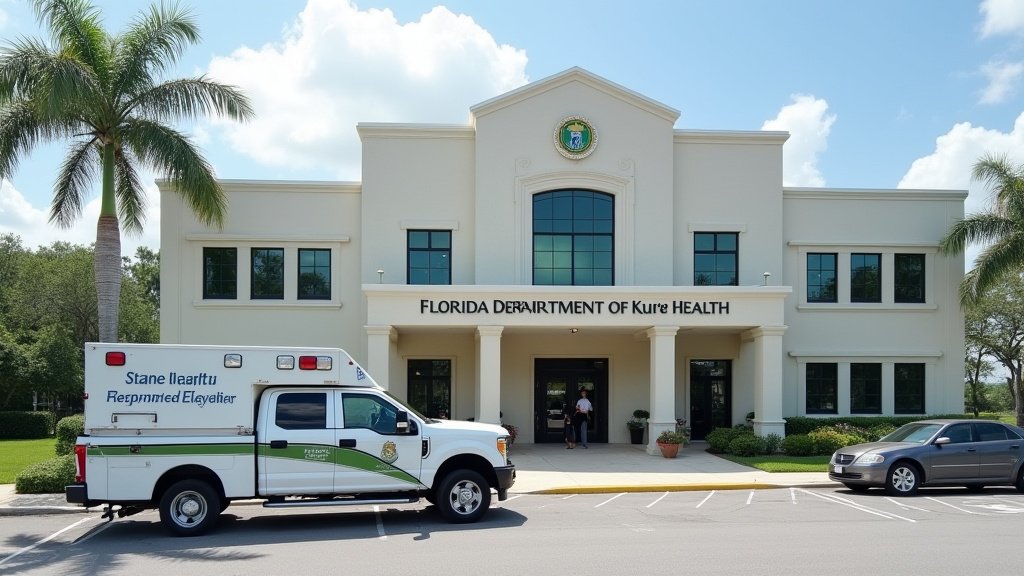
Health authorities have confirmed a concerning surge in cyclosporiasis cases across Florida, with nearly 100 new infections reported within the last week. As the Florida Department of Health (FDOH) ramps up its investigation, public health officials are working to contain the spread of this foodborne illness. Miami-Dade County remains a significant hotspot, having recorded 39 confirmed cases since June, prompting continued, aggressive monitoring by state and local health officials to identify potential contamination sources and prevent further transmission.
The Epidemiology of the Current Surge
Cyclosporiasis is an intestinal infection caused by the microscopic protozoan parasite Cyclospora cayetanensis. Unlike many common foodborne pathogens that spread through direct human-to-human contact, Cyclospora typically spreads through the consumption of food or water contaminated with feces. The current surge in Florida cases represents a significant uptick in diagnostic reporting, though public health experts note that determining the exact source of contamination for 100 new cases in a seven-day window is a complex, time-intensive process.
The Florida Department of Health (FDOH) has deployed epidemiology teams to trace the dietary histories of infected individuals. Because the incubation period for Cyclospora can range from two to 14 days, connecting recent cases to specific shipments of produce—typically leafy greens, fresh herbs, or berries—requires meticulous data collection. The geographic concentration in Miami-Dade suggests a localized distribution chain issue, possibly linked to fresh produce supplies arriving at regional distribution hubs.
Diagnostic Challenges and Clinical Impact
One of the primary challenges in managing the current spike is the nature of the illness itself. The symptoms of cyclosporiasis—which include frequent, watery diarrhea, loss of appetite, weight loss, severe stomach cramps, bloating, nausea, and fatigue—are frequently misidentified as standard viral gastroenteritis or irritable bowel syndrome. Because the parasite is not commonly included in standard stool culture tests, physicians must specifically order an examination for Cyclospora to achieve an accurate diagnosis.
This delay in accurate identification complicates the state’s ability to issue timely recall notices for contaminated products. By the time a patient visits a clinic, receives a specialized lab order, and obtains a confirmed test result, the implicated food product may have already been consumed or discarded. Consequently, public health entities like the Centers for Disease Control and Prevention (CDC) rely heavily on patient interview data to retroactively map the source of the infection.
The Role of Regulatory Oversight
As the number of cases climbs, the FDOH is coordinating closely with the CDC and the U.S. Food and Drug Administration (FDA) to facilitate a multi-agency response. This involves auditing produce supply chains and checking import records for items sourced from regions historically associated with Cyclospora outbreaks.
Regulatory bodies are currently focusing on the produce supply chain as the most likely vector. Consumers are urged to understand that Cyclospora is not killed by standard refrigeration; while thorough washing can reduce the presence of surface contaminants, it is not a 100% guarantee against infection if the parasite has been incorporated into the produce’s cellular structure or if the rinsing process is insufficient.
Secondary Perspectives: Future Implications and Economic Impacts
1. The Economic Ripple Effect on Produce Retail: Retailers and wholesale distributors are bracing for potential economic losses. An association between a specific retailer’s supply chain and a foodborne outbreak can lead to immediate localized inventory liquidation and long-term reputational damage, forcing a restructuring of supplier vetting protocols.
2. Climate Change and Parasite Proliferation: Epidemiologists are increasingly looking at how warmer, wetter weather patterns—often associated with Florida’s changing climate—may impact the viability of water-borne and soil-borne pathogens. Research is ongoing into whether shifting environmental conditions are creating more favorable environments for the survival and spread of Cyclospora in produce-growing regions.
3. Advancements in Genomic Surveillance: The current outbreak highlights the growing importance of whole-genome sequencing (WGS) in public health. By mapping the genetic profile of the Cyclospora specimens recovered from Florida patients, researchers can determine if the 100 new cases share a single point of origin, which would allow for much faster intervention and targeted product recalls in the future.
Prevention and Consumer Safety
While state officials handle the logistics of the investigation, the public is advised to practice enhanced food safety. Washing produce is a necessary first step, but it must be performed under running water with mechanical scrubbing. For individuals who are immunocompromised, officials suggest exercising increased caution regarding raw imported produce until the current outbreak trajectory stabilizes. Anyone experiencing prolonged, severe gastrointestinal symptoms should seek medical attention and specifically ask their physician about screening for Cyclospora.
FAQ: People Also Ask
How long does a Cyclospora infection last?
Without treatment, the symptoms of cyclosporiasis can persist for weeks to months. The illness is often characterized by a ‘waxing and waning’ cycle, where patients experience temporary improvements followed by a return of symptoms. Treatment with antibiotics, specifically trimethoprim-sulfamethoxazole (TMP-SMX), is highly effective and usually resolves the infection within days.
Can washing vegetables kill the Cyclospora parasite?
While washing produce under clean, running water and scrubbing firm-skinned produce can help reduce the amount of surface contaminants, it is not a foolproof method. Because Cyclospora is microscopic and can be difficult to remove from the porous surfaces of leafy greens or herbs, washing alone cannot fully guarantee the elimination of the parasite if the produce was contaminated prior to reaching the consumer.
Is this outbreak limited to Miami-Dade County?
While Miami-Dade County has been identified as a significant hotspot with 39 cases reported since June, the nearly 100 new cases reported in the last week indicate a broader spread. The FDOH continues to monitor cases across the state, and the scope of the investigation is statewide to ensure no other regions are overlooked.
How do healthcare providers test for this parasite?
Standard stool cultures often fail to detect Cyclospora. Healthcare providers must order a specific ‘O&P’ (ova and parasite) exam or use specialized molecular testing methods, such as a GI pathogen panel, to confirm the presence of Cyclospora cayetanensis.