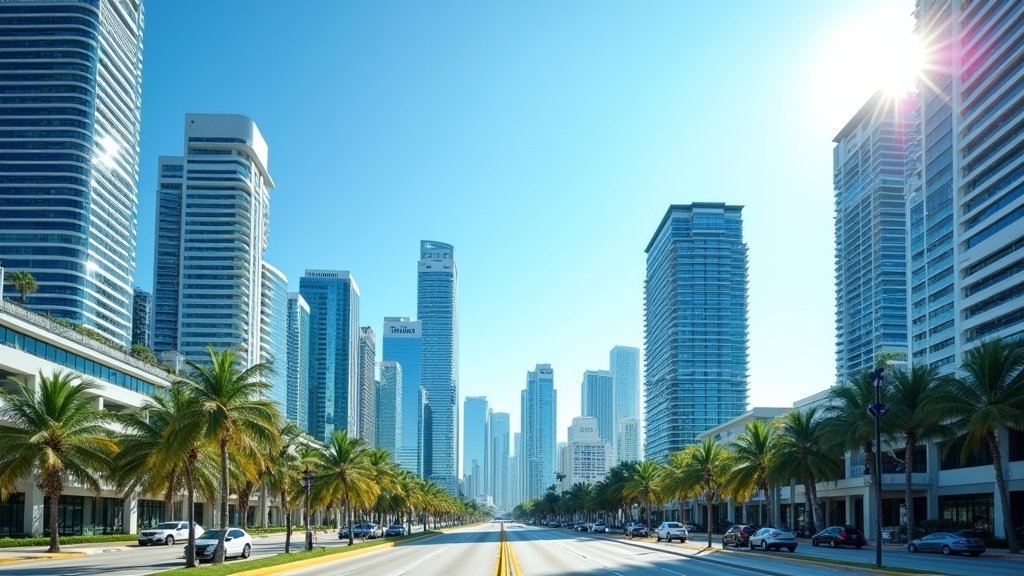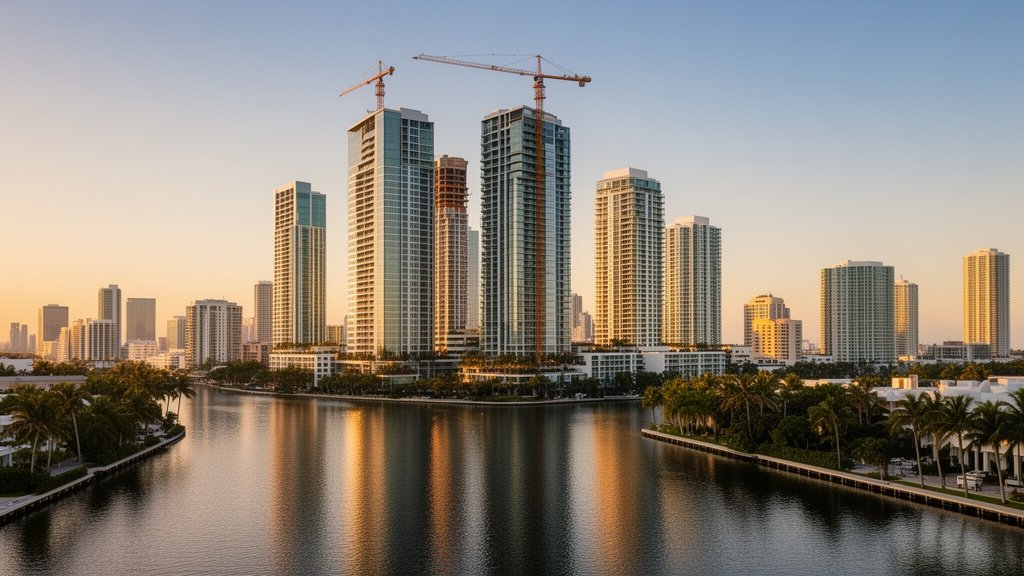
As the Miami skyline reaches its vertical limit and prime coastal real estate becomes increasingly scarce, a significant migration of capital and development expertise is shifting just 30 miles north. Major New York developers, seeking untapped potential, are now aggressively targeting Fort Lauderdale, transforming the “Venice of America” into Florida’s next premier destination for luxury residential and corporate projects. This geographic pivot represents more than a simple expansion; it is a fundamental recalibration of the South Florida luxury real estate map, driven by high-net-worth flight and a hunger for urban density in a market that historically favored sprawl.
Key Highlights
- The Miami Saturation Point: Miami’s Brickell and Edgewater neighborhoods are facing land scarcity and record-high valuations, forcing developers to look for the next high-growth corridor.
- Capital Influx: Large-scale New York firms are initiating multi-million dollar luxury condominium and mixed-use projects, betting on Fort Lauderdale’s downtown potential.
- Infrastructure as Catalyst: The expansion of the Brightline train system and corporate office migration from Wall Street to South Florida have created the necessary infrastructure and demand to support this boom.
- Shift in Demographics: The new developments are specifically targeting ‘snowbirds’ and domestic migrants who demand the same high-end amenities found in Manhattan or Miami, but with a more manageable urban layout.
The Northward Shift: Why Fort Lauderdale is the New Target
The narrative of South Florida real estate has been dominated by Miami for the better part of a decade. However, the sheer cost of entry in Miami—coupled with dwindling available parcels—has hit a tipping point. For developers accustomed to the high-stakes environment of New York, the current state of Miami real estate often presents a ‘bidding war’ exhaustion that yields slimmer margins. Fort Lauderdale, conversely, offers a ‘value-add’ proposition. It combines established waterfront luxury with an urban core that is currently undergoing aggressive densification.
The Corporate Migration and the ‘Value’ Play
It is not merely residential buyers flocking to the region. There is a tangible correlation between the arrival of financial services firms moving their headquarters or satellite offices to South Florida and the surge in residential development. As these high-earners move, they bring expectations for ‘New York-style’ living. Developers are responding by delivering projects that mimic the ultra-luxury, full-service experiences found in Tribeca or Midtown Manhattan, but with the added benefit of Florida’s waterfront lifestyle.
Unlike Miami, which is heavily defined by its nightlife and hyper-dense skyscraper culture, Fort Lauderdale is pivoting toward a lifestyle-centric model. Developers are leaning into the city’s yachting heritage while simultaneously building the type of high-rise, amenity-rich towers that characterize modern luxury living. This creates a balanced environment that appeals to a demographic slightly older and more permanent than the typical Miami short-term investor.
Infrastructure: The Bedrock of the Boom
The feasibility of this shift is heavily underpinned by connectivity. The Brightline passenger rail service has fundamentally altered the geography of the region, making the distance between downtown Miami and downtown Fort Lauderdale essentially moot for many affluent commuters and luxury travelers. This connectivity allows developers to market projects as part of a ‘greater metropolitan network’ rather than isolated properties.
Furthermore, the Fort Lauderdale-Hollywood International Airport has seen a record increase in private jet and commercial traffic, signaling that the wealth accumulation in the area is both significant and sustained. Major firms, including those with significant ties to New York, are now securing zoning approvals for projects that were unimaginable in the city just a decade ago. We are seeing a move toward ‘vertical living’ in the downtown core, where the city is pushing for more pedestrian-friendly zones, supporting the vision these developers have for a walkable, luxury-dense urban environment.
Secondary Angles: Future Trends and Economic Impact
1. The ‘Second City’ Resilience: By developing in Fort Lauderdale, these firms are hedging their bets against Miami’s volatility. Should the Miami market face a correction, the diversified portfolio of the Fort Lauderdale projects offers a buffer of stability.
2. Zoning Evolution: The city of Fort Lauderdale is actively collaborating with these developers, loosening height restrictions in key downtown corridors to accommodate the influx of high-density housing. This legislative support is a primary reason why capital is moving north so rapidly.
3. Sustainable Luxury: New projects are not just focused on height; they are focusing on resilience. Given the region’s climate, developers are incorporating next-generation infrastructure—stormproofing, energy-efficient cooling systems, and sustainable materials—at a price point that appeals to institutional investors who prioritize long-term asset security over short-term flips.
As this trend matures, Fort Lauderdale is poised to shed its reputation as a ‘secondary’ market. With the combined force of New York capital, strategic zoning, and infrastructure investment, the city is rapidly maturing into a primary destination for the most discerning real estate investors in the world.
FAQ: People Also Ask
Q: Why are NY developers leaving Miami for Fort Lauderdale?
A: It is a matter of market saturation. Miami has high land costs and scarcity. Fort Lauderdale offers competitive pricing for land, significant zoning availability for high-rises, and a growing demand from the same high-net-worth demographic already in the region.
Q: How does the Brightline train impact this real estate trend?
A: The Brightline provides a vital transit link that effectively shrinks the distance between the two cities. It allows residents in Fort Lauderdale to access Miami’s economic hubs within minutes, making the region a viable alternative to living in Miami-Dade County.
Q: Is this boom focused on office space or residential condos?
A: It is a mix of both. While luxury condominiums are the most visible aspect of the boom, there is a substantial push for ‘Class A’ office space to accommodate the financial firms and corporate headquarters relocating to the region from the Northeast.
Q: Will property values in Fort Lauderdale eventually match Miami’s?
A: While likely to remain slightly more accessible in the near term, the goal of these massive luxury developments is to elevate the overall market value of Fort Lauderdale. As the inventory of ultra-luxury units increases, local price ceilings are expected to rise significantly.