In the fast-evolving landscape of Miami’s hospitality scene, few venues have managed to capture the cultural zeitgeist quite like Habibi Miami. Perched along the historic Miami River, this French-Moroccan supper club has transcended the typical boundaries of a restaurant, positioning itself as a cornerstone of the ‘dinner theater’ movement. By weaving together high-octane theatrical performances, meticulously curated interior design, and a culinary program that bridges the gap between the Mediterranean and the Maghreb, Habibi Miami isn’t just serving dinner—it is selling an atmosphere that has become the new benchmark for luxury waterfront dining.
Key Highlights
- The Supper Club Renaissance: Habibi Miami spearheads the city’s shift from traditional nightclubs to immersive, experiential dining where the food is as much of an attraction as the entertainment.
- Design Meets Narrative: Under the vision of creative director Mark Lehmkuhl, the space utilizes a distinct pink-and-teal, Wes Anderson-inspired color palette that channels a Beatles-era Tangier fever dream.
- Culinary Fusion: Executive Chef Wladimir Arévalo bridges traditional French technique with bold Middle Eastern flavors, featuring standout dishes like Wagyu Shish-Barak and caramelized phyllo cigars.
- The Hospitality Blueprint: Founded by industry heavyweight Roman Jones, the venue exemplifies the ‘royal escape’ model, prioritizing an exclusive, transportive guest experience that favors long-duration dining over high-turnover service.
The Architecture of Escape: Why Miami is Pivoting to Immersive Dining
The Miami hospitality market has undergone a radical transformation over the last five years. While the city was once defined by its high-energy, bottle-service-centric nightclubs, the contemporary consumer is increasingly demanding a more holistic ‘third place’—a venue that operates as a restaurant, lounge, and show venue in one. Habibi Miami is the clearest manifestation of this trend, located strategically on the Miami River, an area that has surged from a sleepy industrial corridor to the epicenter of the city’s nightlife evolution.
The Shift to ‘Dinner Theater’
Habibi Miami operates on a philosophy of controlled spontaneity. Guests do not merely arrive to eat; they arrive to participate in a sensory journey. The incorporation of roving belly dancers, percussionists, and contortionists who weave through the dining room transforms the act of eating into a live performance. This is a deliberate departure from the ‘loud nightclub’ format that dominated the 2010s. By centering the guest experience on a staged, curated environment, Habibi has successfully captured the demographic that wants the excitement of nightlife without the exhaustion of a crowded dance floor.
Design as a Narrative Device
One of the most compelling aspects of the venue is its commitment to a specific visual language. The collaboration between hospitality pioneer Roman Jones and creative director Mark Lehmkuhl of Ghosthouse Design Group resulted in an aesthetic that defies the typical ‘all-white’ or ‘industrial-chic’ tropes of Miami real estate. Instead, the venue leans heavily into a palette of pinks, teals, and Moorish-inspired architectural flourishes. This is a space designed for the social media age, where every corner serves as a frame. The tent-like structures and ornate silk draperies mimic the luxurious riads of North Africa, creating an intimate, cocoon-like atmosphere that makes the surrounding city feel distant and irrelevant once the guest crosses the threshold.
Culinary Strategy: The Intersection of Technique and Tradition
At the heart of the operation is Executive Chef Wladimir Arévalo, whose resume—marked by his work with Bib Gourmand-winning concepts—brings a layer of culinary credibility that is often lacking in ‘vibey’ venues. The menu is not a simple grab-bag of Middle Eastern tropes; it is a calculated study in spice layering and textural contrast.
The Science of ‘Craveability’
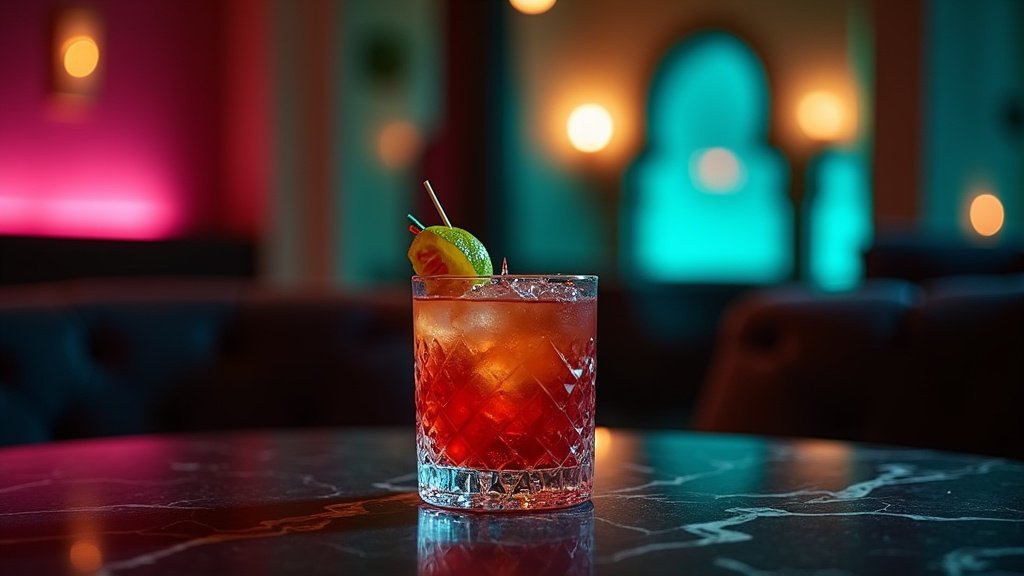
Arévalo’s approach utilizes the fat-washing techniques in the bar program, which mirrors the complexity of the kitchen. By toasting seeds and infusing spirits, the beverage team creates drinks like the ‘Ali’ Fashioned, which are designed to pair specifically with the rich, smoky profiles of the lamb chops and roasted cauliflower. This integration of food and beverage is essential to the supper club model. When a venue sells an ‘evening’ rather than a ‘meal,’ every element must be calibrated to extend the guest’s stay. The high-acid, high-spice profile of the menu encourages continued ordering, keeping tables active and engaged for longer periods than a standard service model would allow.
Scaling the ‘Supper Club’ Concept
The economic impact of Habibi Miami is indicative of a broader trend: the premiumization of the Miami River. By taking over the site of legacy establishments and injecting them with high-concept design, operators like Roman Jones are effectively increasing the revenue-per-square-foot of the district. The supper club model provides a hedge against the volatility of the nightlife market. It offers a diverse revenue stream—dinner, late-night drinks, hookah service, and live entertainment—which allows for stability even as nightlife trends fluctuate.
Future Implications: The Next Era of Hospitality
As Miami looks toward the future, the success of Habibi Miami suggests that we are entering an era of ‘maximalist’ hospitality. The era of minimalism—clean lines, monochromatic palettes, and understated luxury—is being supplanted by a desire for maximalist, immersive environments that promise an escape from the mundane. We can expect to see more developers and hospitality groups investing in ‘transportive’ architecture, where the physical location acts as a prop in an ongoing play. For the consumer, this means higher stakes and higher costs, but also a more profound sense of occasion.
FAQ: People Also Ask
1. What is the dress code for Habibi Miami?
Given the supper club nature of the venue and its focus on an ‘evening out,’ the dress code is generally considered upscale, elegant, or ‘nightlife chic.’ While it is not strictly defined, guests typically lean into evening wear that matches the vibrant, luxurious, and highly aestheticized environment of the space.
2. Is a reservation required?
Yes, given its popularity as a primary destination on the Miami River and its limited capacity (roughly 200 guests), securing a reservation in advance through their website is highly recommended, particularly for Thursday through Saturday nights when the dinner theater performances are in full swing.
3. What is the primary cuisine style?
Habibi Miami focuses on a fusion of French-Moroccan and Mediterranean cuisine. The menu is designed for sharing, featuring a mix of traditional Middle Eastern flavors (such as Ras el Hanout spices and tahini) balanced with French culinary techniques, resulting in a menu that is both approachable and sophisticated.
4. Is this restaurant family-friendly?
While the venue is open for dinner, it is primarily positioned as an adult-oriented supper club and nightlife destination. With its late-night performances, hookah service, and focus on the cocktail program, it is better suited for a mature audience looking for a nightlife experience rather than a family dining environment.