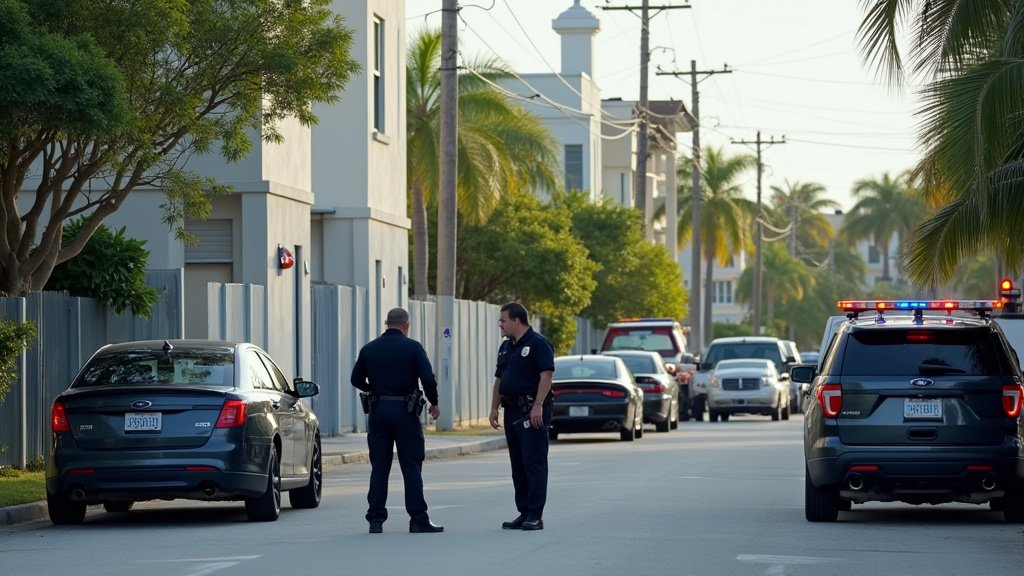
A Miami-Dade Sheriff’s Office (MDSO) deputy fatally shot a teenager during the execution of a search warrant in Miami Beach, according to official reports. The incident, which took place during a high-stakes tactical operation, has initiated an immediate and comprehensive investigation by independent state authorities to determine the circumstances leading up to the use of lethal force. As the department manages the fallout from this encounter, questions regarding tactical protocols, the nature of the warrant, and the standards of engagement for law enforcement in residential settings have come to the forefront.
Key Highlights
- A Miami-Dade Sheriff’s Office deputy was involved in a fatal shooting of a teenager while serving a warrant in Miami Beach.
- The Florida Department of Law Enforcement (FDLE) has assumed the lead on the investigation, standard procedure for officer-involved shootings in the jurisdiction.
- The incident has prompted a review of tactical entry procedures and use-of-force policies as the MDSO undergoes a period of significant institutional transition.
- Authorities have sequestered body-worn camera footage, which is expected to be central to the independent inquiry into the shooting.
Scrutiny Intensifies Following Fatal Miami Beach Warrant Operation
The shooting of a teenager by an MDSO deputy in Miami Beach represents a critical flashpoint for local law enforcement. While the specific details regarding the warrant—including the nature of the alleged offense and the identity of the teenager—remain part of the active investigative record, the event underscores the inherent volatility involved in tactical warrant service. Law enforcement agencies rely on search warrants to secure evidence and apprehend suspects, often utilizing specialized units when there is an elevated risk of confrontation. However, the use of lethal force in these scenarios, particularly involving minors, necessitates a rigorous examination of the protocols that led to the escalation.
The Mechanics of Tactical Warrant Service
Tactical warrant service is designed to maximize officer safety and minimize the ability of suspects to destroy evidence or pose a threat. However, the speed and aggression often associated with these entries have long been a subject of constitutional debate. In this Miami Beach incident, investigators will focus heavily on the “reasonableness” standard established by the Supreme Court in Graham v. Connor. This legal framework requires that an officer’s use of force be judged from the perspective of a reasonable officer on the scene, rather than with the benefit of 20/20 hindsight. Factors that will be weighed include the level of threat perceived by the deputy at the exact moment force was deployed, whether there was an attempt to de-escalate the situation, and whether the entry tactics were appropriate for the known risks.
The Institutional Context: MDSO Transition
The Miami-Dade Sheriff’s Office is currently navigating a complex structural transition, shifting from a long-standing police director model to an elected sheriff’s office. This reorganization is not merely administrative; it fundamentally alters the political and operational accountability structures within the county. For the community, this transition creates a vacuum of expectation regarding how police accountability will be handled moving forward. The involvement of the Florida Department of Law Enforcement (FDLE) is a standard procedural safeguard designed to prevent conflicts of interest, ensuring that the local agency is not investigating its own personnel. This separation is crucial for public trust, especially when the actions of the department are under the microscope of public scrutiny.
Transparency and the Role of Body-Worn Cameras
In modern policing, the most critical piece of evidence is frequently the body-worn camera (BWC) footage. In this incident, the footage captured by the deputy’s equipment—and that of other officers present at the scene—will serve as the objective record against which witness statements and official reports are tested. Transparency advocates argue that the prompt release of this footage is essential to maintaining community trust. However, law enforcement officials often cite the integrity of the ongoing investigation as a reason to withhold such evidence until the process is complete. The tension between the public’s right to know and the investigative need to protect witnesses and evidentiary integrity remains a defining conflict in contemporary policing.
Secondary Angles: Future Implications
1. Technological Advancements in Warrant Service: This incident may accelerate the debate regarding the use of non-lethal entry technologies or remote surveillance to identify threats before officers cross the threshold, potentially reducing the need for direct, high-risk confrontations.
2. Juvenile Justice and Law Enforcement Training: The involvement of a teenager in a warrant execution raises questions about how law enforcement differentiates tactical approaches when minors are suspected to be present in the target location, prompting a potential review of departmental de-escalation training.
3. Legal Precedent and Policy Shifts: Depending on the findings of the FDLE investigation, this case could influence future legislation in Florida regarding no-knock warrants and the mandates for independent oversight in officer-involved shootings.
FAQ: People Also Ask
Q: Why does the FDLE investigate local police shootings?
A: The Florida Department of Law Enforcement (FDLE) acts as an independent investigative body to ensure objectivity. By having a state agency conduct the investigation rather than the local department, the process aims to eliminate real or perceived conflicts of interest and maintain public trust.
Q: What is a “reasonable officer” standard?
A: Derived from Graham v. Connor, this is the legal standard used to evaluate police use of force. It asks whether an officer’s actions were “objectively reasonable” based on the facts and circumstances confronting the officer, without regarding their underlying intent or motivation.
Q: How long do investigations into police shootings typically take?
A: These investigations are highly complex and can take several months. They involve forensic analysis of the scene, ballistics testing, toxicology reports, interviews with all witnesses and officers involved, and a detailed review of all available electronic evidence, including body camera footage.
Q: What happens to the deputy involved during the investigation?
A: It is standard departmental policy for officers involved in fatal shootings to be placed on administrative leave—often with pay—while the investigation is pending. This is a non-disciplinary measure designed to allow for the investigation to proceed without the officer’s active duty involvement.