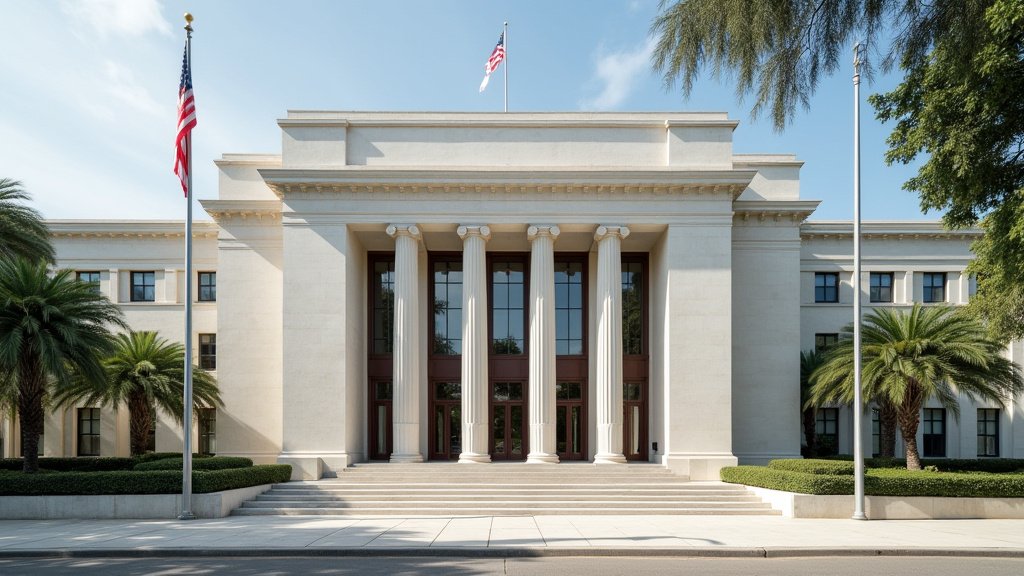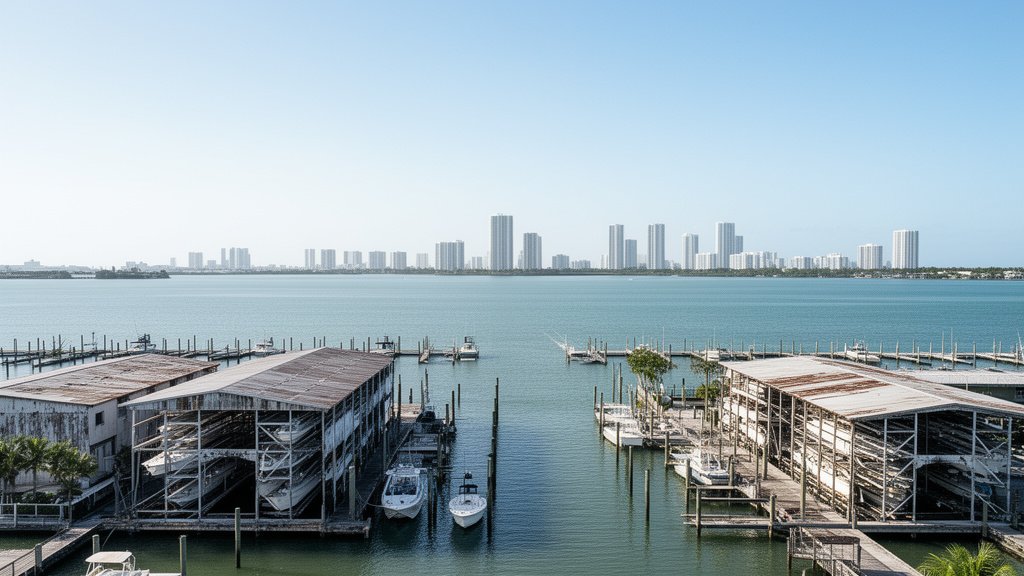
This November, Miami voters will face a critical decision that could reshape the coastline of Virginia Key. A long-debated, controversial $80 million redevelopment project for the island’s aging marina facilities—a plan anchored in a 2016 lease agreement that has since been bogged down by years of intense legal scrutiny and community opposition—is finally heading to the ballot box. The outcome of this referendum will determine whether RCI Group, the developer behind the proposal, can proceed with an extensive modernization plan or if the land will remain under its current operational status, leaving the city to grapple with the future of its public waterfront infrastructure.
Key Highlights
- The Proposal: An $80 million investment aimed at upgrading the Rickenbacker Marina and surrounding facilities into a modernized, mixed-use marine complex.
- The Trigger: A 2016 lease agreement between the City of Miami and RCI Group, which has faced repeated delays due to legal challenges and public outcry.
- The Ballot Measure: Miami voters must provide final authorization for the lease extension, a step required by city charter for the use of public coastal land.
- The Core Conflict: A clash between the need for modernized infrastructure to support Miami’s boating economy and concerns over the privatization and overdevelopment of public space.
The Battle for Virginia Key: Development vs. Public Trust
The Virginia Key redevelopment project is far more than a simple construction plan; it is a flashpoint for broader anxieties regarding Miami’s rapid urban expansion and the protection of public access to Biscayne Bay. At the heart of the controversy is the Rickenbacker Marina, a site that has historically served as a critical hub for local boaters but which critics argue has suffered from neglect, prompting the push for a total overhaul.
A Decade-Long Standoff: The 2016 Lease Agreement
To understand the magnitude of this November’s vote, one must look back to 2016. That year, the City of Miami Commission approved a 75-year lease with RCI Group to redevelop the marina. The vision was ambitious: a comprehensive project featuring upgraded boat storage, enhanced public facilities, and a modernized aesthetic intended to compete with elite marine infrastructure found elsewhere in South Florida.
However, the project immediately hit a wall. Legal challenges mounted, primarily questioning the process by which the lease was granted and asserting that the project violated public trust requirements regarding the stewardship of valuable waterfront land. For nearly a decade, the project has existed in a state of suspended animation, serving as a case study for the complexities of public-private partnerships in an increasingly litigious city environment. The impending November vote is the final hurdle—or perhaps the final stop—in this protracted saga.
The Redevelopment Scope: What the $80M Covers
If approved, the $80 million injection would trigger a significant transformation of the Rickenbacker Marina property. The master plan includes the replacement of outdated dry-stack storage, the creation of a new, more efficient marina layout, and enhanced support services. Proponents argue that the current facilities are crumbling and that private investment is the only viable path to modernize the site without burdening taxpayers with the full cost of infrastructure upgrades.
Furthermore, the developer has consistently emphasized the economic benefits, citing job creation, increased tax revenues, and the potential to elevate Miami’s status as a world-class boating destination. For the proponents, this is not just about boat slips; it is about bringing 21st-century functionality to a location that is currently operating on decades-old, inefficient logistics.
Environmental and Legal Minefields
Opposition to the project remains vocal and well-organized. Environmental groups and local community activists have consistently voiced concerns regarding the project’s impact on Biscayne Bay. The primary fear is that the scale of the redevelopment—particularly the construction density—could negatively affect the delicate marine ecosystem of the surrounding waters.
Legally, the project has navigated a minefield. The requirement to go to the voters stems from the Miami City Charter, which mandates that any lease of public land for a long-term commercial project must be ratified by a majority of the electorate. This provision was specifically designed to prevent the privatization of the city’s most precious assets without the explicit consent of the people. The upcoming vote is therefore a direct application of this democratic safeguard, turning a bureaucratic real estate deal into a civic litmus test.
The Voter’s Dilemma: Growth or Preservation?
As the election approaches, Miami voters are effectively being asked to define their vision for the city’s waterfront. On one side, the argument is one of pragmatism: the marina needs fixing, and $80 million of private capital is a substantial incentive for the city to accept. On the other side, the argument is one of caution: Virginia Key is a unique public resource that should not be optimized for profit at the expense of environmental health or public accessibility.
This choice is emblematic of a larger trend in South Florida, where the pressure to accommodate population growth and tourism often clashes with the necessity of preserving green space and public access. The Virginia Key marina vote will likely be scrutinized by urban planners, environmentalists, and real estate developers across the country as a bellwether for how cities balance development with the sanctity of public land.
FAQ: People Also Ask
Q: Why is the Miami commission asking voters to decide on this project?
A: Under the Miami City Charter, any long-term lease or significant commercial development involving city-owned waterfront land requires voter approval to ensure transparency and public oversight.
Q: What is the primary opposition to the Virginia Key redevelopment?
A: Opponents primarily cite environmental concerns regarding the protection of Biscayne Bay, the potential for increased traffic on the Rickenbacker Causeway, and general skepticism about the privatization of public land.
Q: What happens if the voters reject the proposal in November?
A: If the ballot measure fails, the 2016 lease agreement with RCI Group would likely be terminated or significantly renegotiated, leaving the future of the marina uncertain and forcing the City of Miami to explore alternative maintenance or operational plans.
Q: How does this project impact the boating community?
A: Supporters argue that it provides essential upgrades to dry-stack storage and facility efficiency, which are desperately needed for the local boating community, whereas critics question whether the proposed luxury-oriented changes serve the general public or select interests.