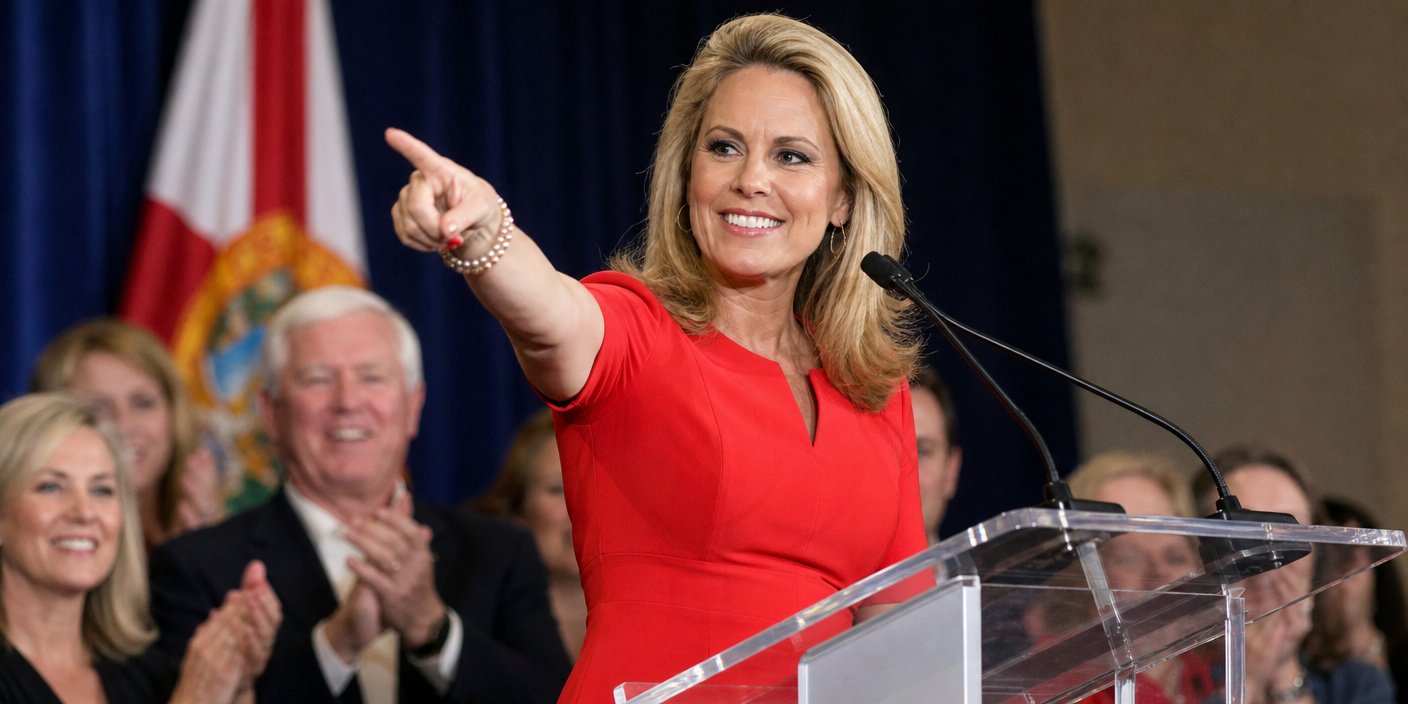
In an election cycle defined by its unpredictability, Florida’s Democratic primary for the U.S. Senate has concluded with a seismic shift. State Representative Angie Nixon, a vocal progressive, has defeated retired Lt. Col. Alex Vindman in a decisive contest, signaling a potential realignment within the Florida Democratic Party. The victory, which political analysts are labeling a significant upset, sets the stage for a rigorous general election campaign against Republican candidate Ashley Moody.
The Progressive Surge: Analyzing the Upset
The victory of Angie Nixon over Alex Vindman represents more than a mere electoral outcome; it reflects a distinct ideological tension currently gripping the Florida Democratic electorate. Vindman, carrying the weight of his distinguished military service and status as a high-profile national security expert, ran a campaign rooted in establishment stability and international policy experience. Conversely, Nixon, who has served as a fixture in the Florida House of Representatives, campaigned on a platform centered on domestic grassroots organizing, economic equity, and environmental justice.
Analysts note that Nixon’s ability to mobilize base voters was the decisive factor. While Vindman maintained strong institutional support and name recognition, Nixon’s campaign successfully articulated a vision that resonated deeply with the progressive wing of the party—a group that has increasingly demanded a more assertive, policy-driven approach to state and national issues. The upset indicates that Democratic primary voters in Florida are increasingly prioritizing local legislative experience and populist messaging over national-security-oriented credentials.
A New Path to the General Election
With the primary victory secured, the focus for the Nixon campaign shifts immediately to the formidable challenge posed by Republican Ashley Moody. The general election contest promises to be a stark ideological clash. Moody, known for a conservative legal and political record, presents a campaign strategy built on traditional Republican platforms: fiscal conservatism, law enforcement support, and judicial restraint.
For Nixon, the path forward requires a delicate balancing act. She must maintain the enthusiastic support of the progressive base that propelled her to the nomination while simultaneously reaching out to moderate and independent voters—a demographic that historically plays a kingmaker role in Florida’s statewide elections. Political strategists suggest that the Nixon camp will likely pivot their messaging to highlight the contrast between her legislative record on social services and the conservative economic policies favored by Moody. This matchup is expected to draw significant national attention and donor funding, as the outcome could influence the balance of power in the U.S. Senate.
Party Dynamics and Electoral Strategy
The Florida Democratic Party is now navigating the fallout and realignment necessitated by this primary result. Historically, the party has struggled to present a unified front in statewide races, often caught between centrist pragmatism and progressive fervor. Nixon’s win could either serve as a catalyst for renewed enthusiasm or a point of contention for party moderates who may have preferred the perceived stability of a candidate like Vindman.
However, early indicators suggest that party unity may coalesce around the shared goal of defeating the Republican ticket. The organizational infrastructure that Nixon built during her state-level campaigns will be stress-tested as it attempts to scale up for a statewide operation. The effectiveness of this transition will largely determine the viability of her challenge against Moody. Moreover, the campaign will need to contend with a challenging electoral map, where voter turnout, particularly in the critical I-4 corridor, will remain the ultimate arbiter of success. As the general election approaches, the visibility of the candidates and their ability to capture the suburban vote will likely be the primary indicators of campaign momentum.
Policy Differences and Voter Sentiment
The divergence between Nixon and her Republican opponent, Moody, is absolute. On matters of healthcare, labor laws, and voting rights, the two candidates represent opposing visions for Florida’s future. Nixon has consistently advocated for an expansion of public services and stronger labor protections, while Moody has signaled a continued commitment to regulatory reduction and market-driven solutions.
For voters, this election offers a clear, binary choice, minimizing the ambiguity that often characterizes political races. The discourse in the coming months will likely focus on these policy differences, with both campaigns leveraging their distinct ideological brands to differentiate themselves. The success of the Nixon campaign will depend on whether this ideological clarity acts as an asset that drives voter turnout, or if it provides easy avenues of attack for the well-funded Moody organization.