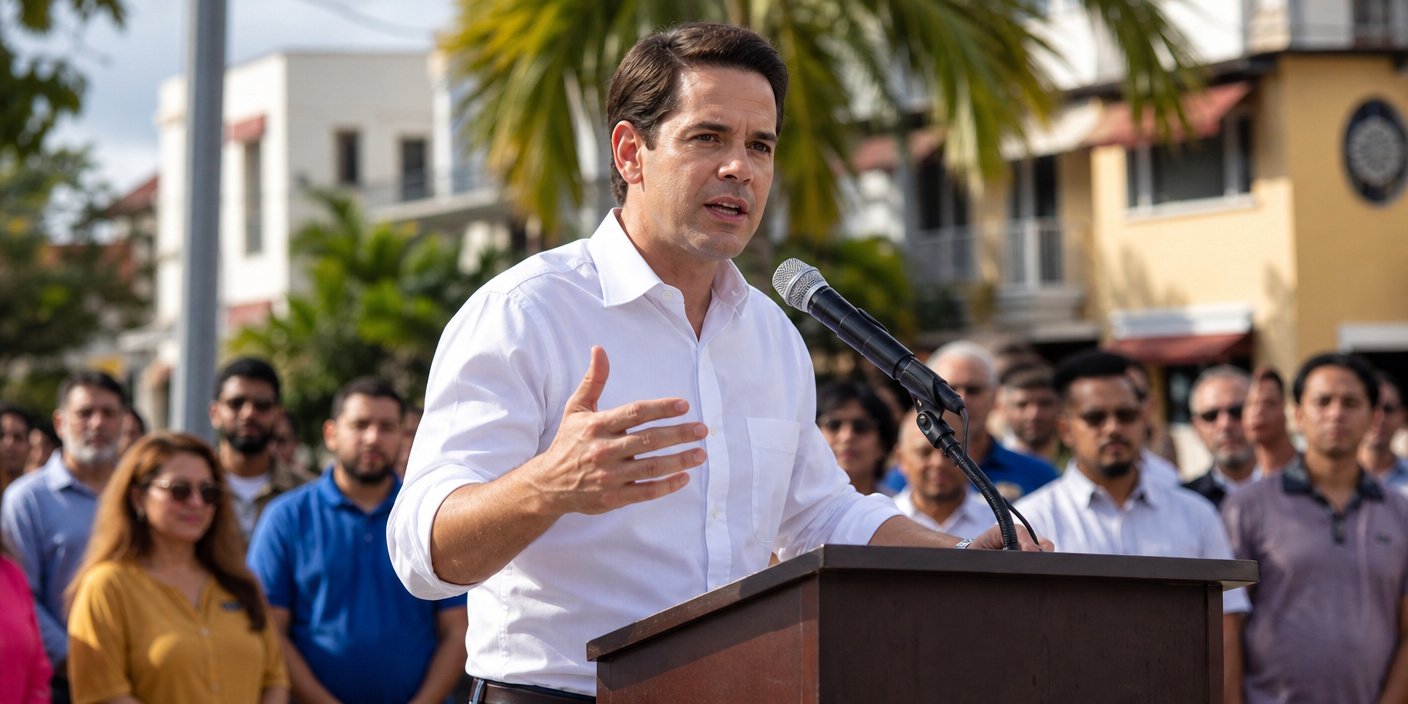
Former CBS4 news anchor Eliott Rodriguez has officially secured the Democratic nomination for Florida’s 27th Congressional District, marking a dramatic transition from the anchor desk to the political arena. His primary victory clears the path for a compelling November general election contest against the two-term Republican incumbent, María Elvira Salazar, in what is poised to be one of the most closely watched congressional races in Miami-Dade County.
The Anchor vs. The Incumbent: A Narrative Clash
The contest between Eliott Rodriguez and María Elvira Salazar is uniquely defined by a shared professional past. Both candidates are seasoned journalists who spent decades informing the Miami community before pivoting to public office. However, while their backgrounds are similar, their political trajectories are starkly distinct. Salazar, a former television personality for networks like Telemundo and CNN en Español, has successfully leveraged her brand to navigate the political landscape, having won reelection comfortably in previous cycles.
Rodriguez, long a fixture of local news in South Florida, is banking on the deep trust he built with viewers over his tenure at CBS4. In an era where trust in institutional media is often debated, Rodriguez is testing a specific theory: can a trusted local news figure transcend the current hyper-partisan political climate to capture voters who are disillusioned with traditional party lines? The primary victory serves as a strong signal of his initial base support, but the challenge now shifts to a general election electorate that is broader, more volatile, and significantly more Republican-leaning than the primary turnout might suggest.
District Dynamics: The Shifting Landscape of FL-27
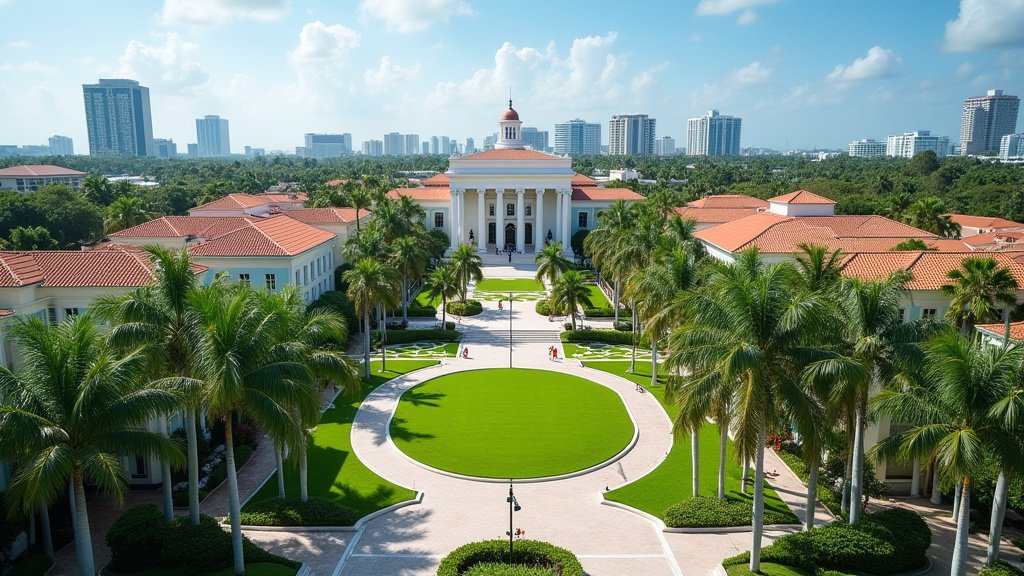
Florida’s 27th Congressional District, which encompasses a large swath of Miami-Dade County including Coral Gables, South Miami, and parts of Little Havana, has undergone a significant political realignment. Once considered a swing district that leaned Democratic, recent cycles have shown a marked shift toward the GOP. This “reddening” of Miami-Dade is the primary obstacle for the Rodriguez campaign.
Salazar has effectively branded herself as a fierce defender of freedom and a critic of socialism, rhetoric that resonates powerfully within the district’s large Cuban-American and Venezuelan-American communities. To unseat her, Rodriguez will need to do more than rely on his journalism accolades; he must craft an economic platform that addresses the high cost of living, insurance premiums, and housing affordability—issues that are acutely felt by his prospective constituents.
Secondary Angles: Analyzing the Path to Victory
1. The Journalist-Politician Archetype: We are seeing an increasing number of media figures running for office. This trend suggests that political parties are prioritizing candidates with high name recognition and established communication skills over traditional political resumes. However, the pivot from objective reporting to partisan campaigning is fraught with risk. Rodriguez must demonstrate that his news background equates to a deep understanding of policy, rather than just the ability to deliver a polished teleprompter script.
2. The Economic Front: While culture wars dominate the headlines in South Florida, the 27th District faces immense economic pressure. Property insurance rates in Florida have skyrocketed, and the cost of daily goods remains a top concern for working-class families. If Rodriguez can successfully pivot the conversation away from national polarization and anchor it in the pocketbook issues of the district, he may find a wedge to peel away moderate voters who have drifted toward the GOP.
3. The GOTV Machine: Elections in Miami-Dade are increasingly decided by ‘Get Out The Vote’ (GOTV) operations. Salazar has an established infrastructure and strong fundraising capabilities. Rodriguez, as a challenger, must rapidly scale his campaign organization to match the intensity of a Republican incumbent who has spent years hardening her position. The efficiency of his grassroots organizing over the next few months will be the deciding factor.
As the campaign enters its final phase, the spotlight will inevitably turn to the debates. Both candidates are experts in communication, having spent decades in front of cameras. This background promises a general election cycle where the debates will be less about the spectacle and more about the precision of their arguments. For Eliott Rodriguez, the goal is simple: prove that the trust he earned in the living rooms of Miami translates into the votes required to change the status quo in Washington.