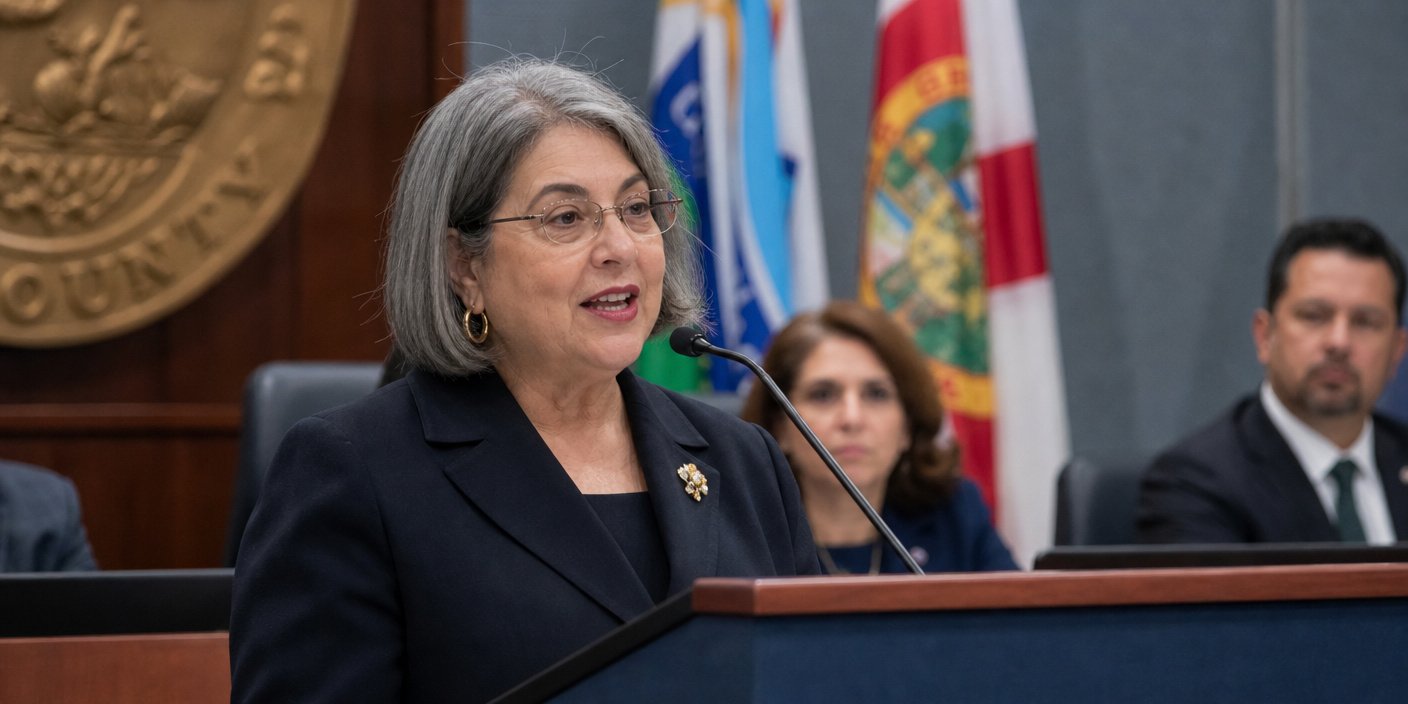
The Miami City Commission has voted to formally approve budget funds for the launch of the Allapattah Community Redevelopment Agency (CRA), a move that accelerates the city’s urban revitalization agenda while simultaneously bracing for an inevitable legal showdown with Miami-Dade County. This decision marks a pivotal moment in the ongoing power struggle regarding municipal autonomy and the allocation of tax increment financing (TIF) funds, placing the future of one of Miami’s most historically significant neighborhoods in the crosshairs of county-level litigation.
Key Highlights
- Budget Approval: City commissioners passed the funding resolution, officially initiating the administrative setup for the Allapattah CRA.
- County Conflict: The move directly challenges Miami-Dade County’s oversight, with the County prepared to initiate litigation over the formation and scope of the agency.
- TIF Mechanism: At the heart of the dispute is Tax Increment Financing (TIF), a tool that captures rising property tax revenues to fund local infrastructure and development projects.
- Strategic Stakes: The battle reflects a broader friction between City Hall and the County over who controls development dollars and policy in rapidly gentrifying urban zones.
The Battle for Allapattah’s Development Future
The approval of the Allapattah CRA is not merely a bureaucratic step; it is a declaration of intent by the City of Miami to reclaim control over the economic trajectory of the Allapattah neighborhood. By establishing this agency, the city aims to capture tax revenue growth generated within the defined CRA boundaries, directing those funds specifically toward infrastructure improvements, affordable housing, and business incentives. However, this strategy is aggressively opposed by Miami-Dade County, which views the proliferation of CRAs as a mechanism that essentially diverts funds from the county’s general budget—funds the county argues are necessary for services that benefit the entire region.
The Mechanics of TIF and the County Objection
At the core of the disagreement lies the controversial nature of Tax Increment Financing. When a CRA is created, the ‘base’ property tax revenue going to the county is frozen. Any increase in property value thereafter generates ‘increment’ revenue, which is diverted from the county’s coffers into the CRA’s budget. Miami-Dade officials have historically argued that cities often create CRAs that overlap with service areas already provided by the county, leading to a redundancy that strips the county of revenue without providing a unique public benefit. The legal argument the county is preparing hinges on whether the City of Miami has adequately proven the ‘slum and blight’ conditions required by state statute to justify the formation of such an agency. If the city cannot substantiate that the area is in decline, the legal basis for the CRA crumbles.
Historical Context: Miami’s CRA Legacy
To understand the intensity of this current friction, one must look at the history of other CRAs in the City of Miami. From the Overtown CRA to the Midtown Miami development, the city’s track record with these agencies has been a mix of successful revitalization and intense criticism regarding oversight and transparency. Critics frequently point to past CRA expenditures as examples of potential mismanagement, and the County is likely to leverage these historical precedents to argue that the Allapattah CRA is an unnecessary overreach. This is a classic ‘tug-of-war’ over municipal versus regional control, where the definition of ‘public good’ varies depending on whether one sits in City Hall or the County Administration Building.
The Economic Impact on Allapattah
For the residents and business owners of Allapattah, the uncertainty is palpable. Allapattah has long been a hub of industrial activity and a home to a vibrant, multi-ethnic community. As neighboring areas like Wynwood and the Design District have undergone massive transformation, Allapattah has become the next logical frontier for real estate developers. Proponents of the CRA argue that without a focused agency, the neighborhood will succumb to unregulated gentrification that displaces current residents. They view the CRA as a tool for stabilization—funding lighting, streetscape improvements, and small business grants that keep the neighborhood competitive. Conversely, opponents fear the CRA will serve as a subsidy for luxury developers, artificially inflating land values and accelerating the very displacement it claims to prevent.
The Legal Road Ahead
The next phase of this conflict will likely play out in the courtroom. Miami-Dade County has signaled its readiness to sue, which could result in a temporary injunction freezing the CRA’s budget. The legal strategy will likely focus on procedural technicalities in the creation of the agency, the validity of the blight study required by Florida law, and the impact on the county’s tax base. For the City of Miami, the strategy will be to aggressively defend the ‘home rule’ concept, asserting that they are better positioned to understand the hyper-local needs of their constituents than the county bureaucracy.
FAQ: People Also Ask
1. What is an Allapattah CRA and what does it do?
A Community Redevelopment Agency (CRA) is a government entity created to revitalize a specific ‘blighted’ area. It uses Tax Increment Financing (TIF) to fund infrastructure, housing, and economic development within that zone.
2. Why is Miami-Dade County fighting the City of Miami over this?
The County objects to the diversion of property tax revenue that would otherwise go to the county’s general fund. They argue the city has not sufficiently proven that the neighborhood qualifies for a CRA and that the agency is unnecessary.
3. Will the Allapattah CRA proceed despite the legal threat?
The City of Miami has voted to fund the agency, indicating their intent to move forward. However, a lawsuit from the county could potentially lead to an injunction, halting the CRA’s operations until the legal matter is resolved.
4. How does a CRA impact local property taxes?
A CRA does not change the tax rate for individual property owners. Instead, it captures the ‘increment’ of property tax growth—the difference between the current tax revenue and the base year the CRA was formed—to reinvest in the community.