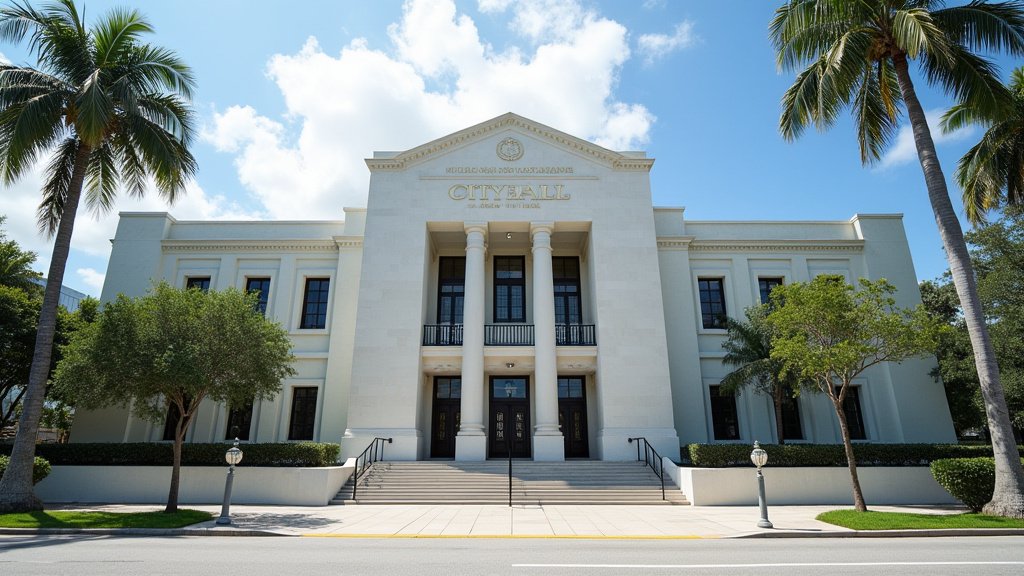
The City of Miami is barreling toward a contentious decision that could reshape one of its most historic neighborhoods, with commissioners scheduled to vote on September 24 regarding a $40 million funding allocation for the newly established Allapattah Community Redevelopment Agency (CRA). This move comes despite a simmering legal battle with Miami-Dade County, which has challenged the CRA’s authority and control over property tax increment financing. The outcome of the vote will not only determine the financial future of the proposed agency but could also set a significant precedent for how municipalities and the county navigate the complex power dynamics of urban redevelopment in South Florida.
Key Highlights
- Funding Commitment: The City of Miami is preparing to authorize $40 million in funding over a five-year period for the Allapattah CRA.
- Legal Deadlock: Miami-Dade County remains in active litigation with the City of Miami, contesting the legality and funding control of the CRA.
- Critical Vote: Miami City Commissioners are set to cast their deciding vote on the measure on September 24.
- Broad Implications: The dispute centers on whether municipal governments can bypass county oversight when establishing redevelopment districts that utilize tax increment financing (TIF).
The Allapattah CRA: A Neighborhood at a Crossroads
The neighborhood of Allapattah, long defined by its working-class roots, industrial heritage, and vibrant Latino community, finds itself at the center of a tug-of-war between local and county officials. At the heart of the debate is the mechanism of the Community Redevelopment Agency. A CRA is a dependent district established by local government for the purpose of carrying out redevelopment activities that include reducing or eliminating blight, improving the tax base, and encouraging economic growth. By freezing property tax assessments at a base year, CRAs capture the incremental increase in tax revenue—known as Tax Increment Financing (TIF)—to reinvest directly into the district.
However, in Miami, the formation of CRAs has historically been fraught with friction between City Hall and the Miami-Dade County Commission. The County argues that the formation of such districts impacts the overall county budget, as the property taxes diverted to the CRA would otherwise flow into the general fund. The City of Miami, conversely, maintains that targeted investment is necessary to prevent urban decay and spur infrastructure improvements that the broader county budget fails to prioritize.
The Anatomy of the Legal Standoff
The ongoing legal dispute is rooted in the statutory requirements for forming a CRA. Miami-Dade County has previously asserted that the City of Miami failed to meet specific legal benchmarks regarding blight studies and inter-local agreements before declaring the Allapattah area a redevelopment district. For the City to move forward with the $40 million investment, it must navigate the potential that a court could rule the CRA’s formation invalid or restricted.
Legal experts suggest that the County’s opposition is not merely about the $40 million sum, but about the precedent of jurisdictional control. By creating this CRA, the City is effectively ring-fencing tax dollars that the County would otherwise retain authority over. This creates a zero-sum game scenario where the City seeks to empower its own economic development arm, while the County seeks to protect its centralized financial oversight. The September 24 vote is essentially a stress test for the City’s legislative autonomy in the face of County-level pushback.
Economic Implications and Gentrification Fears
Beyond the procedural and legal battles, the Allapattah CRA represents a significant economic pivot for the neighborhood. Allapattah has seen an influx of development interest as property values in neighboring Wynwood and the Design District have skyrocketed, pushing investors westward. Proponents of the CRA argue that the $40 million, spread over five years, is essential for ‘equitable development.’ They claim these funds will be used for affordable housing, infrastructure upgrades, and small business support—tools necessary to ensure that long-term residents are not displaced by rising rents and luxury developments.
However, critics of the CRA model often point to the potential for ‘market-driven gentrification.’ They argue that by prioritizing infrastructure that supports higher property values, CRAs can inadvertently accelerate the very displacement they claim to prevent. This tension makes the upcoming vote highly sensitive, as commissioners must balance the need for modern infrastructure against the concerns of a community wary of losing its cultural identity.
Strategic Importance of the September 24 Vote
The September 24 hearing serves as a critical junction. Should the commission vote in favor, it signals a definitive push by the City of Miami to operationalize the CRA regardless of the active lawsuit. This could lead to an escalation of legal tactics from Miami-Dade County, potentially including requests for emergency injunctions to halt the disbursement of funds. Conversely, a vote against the measure or a postponement would signal a strategic retreat, potentially opening the door for a negotiated settlement between the two governing bodies. The decision will be closely watched by developers, urban planners, and residents alike, as it will dictate the pace and nature of investment in Allapattah for at least the next half-decade.
FAQ: People Also Ask
Q: What is the primary role of an Allapattah CRA?
A: A Community Redevelopment Agency (CRA) is tasked with revitalizing a designated area by capturing incremental property tax growth to fund infrastructure improvements, affordable housing, and small business grants within that specific district.
Q: Why is Miami-Dade County suing the City of Miami over this agency?
A: The County is challenging the legal validity of the CRA’s formation, arguing that the City did not adequately follow the statutory requirements for establishing the district, thereby affecting the County’s general tax revenue.
Q: What is the significance of the $40 million figure?
A: This amount represents the planned investment capacity over five years, intended to serve as a ‘seed fund’ for massive infrastructure and redevelopment projects that the City believes are necessary to curb blight in Allapattah.
Q: Will the vote on September 24 resolve the lawsuit?
A: No. The vote is a legislative action by the City. The ongoing legal dispute is a separate judicial process. However, the vote demonstrates the City’s commitment to proceeding with the CRA despite the pending litigation.