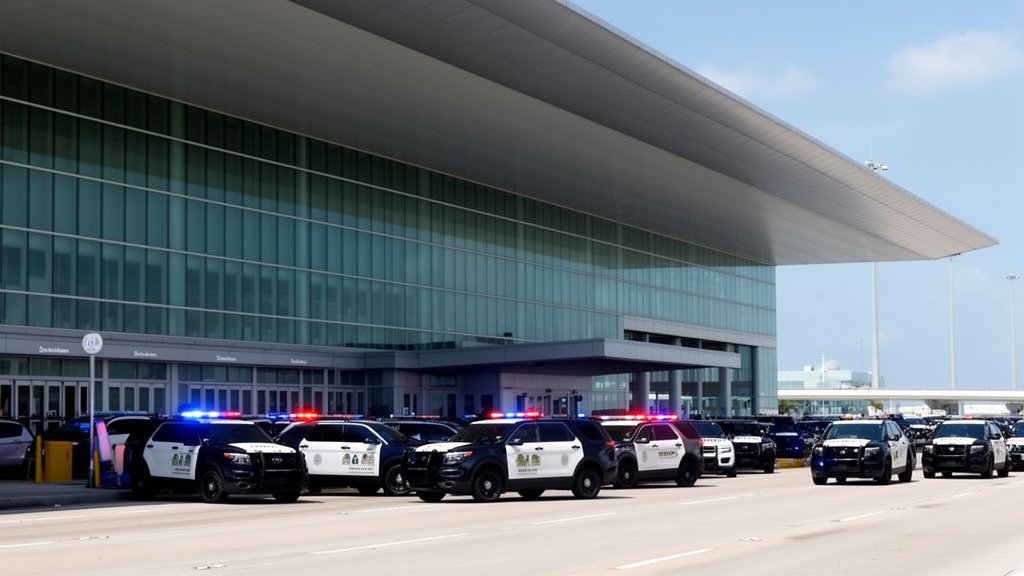
The security incident at Miami International Airport (MIA) unfolded rapidly this morning, necessitating a swift and decisive response from law enforcement officials to secure the facility and ensure the safety of travelers and staff. Reports of shots fired triggered an immediate lockdown protocol, leading to the mobilization of tactical units and a temporary suspension of standard airport operations in the affected sectors. Law enforcement officials have confirmed that the situation has been stabilized and a suspect is currently in custody, though the investigation into the specific circumstances, potential motives, and any resulting casualties remains active and fluid.
The Tactical Security Response
The immediate response to the incident was spearheaded by the Miami-Dade Police Department (MDPD), which maintains a permanent, robust presence at the international travel hub. Upon receiving the initial alerts regarding shots fired, airport security personnel and MDPD officers initiated a lockdown of the terminal area. This procedure is designed to isolate the threat, prevent the movement of potential suspects, and establish a secure perimeter for law enforcement to operate. The coordination between on-site MDPD officers and federal agencies, including the Transportation Security Administration (TSA), was vital in managing the flow of passengers during the lockdown.
Witness accounts from the terminal described a chaotic scene, with travelers seeking shelter as security announcements directed passengers away from the immediate vicinity of the incident. The tactical response focused on rapid containment. Specialized units were deployed to conduct a secondary sweep of the area, ensuring that no further threats existed and that the suspect was isolated from the general public. While the suspect is now in custody, the forensic investigation remains underway. Authorities are meticulously reviewing surveillance footage from the airport’s extensive security network, which is critical for establishing a timeline of events and identifying any potential accomplices or specific precursors to the incident.
Operational Impact and Aviation Logistics
The incident has had a tangible impact on the operational cadence of Miami International Airport. The FAA (Federal Aviation Administration) and airport operations management were forced to implement a temporary ground stop to manage the congestion and ensure no unauthorized access to the security zones occurred during the height of the police response. Such a halt at a major international gateway like MIA creates a cascading effect, causing delays for both departing flights and arriving aircraft that were forced to hold in the air or divert to nearby alternate airfields.
Travelers are advised to check directly with their airline carriers for the most accurate and real-time information regarding flight status, as the ripple effects of the lockdown—including crew displacement and ground equipment delays—can persist long after the physical lockdown has been lifted. The airport administration is prioritizing the gradual return to normal operations, though passengers should anticipate lingering delays throughout the remainder of the business day as security checks and terminal flows are recalibrated.
Evolving Airport Security Paradigms
This incident serves as a stark reminder of the complexities inherent in securing large-scale, high-traffic transportation infrastructure in the modern era. Airports are not only transit points but also critical hubs that require a multi-layered security approach. The integration of advanced surveillance technology, biometric screening, and rapid-response law enforcement teams has become the standard for major international airports like Miami.
However, the human element remains the most unpredictable variable. The ability to detect anomalies—whether through behavioral analysis or heightened vigilance by security personnel—is constantly being evaluated by the Department of Homeland Security and airport authorities. The response to this incident will likely be subject to a comprehensive “After-Action Report.” This internal review will analyze how communication protocols functioned, how effectively the lockdown was communicated to the thousands of people on-site, and where logistical bottlenecks occurred during the evacuation and sheltering phases. Such data is essential for the refinement of emergency preparedness plans, which are regularly tested and updated to mitigate the risk of similar security breaches in the future. The primary objective for airport management in the coming days will be to restore public confidence in the facility’s safety measures while ensuring the investigation provides full transparency regarding the event’s origin.