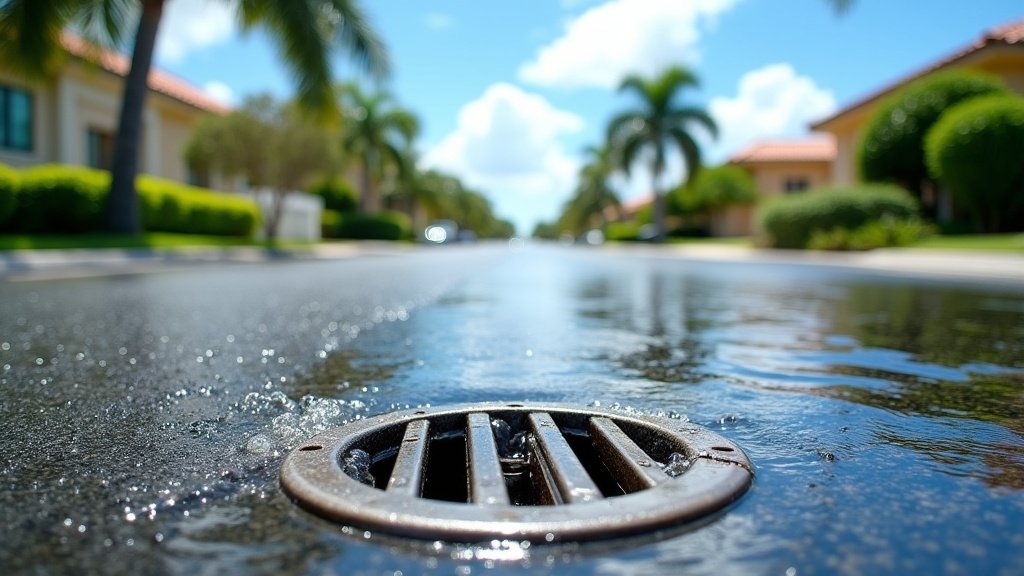
South Florida is currently navigating a period of dangerous, high-magnitude tidal flooding as seasonal “king tides”—the highest tides of the year—continue to surge, inundating low-lying streets and testing the limits of municipal drainage infrastructure. The phenomenon, often occurring in October and November when the gravitational pull of the sun and moon is at its peak, has created widespread “sunny day flooding,” where saltwater spills over seawalls and bubbles up through storm drains even in the absence of rainfall. Local authorities across Miami-Dade, Broward, and Monroe counties are reporting widespread road closures, with officials warning that the inundation will likely persist through the remainder of the tidal cycle, impacting daily life and critical infrastructure.
Key Highlights
- Seasonal Peak: King tides are currently peaking across South Florida, driven by the alignment of the Earth, Moon, and Sun, coupled with rising sea levels.
- Infrastructure Strain: Coastal roadways and localized drainage systems are under significant pressure, with many pumps operating at maximum capacity to manage seawater intrusion.
- Future Warnings: Meteorologists and climate scientists from the National Oceanic and Atmospheric Administration (NOAA) warn that the frequency of these high-tide events is accelerating due to long-term sea-level rise.
- Geographic Scope: The flooding is most acute in low-lying coastal corridors, particularly in parts of Miami Beach, Fort Lauderdale, and the Florida Keys.
The Rising Tide: Understanding South Florida’s Annual Inundation
The current flooding event is not merely a transient weather disturbance; it is a manifestation of the complex interaction between lunar cycles and a changing climate. While king tides are a natural, predictable phenomenon, their impact has been compounded by global sea-level rise, which has elevated the baseline from which these high tides begin. As a result, water levels are reaching higher elevations than recorded in previous decades, turning historically manageable high tides into widespread, disruptive flood events.
The Physics of the Flood
According to data from the National Oceanic and Atmospheric Administration (NOAA), king tides occur during perigee—when the moon is at its closest point to Earth—and during the new or full moon phases. In South Florida, these astronomical forces align specifically during the autumn months. The geological composition of the region adds another layer of complexity. Much of South Florida sits atop porous limestone, meaning that typical concrete seawalls and dikes are often insufficient. Water does not simply crest over the walls; it permeates the ground from beneath, causing “upwelling” through the subterranean drainage network. This makes traditional flood mitigation techniques less effective, as the water bypasses perimeter defenses entirely.
Infrastructure Vulnerabilities and Municipal Response
For local municipalities, this cycle represents a recurring budgetary and operational challenge. In cities like Miami Beach and Fort Lauderdale, extensive pump systems have been installed to force standing water back into the ocean. However, these systems are designed for specific capacities and tidal differentials. When the tide is exceptionally high, the ability of these pumps to discharge water is significantly diminished because the ocean level is higher than the outfall points of the drainage pipes. This forces city officials to manage a delicate balance of emergency response and long-term public works planning, often deploying mobile pumps and closing roads to prevent salt-water damage to vehicles.
The Economic and Real Estate Implications
The economic impact of persistent king tide flooding is shifting the landscape of South Florida real estate. Property values in low-lying zones are increasingly influenced by the “resilience quotient” of the neighborhood. As insurance premiums reflect higher risks associated with coastal flooding, homeowners are facing increased pressure to invest in structural mitigation, such as raising home foundations or installing backflow preventers. The Southeast Florida Regional Climate Change Compact has been instrumental in coordinating a regional response, yet the sheer scale of the coastline means that significant portions of the region’s economy remain exposed to the creeping reality of chronic inundation. Businesses in tourist-heavy districts are forced to contend with reduced foot traffic and the logistical nightmare of salted roadways, adding a micro-economic strain to the broader regional economy.
Future Outlook: Adaptation and Climate Resilience
Looking forward, the Florida Department of Environmental Protection and local planning boards are pivoting from a strategy of “defense” to one of “adaptation.” This includes the implementation of living shorelines—using mangroves and native vegetation to absorb wave energy—and the potential elevation of critical infrastructure, including roads and utility substations. The consensus among climate researchers is that the current model of “managing” the tides will become increasingly untenable without significant structural changes to the region’s topography. The ongoing flooding serves as a tangible, high-visibility reminder of the long-term projections issued by climate agencies: that as global temperatures rise and ice sheets retreat, the baseline sea level will continue to shift upward, turning today’s annual king tide event into tomorrow’s standard high tide.
FAQ: People Also Ask
What exactly causes king tides in South Florida?
King tides are caused by the gravitational pull of the moon and sun on Earth’s oceans. When the moon and sun align (during new and full moons) and the moon is closest to Earth (perigee), the gravitational force is strongest, resulting in higher-than-average high tides.
Why is the flooding worse now than it was 20 years ago?
The primary driver is sea-level rise. As the global average sea level has risen, the starting point for every tide is higher. Consequently, the same astronomical force that produced a minor high tide decades ago now results in a major flood event.
Is the flooding caused by rainfall?
Not primarily. While rainfall can exacerbate the situation by filling up the local drainage basin, king tides cause “sunny day flooding,” where streets flood due to seawater entering the drainage system or overtopping sea walls even during completely dry weather.
What should residents do to prepare for these events?
Residents are advised to avoid driving through flooded streets, as saltwater is highly corrosive to vehicles and can cause mechanical and electrical damage. It is also recommended to check local municipal flood maps, install backflow preventers on drainage pipes, and follow local emergency management guidance regarding road closures.