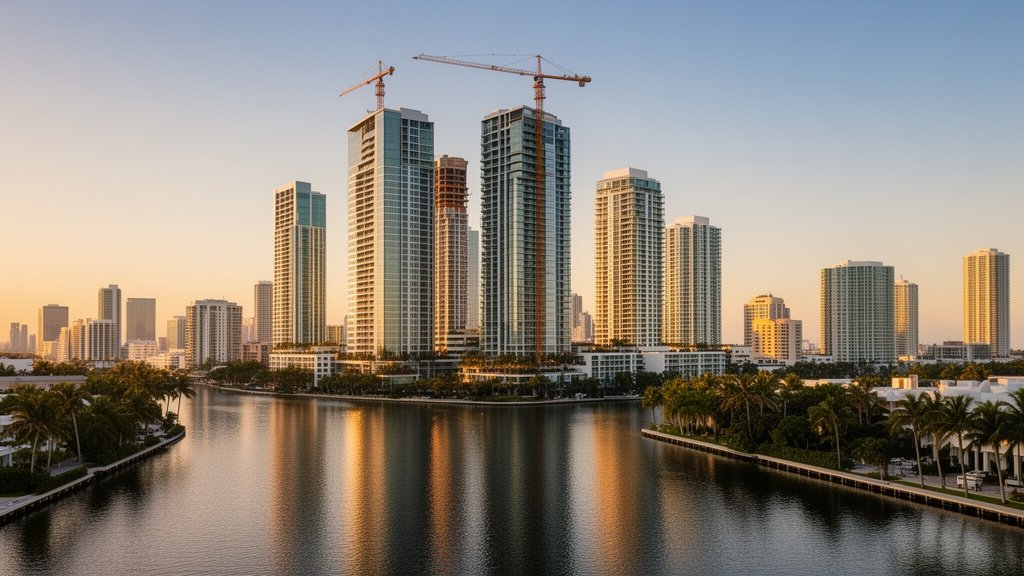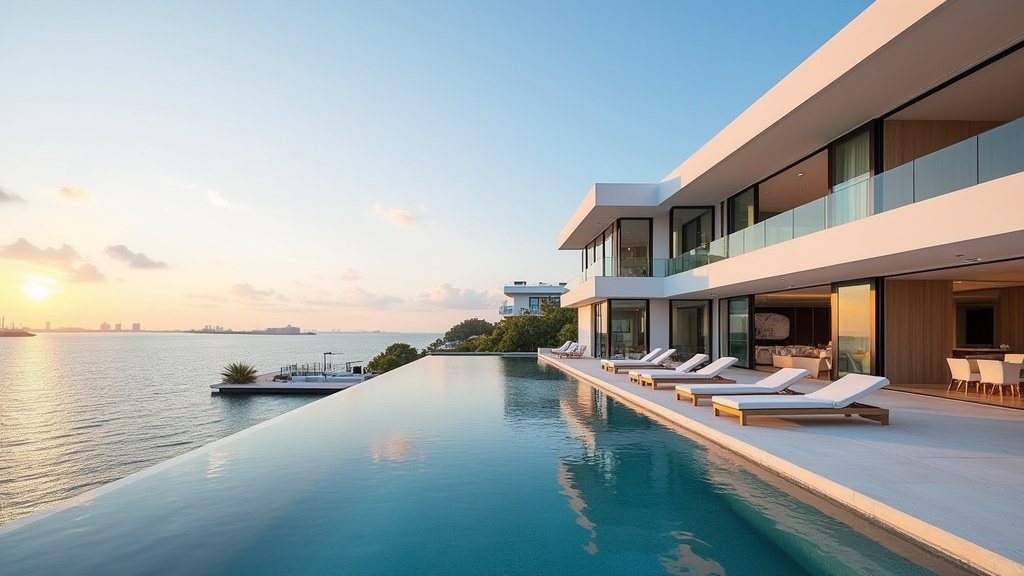
The search for the perfect Miami waterfront estate used to be a matter of preference; today, it is a harsh lesson in market economics. For an entrepreneur arriving in South Florida with a $60 million budget—a figure that would have secured the pinnacle of luxury just a few years ago—the reality check is swift and unforgiving. As the ultra-luxury market continues its rapid ascent, experts are confirming a dramatic shift: $60 million is no longer a competitive entry point for the region’s premier waterfront trophies. With demand for trophy assets far outpacing supply, pricing for top-tier estates is now routinely pushing into the $100 million to $150 million range, redefining what it means to be a player in the South Florida real estate game.
A Six-Year Transformation: 2018 to 2024
To understand the current volatility, one must look at the trajectory of the last six years. Since 2018, South Florida has evolved from a regional luxury market into a global sanctuary for capital. This period witnessed the convergence of several macroeconomic factors: the migration of major financial institutions—spearheaded by entities like Citadel—and a massive influx of Ultra-High-Net-Worth Individuals (UHNWIs) seeking fiscal stability and lifestyle upgrades.
In 2018, a $60 million budget in neighborhoods like Indian Creek or Star Island would have provided a wide array of options. Buyers were in control, and inventory was sufficient to allow for negotiation. Today, that narrative has been inverted. The capital flowing into the region has turned the coastline into a scarce commodity. Buyers are no longer just purchasing a home; they are competing for a limited supply of land that cannot be replicated. Consequently, the value of waterfront property has decoupled from historical norms, inflating rapidly as supply constraints hit a breaking point.
The $100M Benchmark: Decoding the New Pricing Floor
The frustration experienced by buyers holding $60 million is symptomatic of a broader “pricing vacuum.” As entry-level luxury prices rise, they exert upward pressure on the ultra-luxury tier. When the upper middle segment of the market inflates, the absolute top end detaches entirely. Real estate consultants note that for properties offering deep-water access, substantial acreage, and architectural prestige, the asking prices have effectively doubled or tripled in this six-year window.
This shift is not merely speculative; it is grounded in the scarcity of the product. The coastal geography of Miami is fixed, and the existing inventory of large-parcel waterfront homes is essentially static. As more ultra-wealthy individuals relocate, the desire to own these legacy properties creates a bidding environment where $100 million has become the necessary threshold to command attention from sellers. In many cases, homes that were once considered the pinnacle of the market are now being purchased as “tear-downs,” where the value lies exclusively in the land, pushing the actual cost of a move-in-ready estate even higher.
Institutional Capital and the “Citadel Effect”
Much of this change is attributed to the institutionalization of the Miami market. The relocation of corporate giants has brought a permanent workforce of executive-level buyers with liquidity levels that were previously unseen in the area. This has fundamentally altered the demographic of the buyer pool.
Unlike traditional seasonal buyers, these new residents are looking for permanent, generational wealth storage. They aren’t looking to flip; they are looking to hold. This change in investor behavior has locked up prime inventory, further starving the market of available homes and driving prices into the nine-figure territory. For the individual entrepreneur or buyer entering this space, the hurdle is no longer just finding a house; it is finding a seller willing to part with an asset that serves as an appreciating financial instrument.
The Future of Waterfront Scarcity
Looking ahead, the outlook for those waiting for prices to soften is bleak. The underlying drivers—favorable tax policies, infrastructure improvements, and the continued migration of wealth—remain intact. As South Florida matures into a financial capital, the value proposition of these waterfront properties is increasingly aligned with markets like the Hamptons or the French Riviera, where nine-figure price tags are standard.
For the $60 million buyer, the advice from the brokerage community is clear: adjust the geographic scope or adjust the budget. The era of the $60 million premium waterfront trophy has passed, replaced by an era where $100 million is the new starting line, and the sky is increasingly the limit.