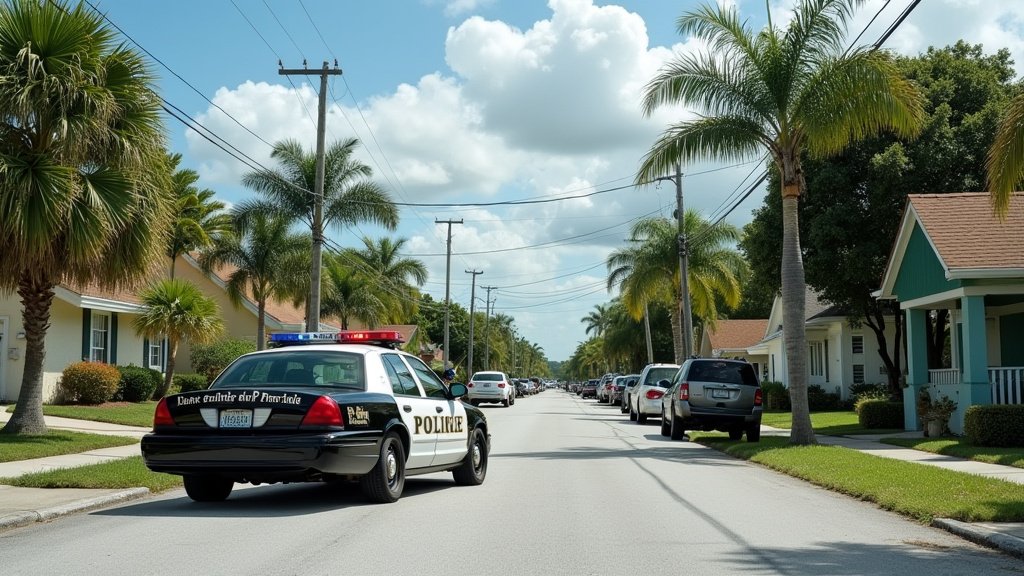
A domestic situation in southwest Miami-Dade has ended in tragedy, with one man confirmed dead and a woman hospitalized after an attempted murder-suicide. The incident, which unfolded within a quiet residential neighborhood, has once again brought the critical issue of domestic violence to the forefront of community concerns in South Florida. Local law enforcement officials from the Miami-Dade Police Department (MDPD) are continuing to piece together the events that led to the violence, as the community grapples with the aftermath of this devastating loss.
Key Highlights
- Incident Outcome: One adult male was pronounced dead at the scene, while an adult female victim remains hospitalized with injuries sustained during the incident.
- Location: The tragedy occurred inside a private residence in the southwest region of Miami-Dade County.
- Law Enforcement Response: The Miami-Dade Police Department (MDPD) secured the scene immediately, launching a thorough investigation into the circumstances of the murder-suicide attempt.
- Public Safety: Authorities have indicated that there is no ongoing threat to the surrounding neighborhood, characterizing the incident as an isolated domestic tragedy.
Unveiling the Investigation and Domestic Tragedy
The investigation into this attempted murder-suicide began when local patrol units were dispatched to the residence following reports of a domestic disturbance. Upon arrival, responding officers encountered a scene that highlights the unpredictable and lethal nature of domestic violence. While specific details regarding the identities of those involved are currently being withheld pending notification of next of kin, the presence of the MDPD Homicide Bureau signals the gravity and the methodical nature of the ongoing inquiry.
The Anatomy of an Investigation
When a tragic event of this magnitude occurs, the primary role of the MDPD is to secure the site to preserve forensic evidence. This involves a coordinated effort between first responders, who initially prioritize life-saving measures for the surviving victim, and the specialized units that arrive later to conduct a deep forensic analysis. Every piece of evidence—from physical items found within the home to digital footprints and witness statements—is essential to reconstructing the timeline of events. For investigators, the core question is not only what happened, but the complex series of behavioral interactions that led to the escalation from a domestic dispute to a fatal confrontation.
Understanding Domestic Violence in South Florida
This incident is not an anomaly in the broader context of domestic statistics in Florida. Domestic violence remains a persistent challenge for law enforcement and social service agencies across the state. Often, these events occur behind closed doors, hidden from public view until they reach a breaking point. Experts in the field of crisis intervention note that the transition from verbal or physical abuse to lethal violence is often sudden but rooted in a long history of escalating control and tension. The tragedy in southwest Miami-Dade serves as a grim reminder that no neighborhood is immune to the societal plague of domestic abuse.
Community Impact and Resilience
For residents in the immediate vicinity, the sight of emergency vehicles and police tape creates a sense of unease. Such incidents ripple through the community, forcing residents to confront the reality that private violence often spills into public knowledge with devastating consequences. The collective response often focuses on grieving the loss of life and advocating for resources to prevent similar occurrences in the future. Local community centers and non-profit organizations in Miami-Dade often see a surge in inquiries following high-profile incidents, as the public becomes more sensitized to the warning signs of abusive relationships.
The Role of Crisis Intervention and Prevention
Prevention remains the most effective tool in the fight against domestic violence. Programs such as the National Domestic Violence Hotline, as well as local initiatives in Miami-Dade, are designed to offer victims an escape route before a situation escalates to a lethal level. These organizations provide confidential support, legal assistance, and safe housing options. The tragedy of this murder-suicide underscores the vital need for early detection—identifying the “red flags” such as isolation, possessiveness, and the sudden escalation of aggression is a societal imperative.
Legal and Forensic Implications
While the primary perpetrator is deceased, the investigation continues for the sake of justice and closure for the families involved. The medical examiner’s office will play a pivotal role, providing the necessary data to clarify the cause of death and the sequence of injuries. Furthermore, the surviving victim’s eventual statement, when she is medically able, will be critical. This legal process is slow and meticulous, designed to ensure that every facet of the incident is documented according to the highest standards of the justice system.
FAQ: People Also Ask
1. What are the signs of a domestic situation escalating to violence?
Common warning signs include extreme jealousy, possessiveness, verbal abuse, controlling behaviors, and the victim becoming increasingly isolated from friends and family. Any sudden change in a partner’s aggression level is a significant red flag.
2. Who can I contact if I am a victim of domestic violence in Miami-Dade?
If you are in immediate danger, call 911. For support and resources, you can reach out to the National Domestic Violence Hotline (1-800-799-SAFE) or local Miami-Dade organizations that provide shelters and counseling services to those in crisis.
3. Will the names of the individuals involved be released?
Generally, law enforcement agencies withhold the names of victims and suspects until the next of kin have been properly notified. Once this process is complete, names are often released through official police reports or media briefings, unless protected by specific statutes like Marsy’s Law in Florida, which allows victims to request privacy.
4. Is there any danger to the neighborhood following this incident?
Law enforcement authorities have explicitly stated that this was an isolated domestic incident. There is no indication of an ongoing threat to the general public or neighbors in the area of the incident.