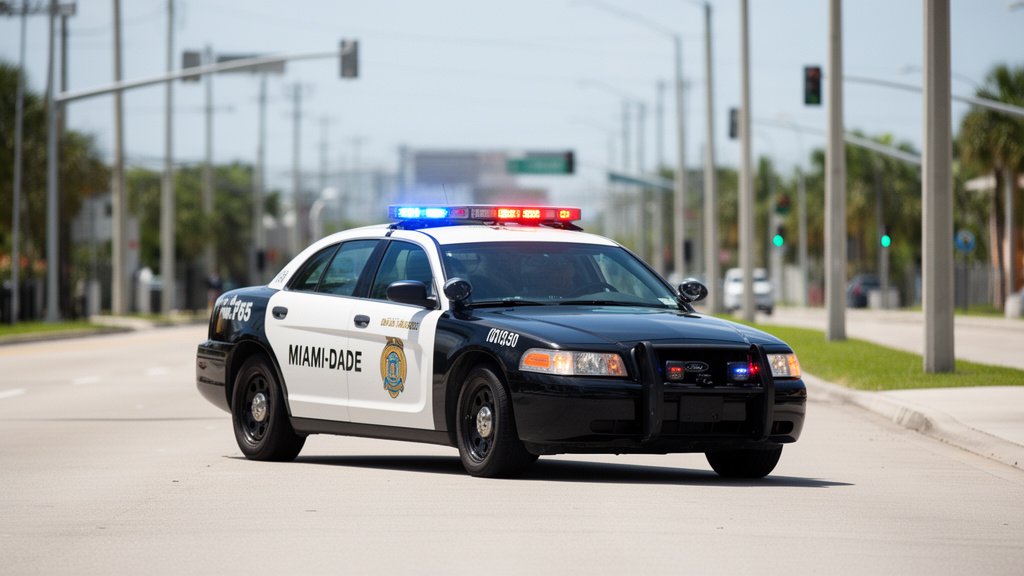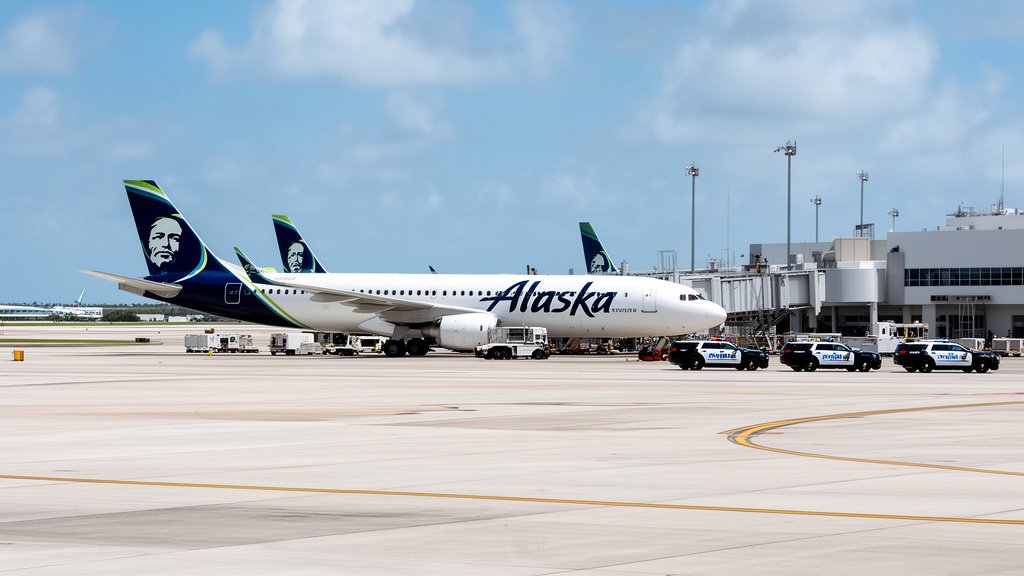
A tense security incident unfolded at Miami International Airport (MIA) as an Alaska Airlines flight was forced to implement immediate emergency protocols, including a full cockpit lockdown, following reports of a passenger issuing threats. The disruption, which caused significant delays for passengers and ground crews alike, highlights the ongoing, volatile challenge of maintaining cabin security in an era of heightened aviation sensitivity.
Key Highlights
- Incident Location: Miami International Airport (MIA).
- Primary Incident: An Alaska Airlines flight was forced to initiate emergency protocols due to a passenger allegedly making verbal threats.
- Security Response: Flight crew immediately enacted a cockpit lockdown, isolating the flight deck to prevent unauthorized access, consistent with post-9/11 aviation safety standards.
- Operational Impact: The flight experienced significant departure delays as law enforcement and ground security teams were summoned to evaluate the threat level.
- Protocol Integrity: The quick decision-making by the flight crew prioritized the safety of passengers and the integrity of the flight deck, demonstrating the effectiveness of current aviation security training.
The Anatomy of an Aviation Security Breach
The incident at Miami International Airport serves as a stark reminder of the fragile balance between passenger convenience and absolute flight security. When an Alaska Airlines flight crew received notice of a potential threat from a passenger on board, they were not merely dealing with an unruly traveler; they were managing a potential security breach that required immediate, decisive action. The decision to lock down the cockpit is not one made lightly. Under strict Federal Aviation Administration (FAA) and Transportation Security Administration (TSA) guidelines, the flight deck door is a hardened, reinforced barrier designed to withstand significant force. Once that door is sealed, it remains closed and monitored, effectively isolating the pilots from the cabin environment until the aircraft is safely on the ground and security personnel have secured the situation.
The Protocols of Isolation
When crew members determine that a passenger’s behavior constitutes a ‘threat’—a term with specific legal and operational definitions—they trigger a chain reaction of safety protocols. In this instance at MIA, the primary goal was to neutralize the risk to the aircraft’s operation. By locking the cockpit, the crew ensures that, regardless of the situation occurring in the cabin, the command center of the aircraft remains under the exclusive control of the pilots. This protocol is the final line of defense against interference. It renders the ‘threat’ contained, allowing the crew to focus on coordinating with ground control, law enforcement, and airline operations centers without the distraction or danger of a compromised flight deck.
Legal and Federal Consequences
The legal ramifications for passengers involved in such incidents are severe. Following the event at Miami International Airport, the individual in question is likely facing investigations by the Federal Bureau of Investigation (FBI) and local law enforcement. Under federal law, interfering with a flight crew is a serious felony. The ‘zero-tolerance’ policies adopted by major carriers like Alaska Airlines, in conjunction with FAA enforcement, mean that the days of simple deplaning as a resolution to unruly behavior are over. Perpetrators now frequently face hefty federal fines, bans from future air travel on the airline, and potential incarceration. The incident at MIA adds to a growing database of disruptive events that industry analysts suggest is straining the resources of both airport security and airline operational teams.
The Operational Toll on Airlines
While the safety of the aircraft is the priority, the operational cost of such an event is substantial. A flight delay at a major hub like Miami International Airport creates a ripple effect. Passengers are displaced, connections are missed, and the airline must re-crew and re-schedule, often incurring massive logistical costs. For the airline, this means an immediate degradation of the day’s scheduled performance metrics. However, in the current regulatory climate, these costs are considered necessary to uphold the uncompromising standard of safety. The airline’s commitment to security—even at the expense of time and revenue—is a selling point for passengers who increasingly prioritize safety in their travel decisions.
Future-Proofing the Skies
As the industry looks forward, the incident at MIA prompts a broader discussion on the efficacy of current in-flight surveillance and the potential for new technologies to mitigate these threats before they escalate. From improved real-time communication between the cabin and cockpit to the potential implementation of advanced behavioral monitoring, airlines are under pressure to adapt. The goal is to identify and de-escalate these situations before they reach the critical threshold of a cockpit lockdown. Until such technology is mature, the industry remains reliant on the professional judgment of flight crews and their rigorous adherence to established safety drills. The Alaska Airlines incident proves that, while disruptive, these safety layers remain the most effective tool in the industry’s arsenal against in-flight threats.
FAQ: People Also Ask
What happens when a cockpit is locked down?
When a flight crew initiates a cockpit lockdown, the flight deck door is secured and reinforced. Pilots are instructed to remain inside the cockpit, even in the event of an emergency in the cabin, to ensure control of the aircraft is never compromised. All communication is routed through digital systems and air traffic control.
Can unruly passengers be prosecuted federally?
Yes. Under federal law, interfering with flight crew members or flight attendants is a serious crime. Depending on the severity of the threats and the disruption caused, passengers can face significant fines from the FAA and criminal charges that carry the potential for prison time.
How does this impact flight schedules?
Lockdowns and related security incidents result in significant flight delays or cancellations. The aircraft involved must be cleared by security, and often the entire cabin must be re-screened. Furthermore, the flight crew may be pulled for questioning, requiring the airline to secure replacement staff to continue the flight operation.