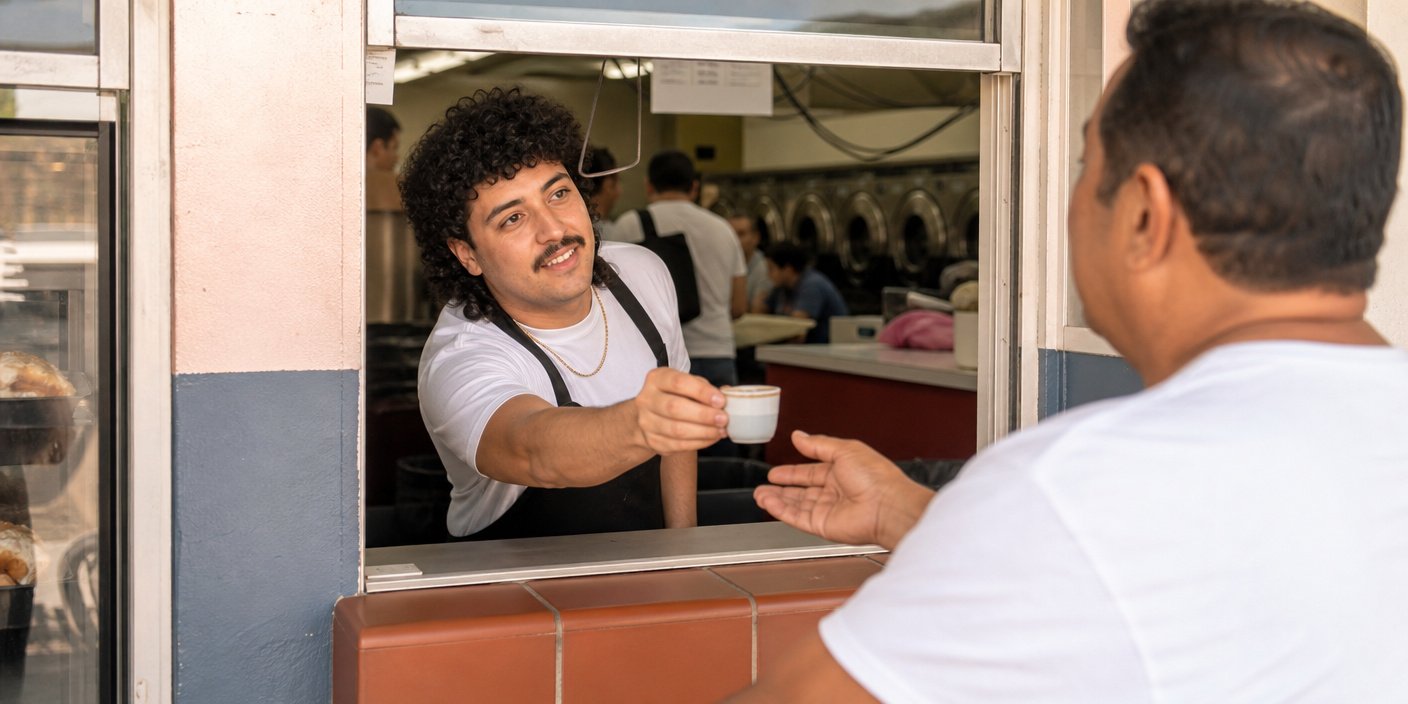
The intersection of global spectacle and neighborhood tradition is rarely as tangible as it is at Mary’s Cafe & Coin Laundry. When comedian Marcello Hernández, a fixture of the Miami cultural scene, utilized the establishment’s iconic ‘ventanita’—the walk-up service window that has defined the city’s coffee culture for decades—to serve local delicacies during the 2026 FIFA World Cup, he did more than just capture the internet’s attention. He transformed a nearly forty-year-old local hub into an accidental epicenter of global sporting fandom, illustrating a profound shift in how modern consumers engage with community landmarks.
Key Highlights
- Legacy of Resilience: Mary’s Cafe & Coin Laundry has operated as a cornerstone of the Miami community for nearly 40 years, surviving the rapid gentrification that has displaced many similar small businesses.
- The Hernández Effect: Comedian Marcello Hernández’s decision to leverage the venue during the 2026 World Cup brought mainstream, global media attention to a space previously known only to locals.
- Cultural Preservation: The viral moment sparked a larger conversation about the role of ‘ventanitas’ as vital third spaces in urban planning and social cohesion.
- Economic Impact: The viral exposure has led to a documented surge in foot traffic, translating to increased revenue for the family-owned business, demonstrating the power of ‘hyper-local’ influencers.
The Cultural Alchemy of Miami’s Ventanita
The ‘ventanita’ is not merely a service window; in Miami, it is an institution. It is a portal through which the frenetic, tropical energy of the city is distilled into a shot of espresso—or a cafecito—and a pastelito. When Marcello Hernández decided to operate out of Mary’s Cafe & Coin Laundry during the height of the 2026 World Cup, he was tapping into a pre-existing rhythm. For nearly forty years, Mary’s has served as a sanctuary for the neighborhood, a place where the laundry spin cycle hums in the background of political debates and casual gossip.
By occupying this space, Hernández bridged the gap between the hyper-local authenticity of the ‘ventanita’ and the global digital audience watching the World Cup. This wasn’t a corporate activation or a paid sponsorship; it was a testament to the fact that cultural relevance in the digital age is often found in the most unpretentious, authentic corners of our cities. The juxtaposition of a global sporting event with the intimate, fluorescent-lit reality of a coin laundry created a spectacle that social media users found immediately captivating.
The Anatomy of the Viral Moment
What makes the Mary’s Cafe story particularly compelling is the authenticity factor. In an era where ‘vibes’ are often manufactured, the chaotic, real-world utility of a coin laundry combined with the refined, rapid-fire humor of a comedian created a ‘perfect storm’ for engagement. For the 2026 World Cup, Miami was not just a host city; it became a stage. Hernández utilized the platform to serve local snacks, turning the waiting area of a coin laundry into a makeshift hospitality lounge.
This movement highlights a growing trend in social media consumption: users are increasingly drawn to ‘grounded’ viral content. They are tired of the polished, over-produced aesthetics of influencers and are instead seeking the genuine, gritty, and historically rich environments of heritage businesses. The viral nature of this event served as a digital spotlight on the necessity of preserving these types of institutions, which are increasingly threatened by rising commercial rents.
Sustaining the Legacy in a Changing City
For nearly four decades, Mary’s Cafe & Coin Laundry has stood as a guardian of the neighborhood’s identity. The viral fame, while beneficial for immediate revenue and brand awareness, raises a significant question for Miami’s urban planners and business owners: how can these spaces survive the transition from ‘hidden gem’ to ‘tourist destination’ without losing the very charm that made them successful in the first place?
The economic surge provided by the World Cup influx and the subsequent viral coverage has given Mary’s a buffer, but the long-term challenge remains. Maintaining the integrity of a 40-year-old business model while navigating the pressures of global attention requires a delicate balance. It requires the owner to protect the ‘local’ feel while accommodating the new demand. The success of this endeavor suggests that there is a hunger for ‘third places’—spaces that are neither work nor home, where the community can gather, communicate, and exist without the expectation of high-end consumerism.
The Future of Community Hubs
This phenomenon invites us to reconsider the value of the ‘ventanita’ beyond the coffee. It acts as a node in a social network, connecting residents across generations. As Miami continues to evolve, the challenge will be to integrate these legacy businesses into the city’s future rather than allowing them to be paved over by development. The success at Mary’s serves as a blueprint for how cultural heritage can be monetized through respect and inclusion rather than exploitation. As the excitement of the World Cup fades, the legacy of Mary’s, and the thousands of businesses like it, will depend on our collective decision to continue showing up—not just for the viral moment, but for the daily maintenance of our community culture.
FAQ: People Also Ask
Q: What exactly is a ‘ventanita’ in Miami culture?
A: A ‘ventanita’ is a small service window cut into the facade of a business, typically a cafe or bakery. It allows customers to order and receive coffee, pastries, and snacks from the sidewalk without entering the establishment, serving as a critical social hub for neighborhoods.
Q: How did the 2026 World Cup influence the popularity of Mary’s Cafe?
A: During the 2026 World Cup, the global influx of visitors and media naturally sought out authentic, local experiences. Marcello Hernández’s engagement with the cafe crystallized this, using the venue as a home base, which funneled massive digital and physical traffic to a previously quiet local institution.
Q: Is Mary’s Cafe & Coin Laundry still operating as a regular business?
A: Yes, the business continues to operate its dual model of laundry and cafe services, maintaining its core identity as a neighborhood staple while managing increased interest from visitors.
Q: Why is this considered an ‘E-E-A-T’ success story?
A: This story demonstrates ‘Experience’ (the physical, long-term presence of the cafe), ‘Expertise’ (the cultural knowledge of the host), ‘Authoritativeness’ (the community backing), and ‘Trustworthiness’ (the genuine, non-corporate nature of the event).