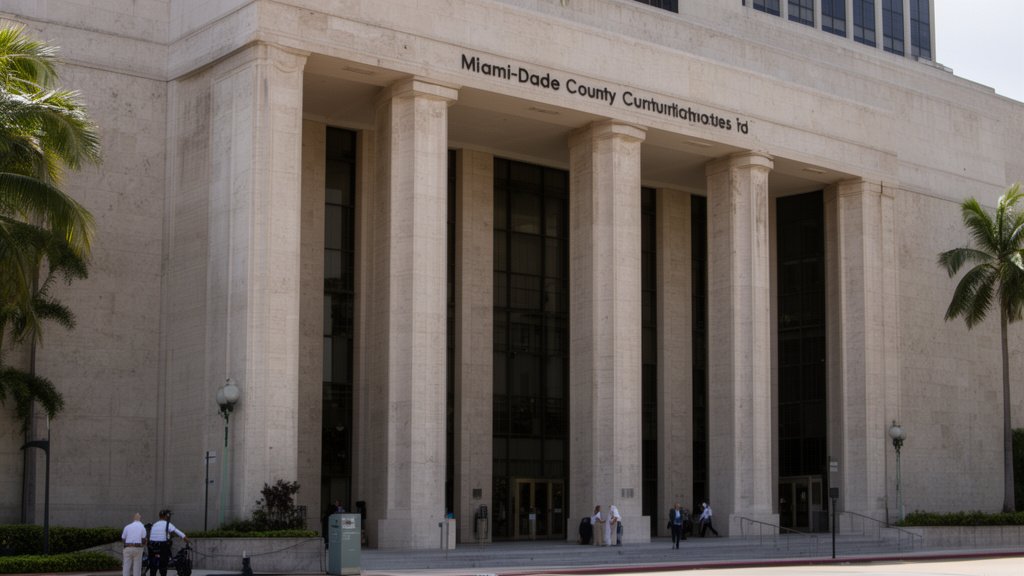
In a startling display of civic confusion, a $4 billion dispute has erupted regarding the true scale of Miami-Dade County’s spending. The controversy, which came to a head during a recent Intergovernmental and Economic Committee meeting, has left taxpayers and even some commissioners questioning the transparency of local government finance. When Auditor Yinka Majekodunm presented a new spending dashboard to the committee, he cited a county expense level of approximately $17 billion. Conversely, the administration’s Chief Administrative Officer, Carladenise Edwards, maintained the budget is $13.2 billion. This nearly $4 billion delta has become the focal point of a heated debate over how government money is accounted for, who gets to define the budget, and whether the public is receiving an accurate picture of county fiscal health.
Key Highlights
- The $4 Billion Gap: A significant disagreement between the county auditor ($17 billion) and the administration ($13.2 billion) over total annual spending.
- Dashboard Revelation: The conflict arose from a newly created spending dashboard designed to track real-time department transactions.
- Defining Expenditures: Administration officials argue the auditor’s figure includes inter-agency transfers, which they claim leads to “double counting,” while the auditor insists the dashboard captures the raw total of all department expenses.
- Call for Transparency: Commissioners are demanding a clear, unified view of the county’s finances, sparking discussions about modernizing budget reporting.
- No Malice Detected: Despite the friction, officials have emphasized that there is no indication of “nefarious” activity, framing the issue as a conflict over reporting methodologies rather than misuse of funds.
The Anatomy of a Budgetary Black Hole
The fundamental conflict centers on a lack of standardization in how municipal governments report their financial activity. In the case of Miami-Dade County, the disparity is not necessarily about missing money, but about the philosophical approach to accounting. The administration’s $13.2 billion figure represents what they describe as “annual individual operating expenditures.” According to Chief Administrative Officer Carladenise Edwards, this method intentionally excludes inter-agency revenues and specific non-operating expenditures. The goal, according to the administration, is to avoid the distortion of the budget through “double counting,” a common practice in complex government accounting where funds passed from one department to another could be tallied twice.
However, the auditor’s office, led by Yinka Majekodunm, argues that their newly developed spending dashboard provides a more granular, bottom-up view. By pulling every single transaction as it occurs, the auditor arrived at the $17 billion figure. This divergence highlights a classic tension in public administration: the difference between a “budgetary projection” (what the government intends to spend) and a “transactional reality” (what is actually flowing through the accounts). For taxpayers, the discrepancy creates a perception problem. When the government reports one number and a seemingly authoritative auditor produces another that is 30% larger, public trust begins to erode.
The Rise of the Dashboard Era
This dispute underscores a broader trend in municipal governance: the push for “open data” and real-time dashboarding. As local governments increasingly adopt tech-driven solutions to improve transparency, they are accidentally uncovering the messy, non-standardized nature of their own legacy accounting systems. When internal records, siloed by department or legacy software, are aggregated into a single, public-facing view, inconsistencies that were previously buried in spreadsheets suddenly become visible. The Miami-Dade incident is a case study in why technical upgrades often force political reckoning. The dashboard was intended to be a tool for efficiency, but it has become a catalyst for a structural review of how the county defines its own fiscal footprint.
Transparency as a Political Utility
Commissioner Danielle Cohen Higgins, who sparked the debate by asking about the true scope of the budget, represents a growing faction of local representatives who are no longer satisfied with high-level summaries. The political pressure here is significant. If commissioners are expected to vote on budgets, they need to know if the authorization they provide covers the entirety of the county’s activity or just a fraction of it. The administration’s firm stance—that data should not be made public until it is “vetted appropriately by the departments, by the clerk and by the comptroller”—clashes with the modern expectation of real-time data availability. This suggests a lingering cultural divide in local government between the traditional gatekeepers of information and a new generation of leaders who prioritize immediate access.
The Future of Fiscal Reporting
What happens when the budget doesn’t match the dashboard? This is the core question for Miami-Dade. To resolve the $4 billion discrepancy, the county will likely need to adopt a hybrid reporting model that reconciles these two disparate approaches. There is a clear need for a “common language” in government accounting where “total spending” is defined in a way that is verifiable by both the executive and the legislative branches. Failure to bridge this gap will result in continued confusion and, potentially, further scrutiny from third-party watchdogs and the public. As counties across the nation digitize their finance departments, they would do well to observe the Miami-Dade experience as a warning: transparency is not just about showing the numbers; it is about agreeing on what the numbers represent before they are published.
FAQ: People Also Ask
1. Is the $4 billion discrepancy a sign of fraud?
No. Both the auditor and the commissioners involved in the discussions have explicitly stated that they do not believe there is anything “nefarious” happening. The issue is technical and methodological, regarding how money flows between agencies are tracked.
2. Why do the two reports differ by so much?
They use different calculation methods. The administration excludes certain inter-agency transfers to avoid “double counting” and inflation of the budget, arriving at $13.2 billion. The auditor’s dashboard captures all raw transactional data, leading to a total of $17 billion.
3. Will the public get access to the dashboard?
Currently, the administration is pushing back against making the dashboard public before it is fully vetted. There is ongoing debate among commissioners about whether to force transparency or wait for the internal reconciliation process to complete.
4. What is the impact of this dispute on taxpayers?
While it does not necessarily imply a tax hike or a budget cut, it highlights a lack of clarity in how public money is tracked. For the taxpayer, the main concern is accountability—ensuring that the government knows exactly how much it is spending at any given time.