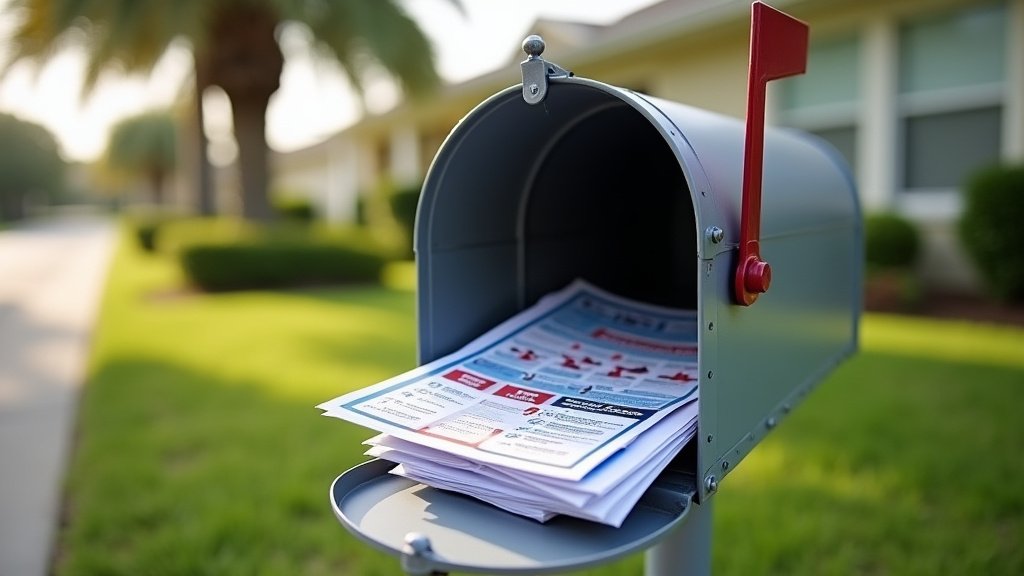
The Miami-Dade Democratic Party has issued an urgent warning to local voters regarding the influx of misleading campaign literature currently circulating throughout the county. These materials, often referred to as ‘slate cards’ or ‘voter guides,’ are being disseminated in the lead-up to the August 18 Primary, utilizing design elements that intentionally mimic official party documentation. The party has explicitly stated that these mailers are unauthorized and serve to deceptively imply party support for candidates who have not received official endorsements, creating confusion among the electorate during a critical phase of the election cycle.
- The Miami-Dade Democratic Party (MCDP) has officially condemned the use of deceptive campaign literature.
- The mailers utilize branding, logos, and layouts designed to trick voters into believing the party has endorsed specific non-affiliated or unvetted candidates.
- Voters are urged to cross-reference all mailers with the official MCDP endorsement list prior to casting their ballots.
- The August 18 Primary represents a crucial juncture for local voters to determine party nominees, making the integrity of information vital.
Unmasking the Mechanics of Election Deception
The phenomenon of the ‘slate card’ is not entirely new to Florida politics, but the sophistication of these recent mailers has alarmed election monitors and party officials. By leveraging specific color schemes, typography, and professional design aesthetics that mirror the official party identity, bad actors are effectively weaponizing voter confusion. This strategy targets low-information voters who rely on party-endorsed lists to navigate the dense, often overwhelming ballot options in local primary elections.
The Anatomy of a Misleading Mailer
Modern slate cards are designed to bypass critical thinking through psychological framing. By placing the names of candidates who have secured official endorsements alongside ‘filler’ candidates who have paid to be featured on the slate, these mailers manipulate the perceived authority of the party. The Miami-Dade Democratic Party’s warning highlights that these materials often use language like ‘Recommended’ or ‘Approved’ in ways that mimic legitimate election board communications, even though these recommendations lack any formal party vetting process. This creates a false sense of legitimacy, causing voters to cast ballots based on a fabricated consensus rather than individual candidate merit.
The Impact on the August 18 Primary Landscape
With the August 18 primary approaching, the potential for these mailers to sway outcomes is significant. Local primary elections often suffer from lower turnout, meaning that even a small percentage of voters influenced by a deceptive flyer can disproportionately affect the final tally. The MCDP has emphasized that these mailers often benefit candidates who are not aligned with the Democratic platform, essentially ‘hijacking’ the party’s hard-earned brand equity to boost candidates who would otherwise lack public support. This not only threatens the integrity of the specific race but undermines the foundational trust voters have in party-led candidate outreach.
Regulatory Challenges in Florida Election Law
One of the most frustrating aspects of this issue for the Miami-Dade Democratic Party is the difficulty in regulating these mailers under existing campaign finance and election laws. Because these flyers are typically funded by independent Political Action Committees (PACs) or political committees, they often operate in a gray area. They are classified as political speech, which enjoys broad constitutional protections. As long as they do not explicitly violate strict defamation or fraud statutes, they are frequently shielded from immediate legal intervention by the Florida Division of Elections. This necessitates a proactive approach where the burden of verification is placed on the voter rather than the regulator.
Protecting Your Vote: A Strategic Guide
In an era of targeted political misinformation, the responsibility falls on the voter to practice ‘digital and physical hygiene’ regarding election information. To ensure that your vote reflects your actual values and supports the intended candidate, follow these three steps: First, always verify endorsement lists directly on the official Miami-Dade Democratic Party website. Second, ignore any mailer that does not contain a clear, mandated ‘Paid for by’ disclaimer that you can trace back to a verifiable source. Third, if you receive a suspicious mailer, report it to the county election office or the party itself. Recognizing that these mailers are a manufactured tool of influence—rather than a reflection of democratic consensus—is the most effective defense against electoral manipulation.
FAQ: People Also Ask
Are these ‘slate card’ mailers illegal?
Generally, these mailers are protected under freedom of speech and political expression laws in Florida. While they may be intentionally misleading, they are rarely illegal unless they violate specific campaign finance disclosure laws or contain provably defamatory, libelous information about a candidate.
How can I tell if a mailer is legitimate?
Legitimate mailers from a party or candidate will always include a clear disclaimer stating exactly who paid for the advertisement. Furthermore, an official party endorsement will always be reflected on the party’s verified website. If a mailer claims to be from the ‘Democratic Party’ but the candidates listed do not match the party’s official, published list, you should treat the mailer as deceptive.
What should I do if I’ve already voted based on a misleading mailer?
If you have already cast your ballot, you cannot change your vote. However, you can help by alerting others in your community. Report the deceptive mailer to the Miami-Dade Democratic Party, which is tracking these incidents, and encourage friends and family to check official sources before visiting the polls or mailing their ballots.
Why are these mailers so effective?
They exploit voter cognitive biases. When a voter is overwhelmed by a long list of candidates—many of whom they do not recognize—they seek shortcuts (heuristics) to make a decision. The slate card acts as a ‘cheat sheet’ that looks official, providing a low-effort way to complete the ballot, which is exactly why they are so dangerous to the democratic process.