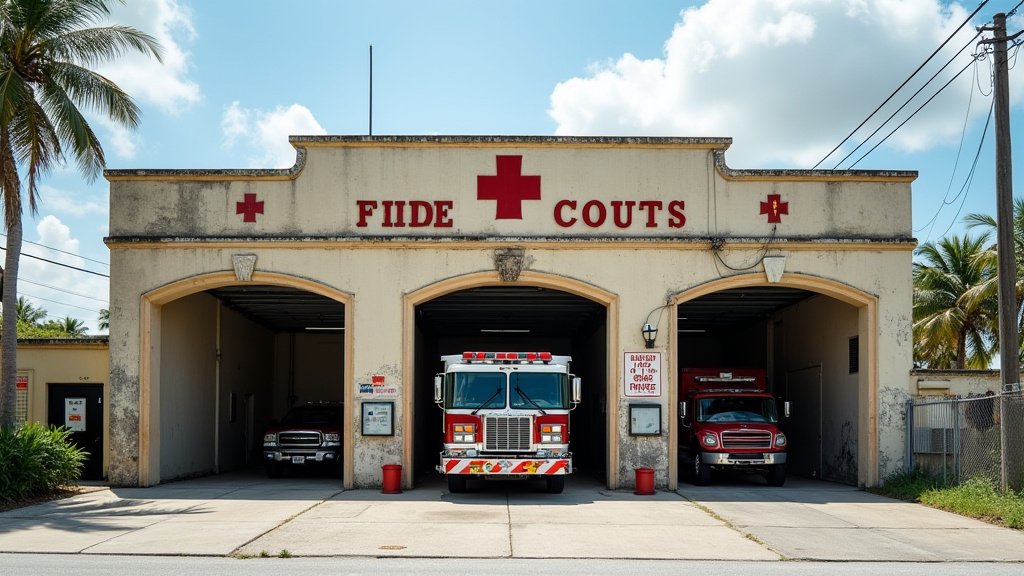
The City of Miami is facing a critical juncture in its public safety infrastructure, as officials weigh an immediate $10.2 million stopgap budget allocation aimed at addressing the most urgent repairs across 12 fire-rescue facilities. This financial maneuver, while significant, is widely viewed by city administrators as a necessary band-aid to ensure operational readiness while the city pivots toward a much larger, more transformative $450 million public safety bond referendum slated for the November ballot. The intersection of these two funding initiatives highlights the mounting pressure on Miami’s aging municipal assets and the complex fiscal balancing act required to maintain public service standards in a rapidly growing metropolitan environment.
The Crumbling Reality of Fire-Rescue Facilities
For years, Miami’s fire-rescue infrastructure has been subjected to the relentless wear and tear of Florida’s harsh coastal climate, compounded by years of deferred maintenance. The 12 facilities earmarked for the $10.2 million allocation are reportedly suffering from structural, electrical, and HVAC-related deficiencies that, if left unaddressed, could compromise the efficiency of the Miami Fire-Rescue Department. The decision to allocate this stopgap funding is rooted in a risk-management strategy: city officials are prioritizing life-safety systems and operational functionality to prevent critical failures that could lead to delayed response times or the temporary closure of stations.
These facilities are not just administrative buildings; they are 24/7 hubs of high-stress activity. HVAC failures in a tropical climate present immediate challenges for the wellbeing of first responders who must maintain peak physical condition. Similarly, electrical issues and structural aging in older stations pose potential hazards for the housing of heavy-duty emergency vehicles. By authorizing this funding now, the city is effectively trying to stabilize the status quo before the broader, more controversial, and far more ambitious bond referendum takes center stage.
Decoding the $10.2 Million Stopgap
Critics of municipal budget management often point to the inefficiency of stopgap funding, arguing that it represents a higher long-term cost compared to comprehensive infrastructure overhauls. However, in the context of Miami’s current fiscal reality, the $10.2 million injection serves as an essential bridge. The allocation is designed to handle “immediate, critical-path repairs”—a designation that specifically covers issues that could force a facility to cease operations if not mitigated within the fiscal quarter.
This capital infusion is expected to cover roof replacements, critical plumbing upgrades, and electrical grid hardening. While this does not modernize the fleet or expand station capacity, it performs the vital task of preventing the degradation of service. It represents a pivot from reactive maintenance to managed stewardship, at least until the voters have their say in November. The city is betting that by demonstrating a commitment to fixing existing assets, they can build the necessary voter trust to support the much larger investment proposal.
The $450 Million Referendum: Betting on the Future
The true centerpiece of Miami’s infrastructure strategy is the $450 million public safety bond referendum. This ballot measure is intended to be the definitive solution to the city’s long-term infrastructure debt. Unlike the $10.2 million allocation, which is pulled from immediate city reserves or adjusted operating budgets, the bond would leverage long-term debt financing to fund a massive overhaul of police stations, fire-rescue facilities, and emergency command centers.
This referendum poses a significant political and economic challenge. With rising living costs and inflationary pressures affecting the Miami electorate, asking for a substantial bond approval requires a strong, data-backed narrative. The city must successfully communicate that the $450 million is not merely about new construction, but about modernizing the backbone of the city’s emergency response. The narrative hinges on the idea that the current state of infrastructure is a liability that the city can no longer afford to carry. The outcome of this vote will likely define the mayor’s administration and the physical look of Miami’s public safety operations for the next two decades.
Secondary Angles: The Complexity of Municipal Infrastructure
To understand the full scope of this issue, one must look at three secondary, yet crucial, aspects:
1. The Psychology of Deferred Maintenance: In municipal governance, infrastructure often suffers from the ‘out of sight, out of mind’ phenomenon until a failure occurs. The push for the $10.2 million stopgap indicates a cultural shift within the City Commission toward proactive asset management, likely spurred by an recent internal audit that flagged the degradation of these specific 12 stations.
2. Fiscal Impact and Taxpayer Trust: The juxtaposition of a stopgap measure and a mega-bond referendum creates a ‘good cop, bad cop’ scenario. The $10.2 million shows the city is managing what it has, while the $450 million suggests they have a vision for what they need. If the stopgap measure is perceived as poorly managed, it could poison the well for the larger bond proposal in November.
3. Operational Resilience: Miami’s fire-rescue response time is a key performance indicator for the city’s overall safety rating. Any dip in station availability affects the Insurance Services Office (ISO) rating, which can have downstream impacts on commercial insurance premiums for local businesses. Thus, the repair of these 12 facilities is tied not just to fire safety, but to the broader economic health and insurability of the Miami business district.