On August 18, 2026, the citizens of Miami-Dade County will participate in a primary election that carries profound implications for the state’s political trajectory. As the state’s most populous county, Miami-Dade serves as a critical bellwether for Florida’s broader political mood, and this year’s ballot—ranging from the high-profile open governor’s race to crucial local state house contests—is expected to draw significant voter participation. The outcome of these primaries will set the tone for the general election in November, defining the parties’ platforms and the strength of the candidates moving forward.
The Significance of the August 18th Primary
The August 18, 2026, primary date is not merely a logistical deadline; it represents a hard turning point for active campaigns across Florida. For residents of Miami-Dade, the primary election is particularly consequential due to the sheer volume of seats up for decision and the competitive nature of the open governor’s chair. Unlike general elections where partisan divides are firmly set, the primary stage acts as a crucible where party ideology, candidate viability, and grassroots engagement are stress-tested. The importance of this specific election cycle cannot be overstated, as the demographic shifts within Miami-Dade have turned the region into an increasingly complex electoral map for both major political parties.
The Open Governor’s Seat: A Shift in State Leadership
The most anticipated aspect of the upcoming ballot is the race for the Florida Governor’s office. With the seat currently open due to term limits, the scramble to secure the nomination has intensified. Miami-Dade, often seen as a microcosm of the state’s diversity, is the primary battleground where candidates are focusing their outreach efforts. Voters are weighing competing visions for the state’s economy, environmental policy, and educational frameworks. The primary serves as the first major filter for these candidates, determining who will carry the mantle into the general election. Analysis suggests that the candidate who resonates with the moderate and suburban voting blocs within the Miami-Dade area is statistically more likely to secure the party nomination, making every precinct in the county a vital asset for campaign strategists.
U.S. Senate Stakes: Local Influence on National Policy
Beyond the statehouse, the U.S. Senate race featured on this ballot highlights the impact of local decisions on national legislative power. Miami-Dade voters are uniquely positioned to influence this outcome. Given the county’s significant population and influence on state-wide margins, the candidate who wins the support of this region in the primary often gains a decisive momentum advantage. The Senate race in 2026 is viewed as a referendum on current national policy, with inflation, foreign policy, and healthcare access serving as the primary pillars of debate. Voters are being urged to look past the rhetoric and examine the concrete legislative records of the challengers, as the primary vote will directly dictate the choices presented to the electorate in November.
The Engine Room: State House Primaries
While the marquee races capture the headlines, the local state house primaries represent the “engine room” of Florida politics. These legislative seats dictate the daily reality for Miami-Dade residents—impacting everything from property insurance rates and transportation funding to housing affordability. The 2026 election cycle has seen a surge in candidate filings for these local districts, reflecting an increased interest in grassroots governance. These races are often decided by razor-thin margins, where voter turnout initiatives and localized door-knocking efforts yield outsized results. The primary election on August 18 is, for many of these candidates, the only election that truly matters, as the districts are often heavily tilted toward one party, making the primary win the de facto ticket to office.
Voter Logistics and the Path to November
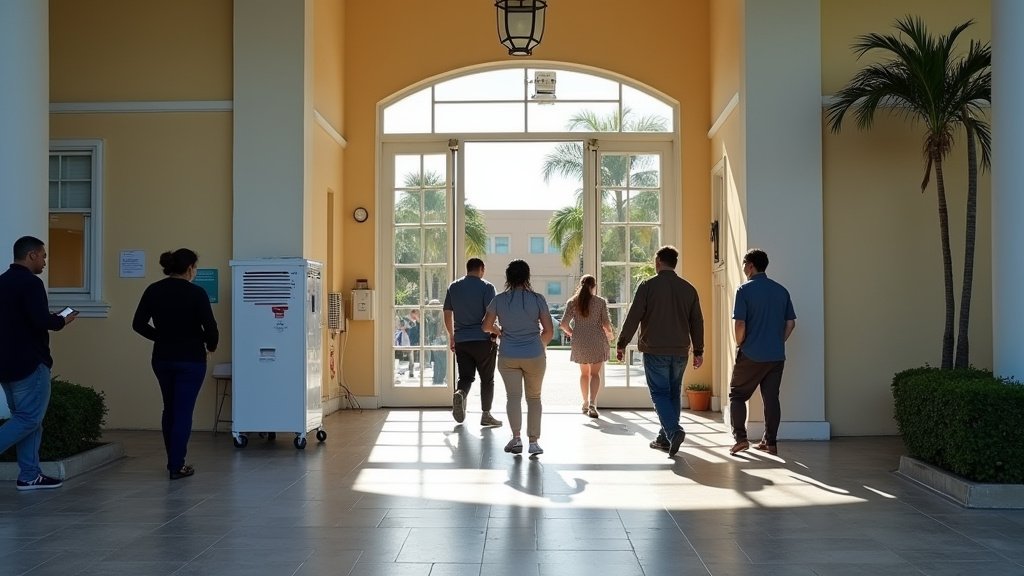
The Miami-Dade Supervisor of Elections has emphasized the importance of planning ahead for the August 18 event. With the implementation of updated voting machine technology and revised precinct boundaries, officials are encouraging residents to verify their registration status and polling locations well in advance. Early voting centers are slated to open in the week preceding the election, providing multiple windows for citizens to cast their ballots. Historically, Miami-Dade has seen fluctuating turnout during primary cycles, but analysts predict that the heated nature of the 2026 races may drive record-breaking early engagement. Understanding the specific logistics—such as the requirement for photo identification and the rules regarding mail-in ballot deadlines—is essential for ensuring that every vote is counted in this pivotal democratic exercise.
Demographic Shifts and Political Evolution
A secondary angle to consider in this 2026 cycle is the demographic evolution of the county. Miami-Dade has historically been a reliable Democratic stronghold, but recent cycles have shown a marked shift toward competitive territory. This primary will provide fresh data on whether this trend is accelerating, stalling, or reversing. The emergence of new voting blocs and the engagement of younger, first-time voters will be analyzed heavily by political scientists. These groups are prioritizing different issues than previous generations, focusing more on environmental sustainability and digital economic opportunities, which forces candidates to adjust their platforms to remain relevant. The primary acts as a barometer for these shifting tides, providing the first hard data point on the electorate’s changing priorities in the post-pandemic era.
Economic Impact: Policy Decisions on the Ballot
Finally, the economic stakes of this election cannot be ignored. With Florida’s economy undergoing rapid transformation, candidates are being forced to address the cost-of-living crisis, particularly in the housing sector, which is acute in Miami-Dade. The primary candidates’ proposals for zoning reform, infrastructure investment, and property insurance stabilization are the most-watched policy areas. Voters are not just casting ballots for individuals, but for the economic philosophy that will guide the region through the remainder of the decade. The results of the August 18th primary will signal to the market, investors, and developers which direction the political leadership of Miami-Dade intends to take regarding the county’s long-term economic development strategy.
FAQ: People Also Ask
1. When do polls open and close for the August 18, 2026, primary in Miami-Dade?
Polls across all Miami-Dade County precincts will open at 7:00 AM and close at 7:00 PM on election day, August 18, 2026. Voters waiting in line at 7:00 PM will be permitted to cast their ballots.
2. Can I change my party affiliation before the primary election?
Florida is a closed primary state, meaning voters must be registered with a political party to vote in that party’s primary. The deadline to change party affiliation is typically 29 days before the election. Check the Miami-Dade Supervisor of Elections website for the exact date for the 2026 cycle.
3. What forms of ID are accepted at the polls?
In Florida, you must present a current and valid photo ID with a signature to vote. Accepted forms include a Florida driver’s license, a Florida ID card issued by the DHSMV, a U.S. passport, or a military ID. A full list of approved IDs is available on the Florida Department of State website.
4. How can I track my mail-in ballot status?
Once you have mailed or dropped off your ballot, you can track its progress online through the Miami-Dade County Supervisor of Elections website portal by entering your name and date of birth. This allows you to verify that your ballot has been received and tabulated.