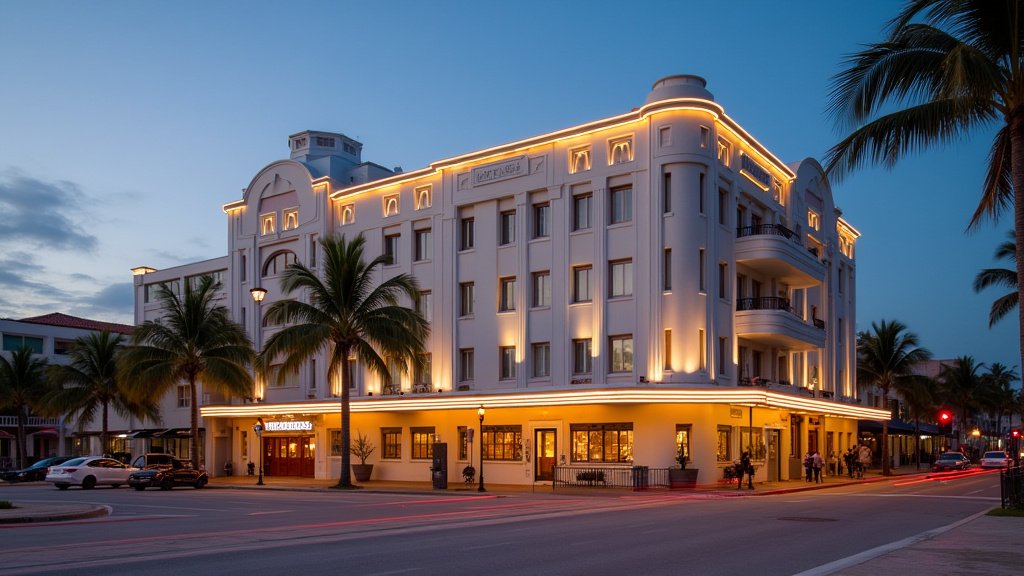
The Miami restaurant scene is currently experiencing a paradoxical surge in August 2026. While the city continues to witness a headline-grabbing “restaurant rush” with high-profile debuts across Wynwood and Edgewater, a significant contraction is occurring simultaneously within the luxury hotel sector. The most notable development is the confirmed closure of Medium Cool, the underground cocktail lounge and culinary hideaway located within the historic Gale Hotel. This venue, which became a staple for those seeking an intimate South Beach escape, is set to cease operations on August 22, 2026. This move, driven by broader property management changes at the historic property, serves as a bellwether for how Miami’s dining establishments are adapting to shifting economic realities and evolving consumer demands.
Key Highlights
- Medium Cool Closure: The acclaimed lounge at the Gale Hotel is scheduled to officially close its doors on August 22, 2026.
- Drivers of Change: The decision is directly tied to significant property management shifts within the Gale Hotel complex, reflecting wider hospitality trends.
- The ‘Rush’ vs. Reality: While August 2026 is defined by a high volume of new restaurant openings, the market is simultaneously purging legacy concepts that no longer align with current revenue models.
- Strategic Realignment: Miami’s dining focus is shifting away from “hidden” hotel bars and toward destination-driven, neighborhood-specific culinary concepts.
The August 2026 Dining Landscape: A Tale of Two Trends
The narrative of Miami’s hospitality industry in August 2026 is one of rapid, often jarring, evolution. For the casual observer, the city appears to be in the midst of a golden age of dining, with new concepts popping up in neighborhoods that were, until recently, strictly industrial or residential. Yet, beneath this veneer of constant growth lies a more complex economic reality. The “Restaurant Rush,” as it has been termed by local industry analysts, is not merely an expansion of the dining scene; it is a fundamental reconfiguration.
The Medium Cool Exit: Examining the Gale Hotel Shift
For years, Medium Cool served as a quintessential example of the “hidden” Miami bar—a speakeasy-style space that leveraged the charm of the Art Deco Gale Hotel to attract a sophisticated, late-night crowd. The August 22, 2026, closure date is not just a calendar event; it represents the end of an era for that specific corner of South Beach. The closure is inextricably linked to ongoing property management changes. In the competitive landscape of Miami luxury, hotel operators are increasingly prioritizing high-yield, multi-functional spaces over niche, low-volume lounges. When property management groups restructure, they often look at the return-per-square-foot of every amenity. Consequently, intimate venues like Medium Cool, while culturally significant, are frequently the first to face the chopping block in favor of more scalable, high-traffic concepts that cater to a broader international demographic.
Analyzing the ‘Property Management’ Factor
To understand why a venue like Medium Cool would close during the peak of a “restaurant rush,” one must look at the financials of hotel-integrated dining. Property management companies in Miami are currently navigating rising real estate costs, labor shortages, and shifting tax structures. When a property changes hands or undergoes a strategic management overhaul—as is the case with the Gale Hotel’s current trajectory—the primary goal is efficiency. This often results in a “homogenization” of amenities. The irony, of course, is that Miami’s restaurant scene thrives on the unique and the boutique. By replacing these specific, personality-driven spaces, management groups run the risk of alienating the very locals who sustain the venue during the off-season.
The Neighborhood Pivot: Beyond South Beach
Another secondary angle to this story is the geographic migration of the “it” crowd. The Restaurant Rush of 2026 is notably decentralized. While the Gale Hotel and other South Beach landmarks have traditionally been the heartbeat of the scene, recent data shows that the highest density of new, successful restaurant launches is occurring in Wynwood, Edgewater, and the expanding corridors of Little River. These areas offer chefs more creative freedom, larger square footage, and a younger, more adventurous demographic. This migration is putting additional pressure on legacy South Beach properties. To stay relevant, hotel operators are being forced to either pivot their food and beverage programs toward destination-worthy, standalone-style restaurants or face the type of quiet closures we are seeing this month. The closure of Medium Cool acts as a signal that the “lobby bar” era of Miami dining is receding, giving way to a more localized, neighborhood-centric culinary culture.
Why Miami Diners Keep Coming Back
Despite the closures, the velocity of the Miami market remains unmatched. For the average diner, the constant turnover in the scene is a feature, not a bug. Miami residents possess a distinct “newness bias,” where the appetite for the next “hot” table overrides loyalty to long-standing institutions. This, in turn, creates a self-fulfilling prophecy: restaurants, knowing they have a limited shelf life to make an impact, are often designed with a “burn bright, then exit” mentality. This high-pressure environment is what makes the loss of a place like Medium Cool feel particularly sharp—it was a consistent presence in a city defined by transience. As August 2026 progresses, the industry will be watching closely to see what replaces these legacy spots. Will it be a bland, corporate-friendly concept, or will the new property managers embrace the risk required to keep Miami’s dining scene as electric as its reputation?
FAQ: People Also Ask
Q: Is the Gale Hotel closing, or just the restaurant?
A: Only the Medium Cool venue is closing on August 22, 2026. The Gale Hotel remains operational, though it is currently undergoing property management and strategic operational changes.
Q: Why is Medium Cool closing despite Miami’s current restaurant rush?
A: The closure is a result of strategic property management shifts. While the broader Miami market is seeing many new openings, individual venues are often shuttered when management decides to re-allocate space or rebrand the property’s hospitality offerings to maximize efficiency.
Q: Is this part of a larger trend of hotel bar closures in Miami?
A: Yes. There is a noticeable shift away from traditional, hotel-integrated speakeasies toward standalone, destination-focused dining experiences in neighborhoods like Wynwood and Edgewater, making smaller hotel bars less economically viable.
Q: Will there be a replacement for Medium Cool?
A: While no official announcement has been made regarding the space post-August 22, the current trend suggests that any replacement will likely be designed to cater to broader, high-traffic hotel guest demographics rather than the niche audience Medium Cool attracted.