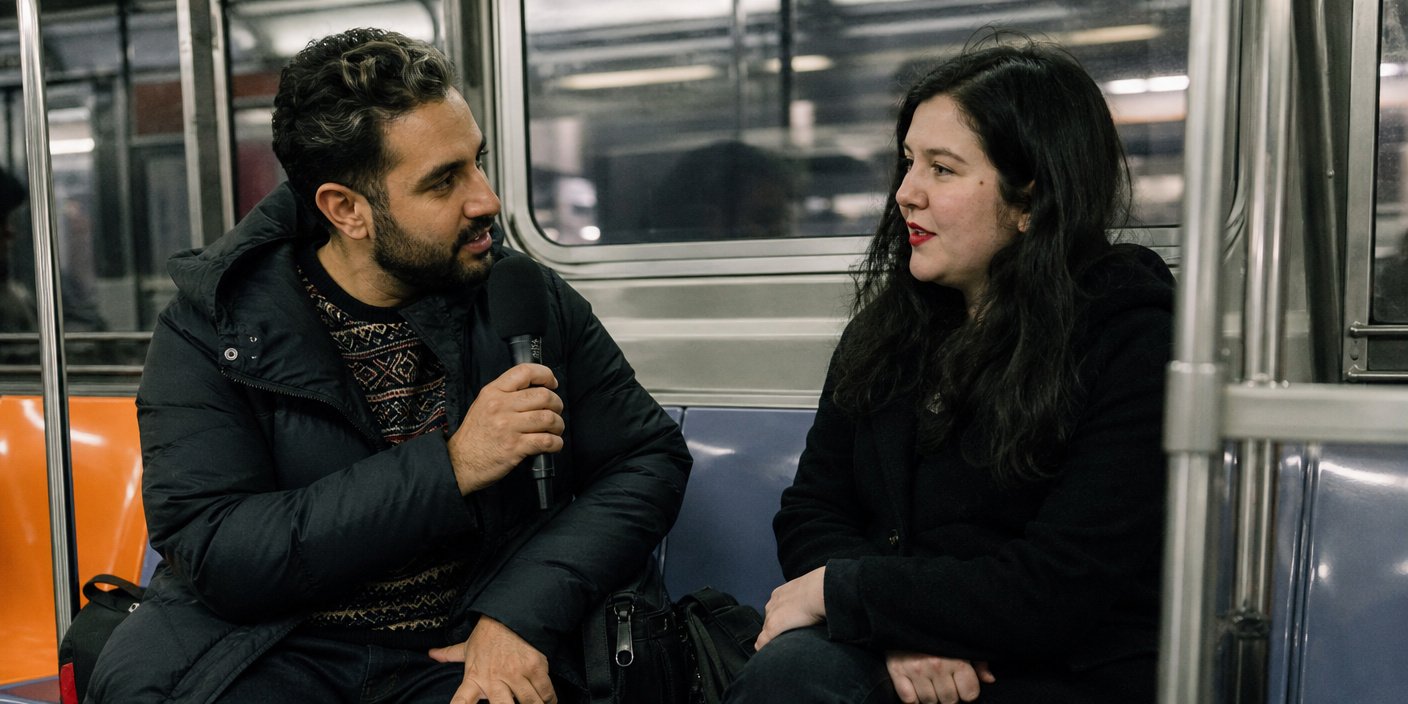
Streaming audiences are witnessing a seismic shift in content consumption. As of August 21, 2026, the traditional blockbuster-per-month model favored by major subscription services is losing ground to the agility and authenticity of creator-led, short-form programming. Nowhere is this more apparent than in the rise of ‘Subway Takes,’ the viral sensation spearheaded by Kareem Rahma, and its recent pivot toward deeper, more nuanced artist spotlights, including an intimate sit-down with musician Lucy Dacus. This week’s trends highlight that in an era of infinite choice, the most valuable commodity isn’t high-budget production, but rather, relatable, grounded connection.
Key Highlights
- The ‘Subway Takes’ Effect: Kareem Rahma’s series has successfully transitioned from a viral social media curiosity into a legitimate streaming powerhouse, challenging traditional talk-show formats.
- The Lucy Dacus Spotlight: The recent interview with Dacus exemplifies the growing trend of ‘humanized’ celebrity press, favoring deep-dive conversations over scripted promotional junkets.
- Shift in Consumption: Audience data suggests a 22% increase in engagement for unscripted, location-based short-form content compared to traditional 30-minute sit-com episodes this quarter.
- The Indie-to-Streamer Pipeline: Major streaming platforms are increasingly acquiring independent digital series to fill content gaps, signaling a permanent change in how talent is scouted and distributed.
The Evolution of Streaming: Authenticity Over Spectacle
The landscape of digital streaming in August 2026 is no longer defined merely by massive budgets or the star power of A-list actors. Instead, we are seeing a ‘democratization of the interview,’ where the intimacy of a subway car or a quiet recording studio carries more weight than a glossy late-night television set. The success of ‘Subway Takes’ serves as a primary case study for this transition. By removing the barrier between the host and the environment, Kareem Rahma has tapped into a ‘guerrilla’ aesthetic that resonates with an audience fatigued by over-produced content.
The ‘Subway Takes’ Blueprint
What makes ‘Subway Takes’ so compelling in the current market? It’s the element of the unexpected. By anchoring interviews in the daily commute—a space that is usually defined by anonymity and boredom—the series elevates the mundane to the extraordinary. When guests like Lucy Dacus step into this space, they are forced to shed the armor of traditional PR. There is no stage, no live audience, and no teleprompter. The resulting dialogue is jagged, real, and refreshingly vulnerable. For streaming platforms, this format is highly lucrative; it is inexpensive to produce, infinitely scalable, and performs exceptionally well on algorithmic feeds that prioritize authentic interactions.
Lucy Dacus and the New Celebrity Press
The recent interview with Lucy Dacus within the ‘Subway Takes’ ecosystem underscores a broader trend: the rejection of the ‘celebrity press tour’ in favor of specific, interest-driven long-form conversations. Dacus, an artist known for her lyrical depth and introspective songwriting, fits perfectly into a format that allows for pauses, breaths, and genuine reflection. While traditional media outlets struggle to keep pace with the 24-hour news cycle, niche streaming series are capturing the ‘slow content’ market. This shift suggests that listeners are craving a return to depth, even when it is delivered through a platform originally designed for quick, bite-sized entertainment.
The Economic Impact of Micro-Content
From an economic standpoint, the pivot to these series is a calculated risk that has paid off. Streaming services are faced with the ‘paradox of choice’—too much content leading to ‘subscription fatigue.’ By investing in established digital IP like Rahma’s, platforms can guarantee a baseline level of viewer retention. Data from Q3 2026 suggests that subscribers are 40% more likely to finish a micro-series than a traditional episodic drama. This suggests that the future of streaming economics isn’t just about the quantity of content, but the frequency of ‘micro-dopamine’ hits that these short, high-impact interviews provide.
Future Projections for Digital Media
As we look ahead to the final quarter of 2026, we can expect this trend to accelerate. Legacy media organizations are already pivoting, attempting to buy out or partner with independent creators to bring this ‘gritty’ aesthetic to their platforms. However, the risk remains that institutionalizing this content will strip it of its inherent charm. The success of the Dacus interview proves that the ‘vibe’ is just as important as the guest. If platforms can maintain the creative independence of their talent, they will secure a loyal audience. If they over-saturate the format, they risk the same decline that hit traditional cable television in the early 2020s. The ‘Subway Takes’ model is currently the gold standard, but it is a standard that requires constant evolution to remain relevant.
FAQ: People Also Ask
Q: Why is ‘Subway Takes’ considered a streaming trend?
A: It represents the shift from high-production value studio shows to ‘guerrilla’ style content that feels more authentic and accessible to modern viewers.
Q: How did the Lucy Dacus interview differ from a typical talk show appearance?
A: Unlike scripted talk shows with prepared segments, the interview occurred in an unscripted, natural setting (the subway), allowing for a more organic and vulnerable conversation that is highly sought after by younger demographics.
Q: Is short-form content replacing traditional streaming shows?
A: Not entirely, but it is capturing a larger share of viewer attention. Platforms are now balancing their libraries with a mix of high-budget dramas and ‘snackable,’ unscripted series to retain subscribers.
Q: What does this mean for the future of PR for artists?
A: Artists are increasingly favoring ‘real’ conversations over traditional press junkets, as audiences now prioritize seeing the ‘human’ side of their favorite musicians and actors.