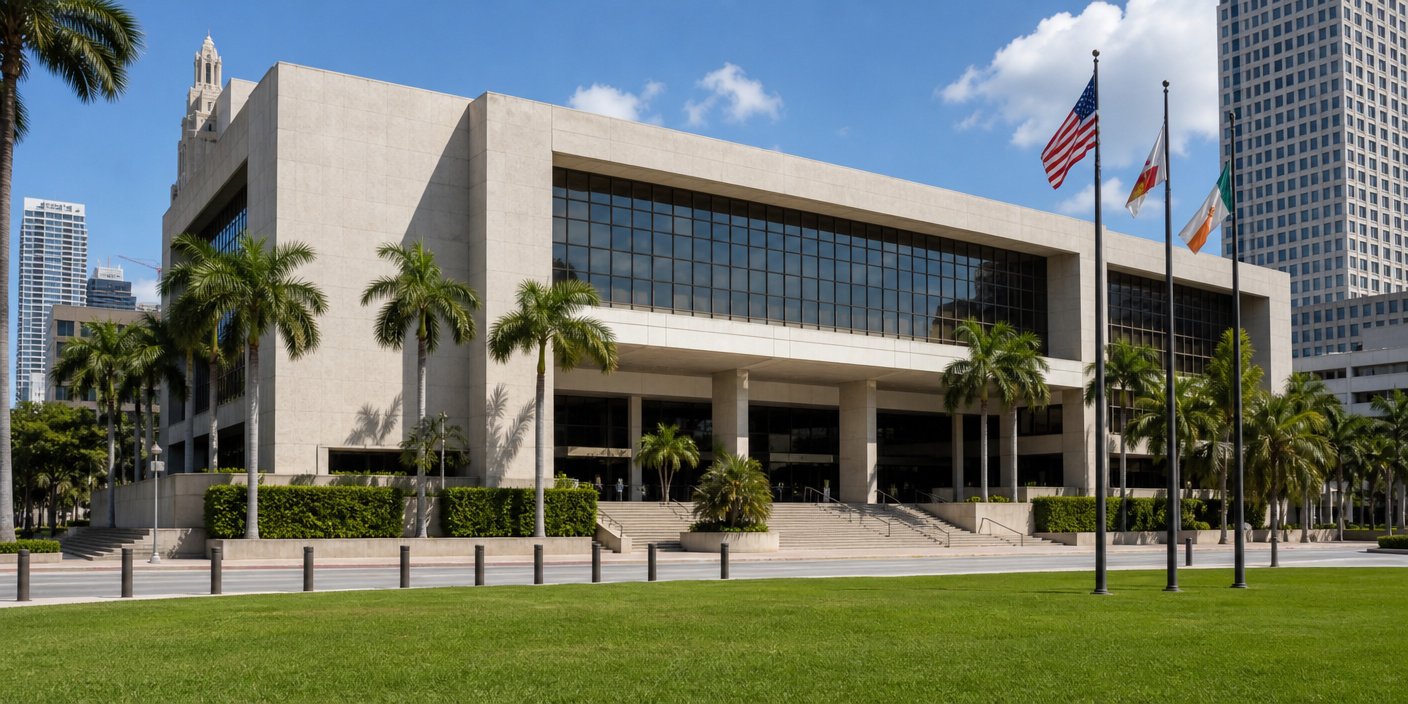
The Miami-Dade Board of County Commissioners has officially finalized a $14.26 billion budget for the upcoming fiscal year, a significant legislative achievement that sets the course for the county’s operations through a period of transition and economic scrutiny. By maintaining the property tax rate at 4.57 mills, the commission has signaled a commitment to fiscal stability, attempting to balance rising service costs with the financial realities facing local homeowners. However, the budget process was far from seamless, marked by intense debate regarding the funding structure for the incoming constitutional Sheriff’s Office.
The Fiscal Landscape: Balancing Growth and Burden
The approved $14.26 billion budget represents a complex balancing act. As Miami-Dade continues to experience population growth and inflationary pressures, the demand for public services—ranging from infrastructure and water management to public safety—has surged. The decision to maintain the property tax rate at 4.57 mills, the same rate as the previous year, is a clear nod to residents concerned about the cost of living.
However, local economists warn that keeping tax rates flat while expanding service capacity requires high efficiency. The budget prioritizes the maintenance of existing county infrastructure while setting aside funds for necessary technological upgrades in civil administration. This fiscal approach attempts to shield the average property owner from tax hikes while still providing the resources required for a major metropolitan government. The focus remains on maximizing the purchasing power of the dollar, ensuring that essential services are not compromised during this period of high demand.
The Sheriff’s Office Disconnect
The most friction-heavy component of the budget approval was the allocation for the Sheriff’s Office. With the county transitioning from the appointed Miami-Dade Police Department (MDPD) to an elected constitutional Sheriff, the fiscal requirements are shifting. Sheriff-elect Rosie Cordero-Stutz has voiced significant concerns regarding whether the allocated funds meet the staffing requirements necessary for the agency to operate effectively under its new mandate.
This debate centers on the difference between operational maintenance and the cost of structural transformation. The Sheriff-elect’s office has argued that the current budget figures may underestimate the logistical, recruitment, and equipment costs associated with establishing a fully independent constitutional office. Commissioners, meanwhile, argue that the budget provides a solid foundation and that further adjustments can be made mid-fiscal year if specific gaps emerge. This tension highlights a broader political struggle: the challenge of funding a new, high-stakes institutional role without exceeding the county’s fiscal guardrails.
Economic Implications for Taxpayers
For the average Miami-Dade resident, the budget is a double-edged sword. While the refusal to increase the millage rate provides some relief against the backdrop of soaring property values—which could still lead to higher overall tax bills due to assessment increases—the uncertainty surrounding the Sheriff’s Office funding creates a potential for future volatility.
The secondary angle of this issue is long-term sustainability. If the budget proves insufficient for the Sheriff’s Office, the county may face a “mid-year correction,” which could involve reallocating funds from other departments or, in a less likely scenario, revisiting tax policies. Furthermore, the massive $14.26 billion total underscores the sheer scale of the county’s economic footprint, making it a critical barometer for the health of South Florida’s real estate and job markets. As the county moves toward this new era of elected law enforcement, taxpayers will be closely monitoring whether these budgetary projections align with the actual delivery of public safety services.
Future Predictions: What Comes Next?
Looking ahead, the next six months will be a stress test for the administration. The transition of the police department into the constitutional Sheriff’s Office will be the primary focal point of government oversight. We anticipate that the first quarter of the next fiscal year will be characterized by ongoing negotiations and supplementary requests for funding as the realities of the transition become clearer. Additionally, the county will likely continue to face pressure from labor unions and infrastructure departments for salary adjustments and capital project funding, which may further test the boundaries of the $14.26 billion ceiling.
Ultimately, this budget is not just a spreadsheet; it is a declaration of policy priorities. The commission has clearly signaled that while they are willing to support new initiatives, they are deeply hesitant to increase the burden on taxpayers, even when faced with pressure from key departments like law enforcement.