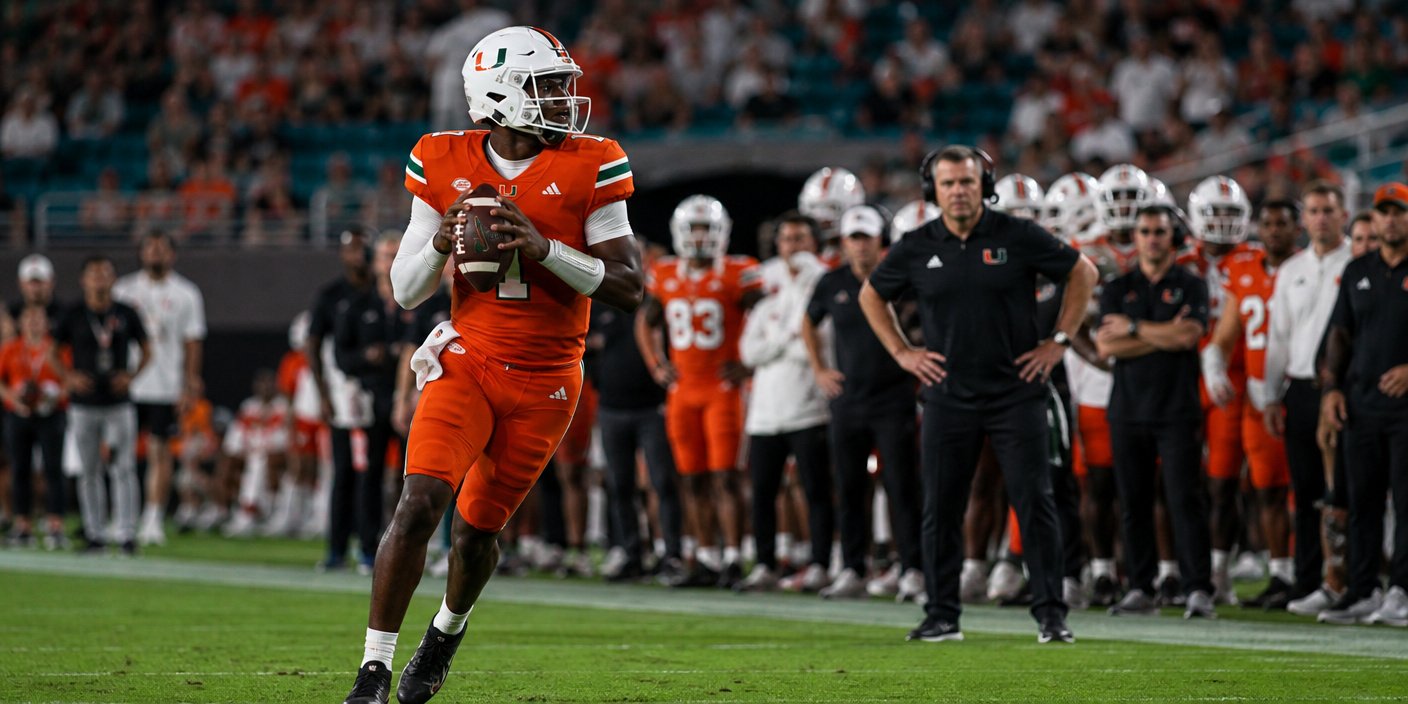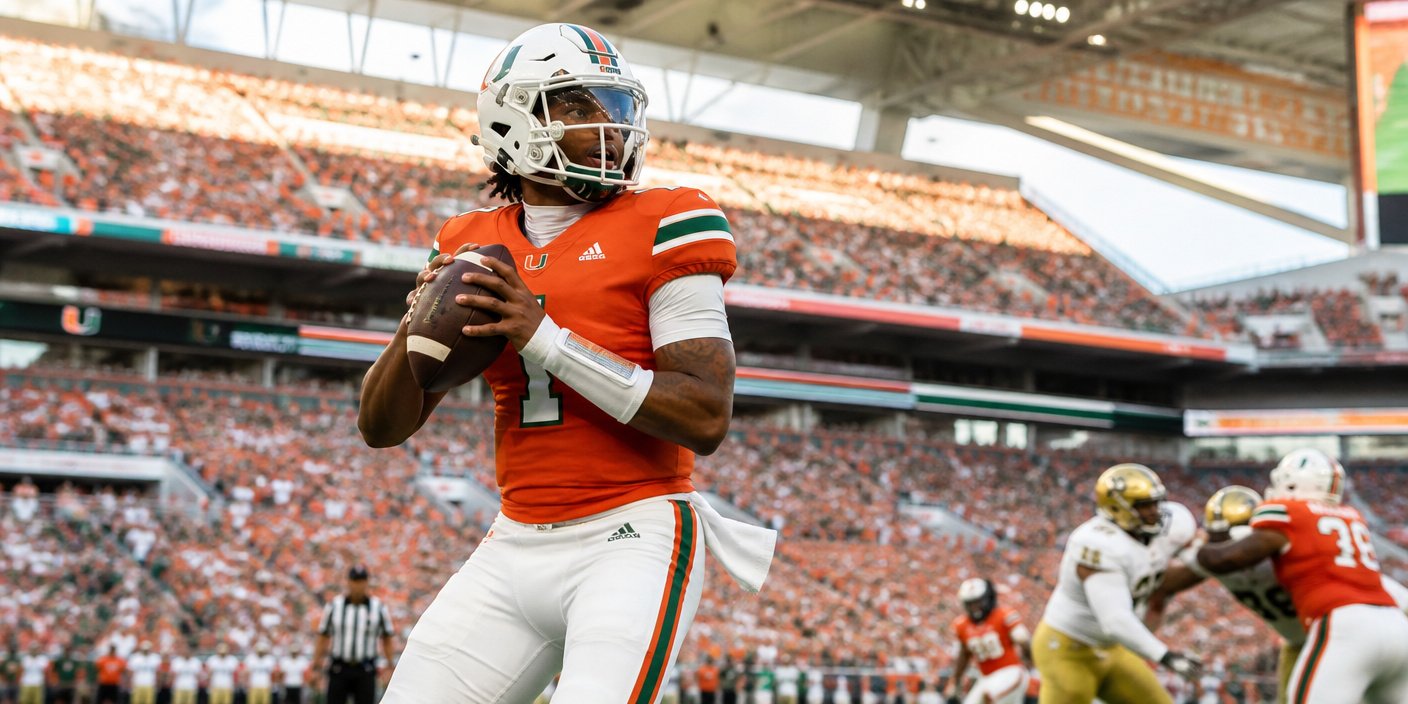
The No. 4 Miami Hurricanes emphatically shattered their long-standing “Death Valley” curse this Saturday, routing the Clemson Tigers 41-13 in a decisive statement victory that reverberates throughout the Atlantic Coast Conference. The win, Miami’s first at Clemson Memorial Stadium since 2010, was a comprehensive display of modern football, marked by offensive precision, a stifling defensive presence, and the sheer physicality required to silence one of the loudest venues in college sports. As the Hurricanes solidified their standing in the national conversation, the nature of this victory suggested that the program’s identity has undergone a significant transformation under the current coaching staff.
Key Highlights
- Historic Breakthrough: Miami secured its first victory at Clemson Memorial Stadium since the 2010 season, ending a grueling 14-year drought in one of the most intimidating environments in college football.
- Offensive Explosion: Led by quarterback Darian Mensah, the Hurricanes offense systematically dismantled the Clemson defensive scheme, putting up 41 points—a rare feat against a program historically defined by its defensive prowess.
- Physicality at the Line: The Hurricanes’ rushing attack proved to be the difference-maker, establishing dominance at the line of scrimmage that wore down the Clemson front seven as the game progressed.
- ACC Implications: With this 41-13 result, Miami has firmly cemented its position at the top tier of the ACC hierarchy, establishing themselves as a primary contender for the conference championship.
The Anatomy of a Historic Rout: Breaking the Death Valley Curse
For nearly a decade and a half, the trip to Clemson, South Carolina, has been a graveyard for visiting ambitions. Known colloquially as “Death Valley,” Clemson Memorial Stadium is notorious for its crowd noise and the psychological weight it places on opposing teams. Entering Saturday, the narrative surrounding the No. 4 Miami Hurricanes was not just about the skill gap or the rankings; it was about whether they could handle the immense pressure of a road environment that has claimed many talented squads before them. The answer, delivered with emphatic force, was a resounding yes.
The Dominance of Darian Mensah
At the heart of Miami’s offensive success was Darian Mensah. In a game where poise is often prioritized over pure athleticism, Mensah delivered a masterclass in situational football. Operating with a calm efficiency, he orchestrated drives that left the Clemson defense chasing shadows. Mensah’s ability to manipulate the coverage and extend plays when the pocket collapsed allowed Miami to convert on crucial third downs, keeping the chains moving and the Clemson crowd at bay.
His decision-making was particularly sharp in the red zone, where Miami converted opportunities into touchdowns rather than settling for field goals. This efficiency was the primary catalyst for the 41-point total. Analysts have long pointed to Mensah as a potential X-factor for the Hurricanes’ postseason ambitions, and this performance provided the clearest evidence yet that he is capable of leading the team on the biggest stages against formidable opponents.
Physical Rushing Attack as the Catalyst
While the passing game provided the surgical precision, the Hurricanes’ rushing attack provided the hammer. From the opening kickoff, Miami’s offensive line established a physical dominance that Clemson struggled to counter. By committing to a heavy, ground-based approach, Miami controlled the tempo of the game, limiting the time Clemson’s offense could spend on the field and slowly demoralizing their defensive front.
This physical brand of football—often referred to as ‘winning the trenches’—has been a cornerstone of successful championship teams. By bullying the interior of the defensive line, Miami’s running backs were able to consistently find lanes, turn short gains into explosive runs, and keep the Clemson defense off-balance. The cumulative effect of these bruising runs was evident in the fourth quarter, where the Tigers’ defensive unit appeared fatigued and unable to stop the surge.
Historical Context and the Road Ahead
To understand the magnitude of this victory, one must look at the historical context. Since 2010, the landscape of the ACC has been largely dominated by Clemson’s sustained excellence. Winning in their house is not merely a box-score victory; it is a psychological hurdle that many programs fail to clear. By winning 41-13, Miami didn’t just beat the Tigers; they neutralized the home-field advantage that has defined Clemson’s era.
This outcome forces a recalibration of expectations for the remainder of the season. Miami is no longer an up-and-coming team; they are a validated powerhouse. With this win, the Hurricanes have effectively signaled that the balance of power in the ACC is shifting. The challenge now for Miami is consistency. Historically, “statement wins” can sometimes lead to complacency. However, given the focus displayed in this outing, the Hurricanes appear poised to maintain this trajectory, aiming for a deep playoff run that now seems well within their reach.
FAQ: People Also Ask
1. Why is Clemson Memorial Stadium considered one of the hardest places to play?
Clemson Memorial Stadium, or “Death Valley,” is famous for its deafening crowd noise, the unique tradition of the team running down “The Hill,” and the intense humidity of South Carolina, which challenges visiting teams’ endurance. The combination of fan support and historical team success creates an intimidating atmosphere for any opponent.
2. What was the significance of the 41-13 score?
This score represents a lopsided victory over a traditional conference heavyweight. Scoring 41 points against Clemson at home is statistically significant, highlighting the efficiency and explosive potential of the current Miami offensive unit, while the 13 points allowed speaks to a disciplined and effective defensive strategy.
3. How does this win impact Miami’s standing in the ACC?
This victory validates Miami as a legitimate frontrunner in the ACC. By defeating a key conference rival in a hostile environment, the Hurricanes have improved their strength of schedule and bolstered their resume for both the ACC Championship game and the national playoff selection committee.
4. What changed for Miami since their last win there in 2010?
Since 2010, the program has undergone significant structural, coaching, and recruiting changes. This particular victory highlights a shift in team culture, improved depth on both lines of scrimmage, and the development of high-level talent like Darian Mensah who can perform under high-stakes, pressure-cooker environments.