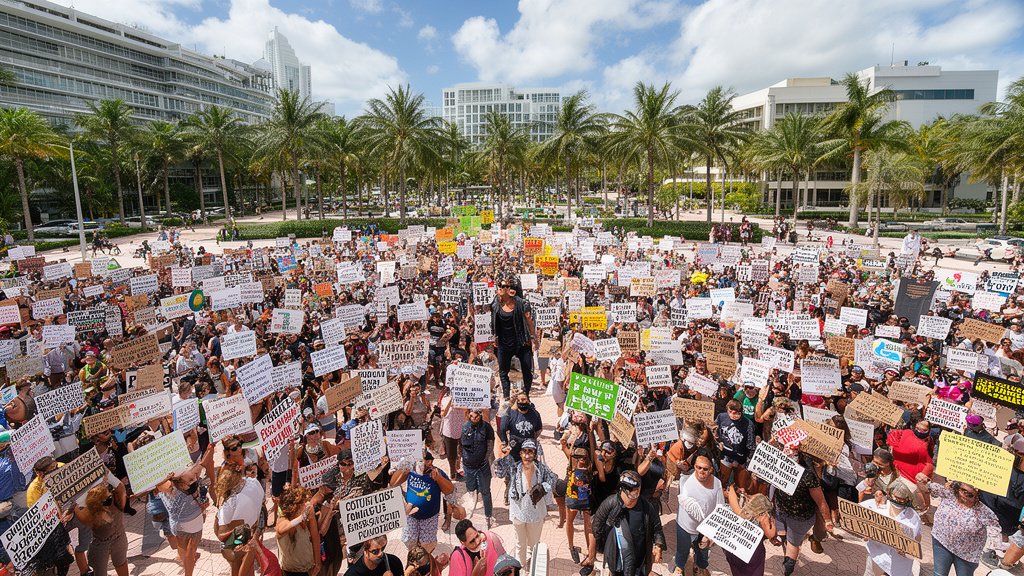
Miami, FL – The City of Miami Commission has taken a decisive step. They voted unanimously on January 22, 2026. The commission approved the creation of a specialized task force. This group will investigate businesses with potential ties to the Cuban regime. Furthermore, they adopted a resolution. This resolution urges the federal government to rigorously enforce U.S. sanctions laws concerning Cuba.
This trending news signals a significant move. It marks a coordinated effort against businesses allegedly supporting the Cuban government. The commission’s action comes after considerable debate. It reflects a broader trend in South Florida. Neighboring cities have also increased scrutiny.
Background of Sanctions
The United States maintains a comprehensive economic embargo on Cuba. This embargo began in February 1962. It targets trade and commerce with Cuban interests. The aim is to prevent U.S. territory from financially supporting Havana’s government. U.S. sanctions are enforced by federal agencies like the Office of Foreign Assets Control (OFAC).
The Commission’s Vote
Commissioner Ralph Rosado sponsored the initial proposal. His original idea focused on the city’s Office of the Inspector General. This office would review business tax receipts for violations. However, the final approved resolution took a slightly different path. It establishes a task force composed of city municipal employees. They will collaborate with officials from the Miami-Dade County Tax Collector’s Office.
Commissioner Rosado emphasized the vote’s importance. “Today’s vote makes it clear that the city of Miami will take the enforcement of federal sanctions laws seriously and will not turn a blind eye,” he stated. The initiative aims to ensure compliance with federal regulations. It seeks to prevent any illicit financial support reaching Cuba.
Addressing Legal Concerns
Some commissioners expressed concerns about legal liability. Commissioner Miguel Gabela voiced support for targeting businesses linked to the Cuban regime. However, he cautioned against the city incurring significant legal costs. “My only concern is that we don’t get into legal wrangling, and then it winds up costing money,” he noted. Gabela suggested that Miami-Dade County or federal agencies should take the lead in enforcement.
Chairwoman Christine King also raised worries. She mentioned the proposal’s vague language. King feared it could unintentionally ensnare business owners supporting family members on the island. To address these issues, a substitute resolution was introduced. It authorized the city manager to work with and support the Miami-Dade County tax collector in enforcing existing law.
Urging Federal Action
In addition to forming the task force, the commission passed a separate resolution. This resolution strongly urges the federal government. It calls for vigorous investigation and enforcement of laws governing business activity with Cuba. This dual approach allows the city to push for enforcement. It also defers primary investigative decisions to federal agencies and county processes.
County and City Collaboration
The Miami-Dade County Tax Collector’s Office has already taken enforcement actions. Tax Collector Dariel Fernandez has revoked licenses from businesses unable to justify legal operations with Cuban entities. His office has previously mailed letters to businesses requesting proof of federal authorization to conduct business with Cuba.
Fernandez stated, “Miami-Dade will no longer be used as a platform to finance or sustain it [the Cuban communist regime],” highlighting a commitment to national security. The collaboration between the city and county tax collector is seen as crucial. It aims to streamline enforcement efforts.
Implications for Businesses
This new task force will examine business tax receipts. It will identify potential violations of federal law. Businesses found to be in violation face significant risks. These could include license revocation. The city attorney clarified that this is not a “witch hunt.” Rather, it ensures compliance with current laws.
The move reflects a strong political message. Commissioners want to ensure businesses operating in Miami do not support the Cuban dictatorship. The news from Miami is generating significant discussion. It highlights local government’s role. It also underscores the ongoing scrutiny of international business ties. This news is trending among local and national outlets. It prompts questions about future enforcement actions. The city is now positioned to support broader federal efforts.