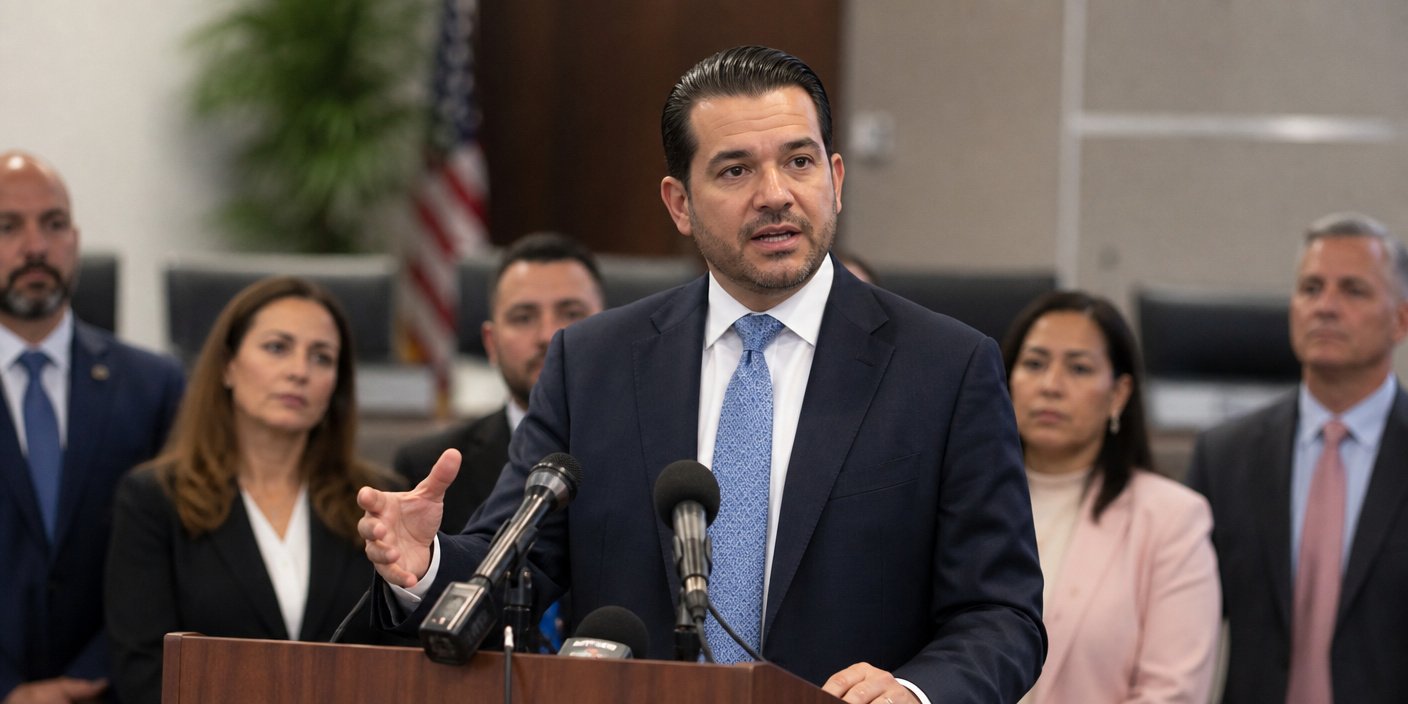
In a decisive move for the district’s future, the Miami-Dade County School Board voted unanimously to appoint Rafael Villalobos as the new superintendent, concluding a rigorous, months-long search process to identify the next leader for the nation’s fourth-largest public school system. The appointment marks a pivotal shift for the district, which serves hundreds of thousands of students across South Florida, as stakeholders look toward a new administrative philosophy defined by organizational stability and a renewed focus on core educational outcomes.
Key Highlights
- Unanimous Approval: The School Board confirmed the appointment with a 100% majority vote, demonstrating unified support for Villalobos’s leadership vision.
- Search Culmination: The decision concludes an exhaustive national search process designed to replace the outgoing leadership and secure a candidate with deep experience in urban district management.
- Strategic Mandate: Villalobos is tasked with overseeing a massive operating budget and addressing critical post-pandemic educational recovery metrics.
- Immediate Transition: The transition period is set to commence immediately, with Villalobos expected to begin outlining his specific policy initiatives for the upcoming academic semester.
A New Direction for Miami-Dade: The Appointment of Rafael Villalobos
The formal selection of Rafael Villalobos as the new superintendent of the Miami-Dade County Public Schools (MDCPS) represents more than just a personnel change; it is a strategic repositioning of the district’s priorities. As the school board moved to confirm his appointment, the atmosphere was one of calculated optimism. The unanimous nature of the vote—often a rarity in a district as large and politically diverse as Miami-Dade—speaks to a rare alignment among board members regarding the immediate necessities of the district.
Historical Context and District Scope
To understand the magnitude of Villalobos’s appointment, one must first appreciate the scale of the Miami-Dade school system. As the fourth-largest district in the United States, MDCPS is an entity that rivaling the budgets and complexities of medium-sized corporations. The superintendent of such a district does not merely manage school operations; they oversee a complex ecosystem of logistics, labor negotiations, specialized curriculum, and facility management.
Historically, the district has navigated the turbulent waters of rapid demographic shifts, funding fluctuations, and the intensifying pressures of state-level educational mandates. Villalobos inherits a system that has been grappling with the long-term impacts of the global pandemic on student proficiency, particularly in literacy and STEM fields. The Board’s confidence in Villalobos appears rooted in his history of navigating similar complex bureaucratic landscapes, emphasizing administrative efficiency without compromising the human-centric needs of the classroom.
The Selection Process: A National Pursuit
The process leading to this unanimous decision was intentionally methodical. The Board initiated the search process with a wide net, soliciting feedback from teachers, parents, community leaders, and regional business partners. By prioritizing a search that was both transparent and expansive, the Board sought to avoid the common pitfalls of insular hiring.
During the public forums held prior to the vote, the consensus among stakeholders was a demand for ‘steadiness and vision.’ Villalobos, throughout the interview and vetting stages, distinguished himself by presenting a coherent roadmap that prioritized teacher retention—an area where the district has faced significant headwinds—and a modernization of vocational training programs. His approach appears to be one of ‘principled pragmatism,’ a quality that likely resonated with the diverse viewpoints represented on the school board.
Economic Implications and Budgetary Oversight
One of the most pressing responsibilities on Villalobos’s desk will be the stewardship of the district’s multi-billion dollar budget. With inflation impacting facility maintenance costs and the competitive pressure to raise teacher salaries to keep pace with the cost of living in South Florida, the new superintendent will need to be both an educator and a skilled fiscal hawk.
Experts suggest that Villalobos will likely focus on optimizing ‘back-office’ operations to redirect more funding directly into the classroom. The challenge lies in the delicate balance of satisfying state-mandated fiscal requirements while addressing the specific socio-economic needs of the district’s diverse student body. His background suggests an aptitude for resource allocation that could potentially streamline procurement processes and improve the agility with which the district responds to changing educational needs.
Challenges and Future Educational Outlook
Looking ahead, the road for Villalobos is not without its hurdles. The district must reconcile the demands of state-level curriculum regulations with the need for localized, culturally responsive teaching methods. There is also the critical issue of school safety and infrastructure, with several aging campuses requiring significant capital investment.
Furthermore, the integration of new instructional technologies—specifically those aimed at narrowing the achievement gap—will define the success of his early tenure. The board, by throwing their full support behind him, has essentially granted him the political capital to implement potentially sweeping, albeit necessary, structural changes. Villalobos is expected to prioritize a ‘classroom-first’ approach, aiming to reduce administrative bloat and empower individual school principals to have more autonomy in managing their specific campus needs.
As the district moves forward, the education community is watching closely. The unanimity of his appointment provides him with a strong mandate, yet it also places the full weight of responsibility squarely on his shoulders. For Miami-Dade, the Villalobos era is not just about a change in leadership; it is about the assertion of a vision that seeks to elevate the district to a position of national educational leadership once again.
FAQ: People Also Ask
1. Who is Rafael Villalobos?
Rafael Villalobos is the newly appointed superintendent of the Miami-Dade County School Board, selected unanimously following a comprehensive national search to lead the fourth-largest school district in the United States.
2. Why was the vote for the new superintendent unanimous?
The unanimous vote indicates a strong consensus among School Board members regarding the necessity for stable, focused, and experienced leadership to navigate the district’s upcoming fiscal and pedagogical challenges.
3. What are the top priorities for the new superintendent?
Key priorities include optimizing the district’s multi-billion dollar budget, improving teacher retention rates, addressing post-pandemic educational recovery, and modernizing vocational and STEM training programs.
4. How does this change the future of Miami-Dade County Public Schools?
The appointment signals a shift toward administrative stability and a renewed focus on classroom outcomes, with an expected emphasis on streamlining district operations to maximize resource allocation directly to schools.