Miami-Dade County’s strategic push to centralize its administrative operations into a newly acquired facility in the Fontainebleau neighborhood has reached a critical juncture, with the total project investment now climbing toward an estimated $255 million. The initiative, championed by the county administration to streamline public-facing services, involves the conversion of the former Flagler Corporate Center—recently rebranded as the West Dade Government Center—into a high-efficiency hub for multiple departments. While proponents argue that the consolidation will generate long-term savings by eliminating disparate rental costs and boosting operational efficiency, the significant capital outlay has ignited a fierce debate regarding fiscal responsibility and the valuation of commercial assets in the post-pandemic real estate market.
Key Highlights
- Consolidation Strategy: The project centralizes various permitting, regulatory, and economic resource departments under one roof at 9250 West Flagler Street.
- The $255M Price Tag: The budget includes the $182 million acquisition cost plus approximately $74 million allocated for extensive renovations, infrastructure upgrades, and parking facilities.
- Controversial Valuation: Early proposals for the project faced backlash from county commissioners regarding the property’s valuation and current market conditions, despite the county’s projection of $860 million in long-term savings over three decades.
- Operational Shift: The move represents a major transition in how Miami-Dade delivers essential services, shifting from fragmented, leased office spaces to a single, county-owned corporate campus.
The Anatomy of a Massive Public Investment
The roadmap to the $255 million West Dade Government Center began with an urgent need to modernize the county’s aging infrastructure. For years, Miami-Dade’s permitting, land development, and administrative departments operated across various sites, many of which were leased from private landlords. This fragmentation not only created logistical hurdles for the public—forcing residents and contractors to navigate multiple locations for simple approvals—but also burdened the county budget with significant, recurring rental expenditures.
Moving Toward Consolidation
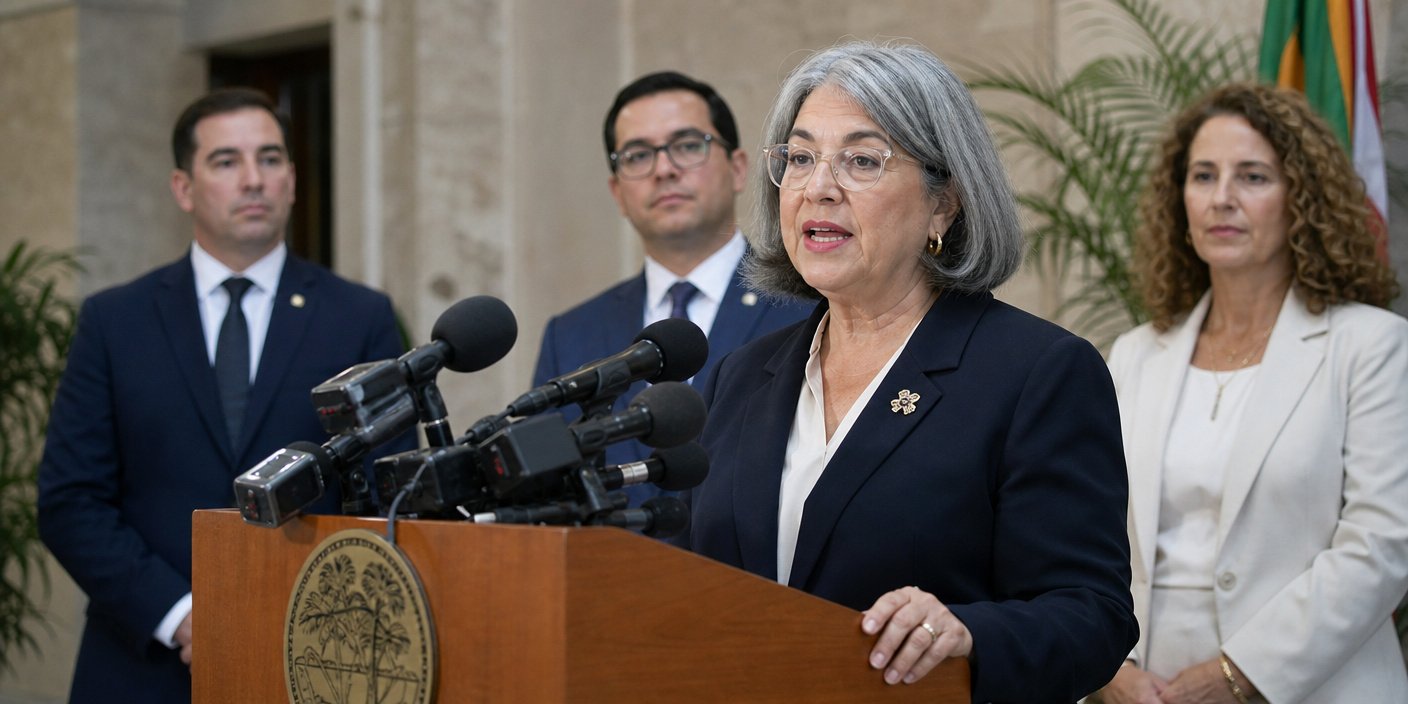
When Mayor Daniella Levine Cava’s administration identified the 9250 West Flagler Street property, the goal was twofold: to provide a “one-stop shop” for residents and to secure a permanent, county-owned asset that would hedge against rising commercial rents. The acquisition process, however, was far from smooth. Initially proposed at a higher price point, the deal required significant political maneuvering and a unanimous vote from the Board of County Commissioners. The transition of this site into the West Dade Government Center is intended to act as an anchor for the surrounding community, bringing a high volume of daily foot traffic and ensuring that government services remain accessible to the growing suburban population west of the city center.
The Economics of the Renovation
While the headline-grabbing $182 million acquisition captures the most attention, the secondary layer of the story lies in the $74 million renovation budget. The building, originally constructed in the mid-1970s, requires comprehensive modernization to meet current ADA compliance standards, energy-efficiency requirements, and technological needs of modern government. This includes upgrading HVAC systems, retrofitting interior office layouts to accommodate open-floor plans, and constructing a parking garage to handle the influx of both staff and public visitors. Critics argue that the scope of these upgrades essentially represents a “rebuilding” effort on top of the initial purchase price, challenging the efficiency of the overall investment.
Fiscal Scrutiny and Future Projections
The primary friction point for this project is the delta between the county’s estimated project cost and the market valuation of the property at the time of purchase. Two independent appraisals conducted prior to the acquisition placed the property’s value significantly lower than the final purchase price, sparking concerns about overpaying in a volatile market. County officials have countered this by pointing to a “long-term value” model. They project that by eliminating rent payments for existing leased spaces—many of which are in prime locations where rents have skyrocketed—the county will achieve a net savings of roughly $860 million over the next thirty years.
Impact on Regional Development
Beyond the budget spreadsheets, the establishment of the West Dade Government Center serves as a catalyst for local economic development in the Fontainebleau area. The concentration of regulatory and permitting departments creates a de-facto business district, likely attracting related professional services, law firms, and engineering companies looking to set up shop near the hub of government activity. This clustering effect is a deliberate part of the county’s urban planning strategy, aiming to reduce traffic congestion by placing services closer to the suburban workforce rather than requiring a commute to the downtown core.
The Shift in Government Work Culture
Finally, the project signals a broader shift in how local governments view office space. As private sector companies downsized footprints during the remote-work surge, Miami-Dade seized the opportunity to acquire high-quality, “ready-to-use” commercial stock at a discount relative to the cost of new ground-up construction. This “buy-vs-build” philosophy is a critical angle; construction of an equivalent facility from the ground up was estimated at upwards of $323 million, suggesting that even with the $255 million price tag, the county may have avoided a more expensive long-term capital commitment. The ultimate success of this project will be measured not just by the final tally of the renovation, but by the tangible improvement in service delivery speeds for the residents of Miami-Dade County.
FAQ: People Also Ask
1. Why did the county purchase an existing building rather than building a new one?
Construction costs for a brand-new facility were estimated at over $323 million, significantly higher than the total acquisition and renovation package of roughly $255 million. Purchasing an existing asset allowed the county to secure a large-scale property faster and at a lower price point.
2. Which departments are moving to the West Dade Government Center?
The facility will house key departments including the Department of Regulatory and Economic Resources, the Office of the Property Appraiser, the Water and Sewer Department, and the Department of Solid Waste Management, among others.
3. How will this impact local residents and business owners?
Residents and contractors will benefit from a centralized “one-stop shop” for permitting and land development applications, potentially reducing the time and travel previously required to visit multiple locations across the county.
4. Is the project currently under budget?
The project is proceeding as approved by the Board of County Commissioners, with the $74 million renovation phase specifically scoped to address necessary infrastructure and accessibility upgrades identified during the pre-purchase due diligence phase.