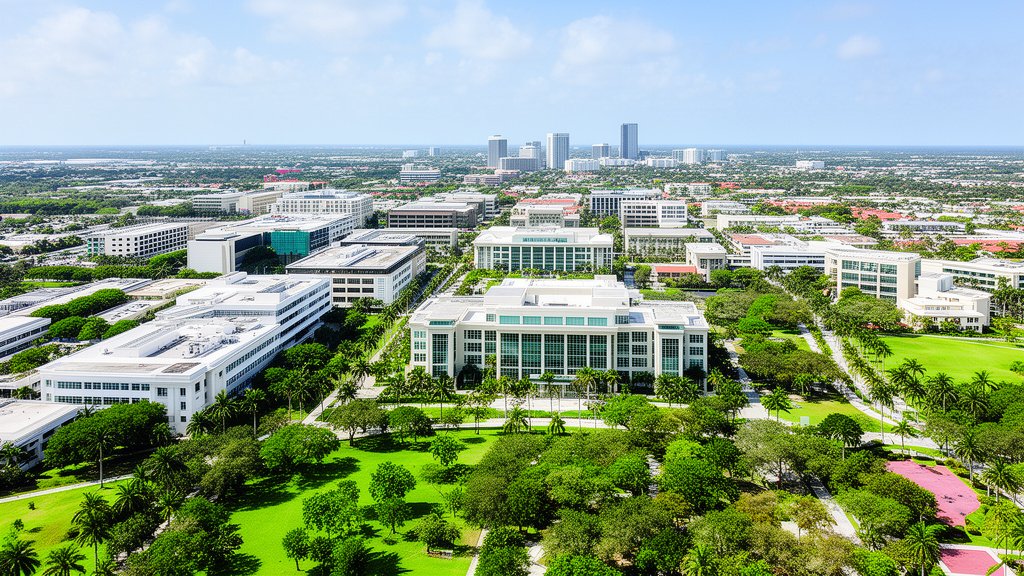
The City of Miami is set to move forward with the formal creation and activation of the Allapattah Community Redevelopment Agency (CRA) during its upcoming commission meeting, bypassing the need for Miami-Dade County approval. This development comes after a 120-day state-mandated review period for the county expired on March 3 without any official action taken. Under Florida law, the lack of a timely response from the county effectively functions as a procedural green light, allowing the city to proceed with the establishment of the agency independently. This move marks a pivotal turn in the long-gestating plan to revitalize the 1,661-acre Allapattah neighborhood, positioning it for significant infrastructural and economic upgrades.
Key Highlights
- Regulatory Lapse: Miami-Dade County failed to act within the 120-day window required for review, resulting in an automatic delegation of authority to the City of Miami.
- Unilateral Progression: With the statutory deadline passed, the Miami City Commission is scheduled to vote to formally activate the Allapattah CRA today, designating itself as the agency’s governing board.
- Economic Catalyst: The CRA is designed to utilize Tax Increment Financing (TIF) to direct funding toward affordable housing, streetscape improvements, and business development in an area identified as blighted.
- Strategic Boundaries: The new CRA will cover a significant footprint, spanning from the SR-112/Airport Expressway in the north to the Miami River in the south, targeting the core of the district.
Navigating the Statutory Deadline and City Autonomy
The activation of the Allapattah Community Redevelopment Agency represents a calculated maneuver within the complex framework of Florida’s land-use governance. Municipalities in Florida are not required to solicit perpetual approval from counties for the creation of redevelopment zones, provided they follow the rigorous guidelines established under the Community Redevelopment Act of 1969. The crux of the current situation lies in the ‘deemed granted’ provision of state law. When a city submits its ‘Finding of Necessity’ and a formal redevelopment plan to the county, the county has exactly 120 days to approve, deny, or formally request modifications.
By failing to meet this deadline, Miami-Dade County inadvertently surrendered its opportunity to block or alter the scope of the project. For the City of Miami, this is not merely a bureaucratic victory; it is a strategic unlocking of financial tools that have been frozen for over a year of procedural preparation. The city’s decision to move forward without a signed agreement reflects a growing trend in urban governance where municipalities, feeling the pressure of rapid gentrification and housing shortages, are becoming more aggressive in utilizing available statutory mechanisms to bypass administrative gridlock.
The Allapattah Neighborhood in Transition
Allapattah has long been viewed by planners and investors as a district with immense potential, often described as one of the few remaining ‘inland’ neighborhoods in Miami that retains a strong working-class fabric despite intense development pressure. The neighborhood is uniquely situated between the Health District, the airport corridor, and the thriving downtown business district. This location has made it a focal point for what many characterize as speculative investment, leading to rapidly rising rents and the displacement of long-term residents.
District One Commissioner Miguel Gabela, who is slated to serve as the chair of the new CRA board, has championed the agency as a critical intervention. The goal is not merely to invite high-density development but to manage it. By establishing a CRA, the city gains the ability to capture increases in property tax revenues within the district and reinvest those funds directly back into the neighborhood. This cycle of reinvestment—the core of Tax Increment Financing (TIF)—is intended to fund public infrastructure that developers might otherwise neglect, such as improved street lighting, drainage systems, and modernized public spaces.
The Mechanics of Tax Increment Financing (TIF)
The primary engine of the new Allapattah CRA will be Tax Increment Financing. This financing tool allows the agency to designate a specific area and freeze the tax base at a ‘base year’ valuation. As the neighborhood undergoes redevelopment and property values naturally rise, the additional property tax revenue generated from that appreciation is funneled into the CRA trust fund rather than the general municipal or county coffers.
Critics often argue that CRAs divert essential funds from schools and county services, but proponents maintain that without the upfront infrastructure investment provided by the CRA, the property value appreciation—and thus the future tax revenue—would never occur in the first place. For Allapattah, this means the city will have a dedicated revenue stream to prioritize the development of affordable housing units, a pressing need given that Miami-Dade County is currently estimated to have a shortfall of tens of thousands of workforce housing units. The agency’s charter will focus on ensuring that the economic gains of the neighborhood are not solely captured by luxury developers but are partially captured for the public good.
Inter-Governmental Relations: City vs. County
The silence from Miami-Dade County regarding the Allapattah CRA has sparked quiet debate in political circles. While some suggest that the county may have been overwhelmed by a high volume of development applications across the region, others point to a historical friction between the city and county governments regarding land-use control. By asserting its authority to launch the CRA without a sign-off, the City of Miami is signaling a shift toward more independent governance in development policy. This move forces the county into a reactive position, rather than a proactive planning role.
For residents, the administrative distinction matters less than the material outcome. The history of CRAs in Miami is mixed; some have succeeded in transforming districts, while others have been criticized for favoring commercial interests over community preservation. The success of the Allapattah CRA will ultimately be judged by its ability to integrate the diverse needs of existing residents with the inevitable influx of new businesses and infrastructure. The inclusion of library modernization and mixed-income housing in recent projects nearby suggests a blueprint that the new agency might seek to emulate.
Beyond the Infrastructure: Social and Economic Impact
The creation of the CRA is not a silver bullet for the challenges facing Allapattah. The neighborhood remains a cultural hub with deep roots, and the fear of ‘corporate’ transformation remains a central concern for local community organizations. The agency’s mandate must balance the need for modernization with the preservation of the neighborhood’s unique identity. This means that the planning board will need to be transparent about its Request for Proposals (RFP) processes and ensure that community feedback is not just heard, but baked into the development agreements.
Furthermore, the economic impact will be observed in how the CRA manages land. Large-scale redevelopment on city-owned lots—such as the General Services Administration (GSA) lot—will be the agency’s first true test of efficacy. If the CRA can secure developments that mandate affordable housing as a condition of site usage, it will set a precedent for future development across the city. As it stands, the city is moving from the planning phase to the operational phase, with high expectations from all stakeholders involved.
FAQ: People Also Ask
Q: Why did Miami-Dade County miss the deadline?
A: While the county has not issued an official explanation, administrative backlogs and the high volume of development activity across Miami-Dade are often cited in similar cases. Under Florida law, the county has 120 days to review a CRA proposal; if no action is taken, the request is automatically granted.
Q: What exactly is a Community Redevelopment Agency (CRA)?
A: A CRA is a dependent special district established by a local government to address ‘slum and blight’ in a specific area. It uses Tax Increment Financing (TIF) to fund public improvements like infrastructure, housing, and economic development using the growth in property tax revenues within that designated district.
Q: What does this mean for the residents of Allapattah?
A: In the short term, the activation of the CRA means the city now has a dedicated funding mechanism for projects in the area. Residents can expect to see increased attention on infrastructure, such as road improvements, public space enhancements, and potential pushes for affordable housing initiatives, though the impact will depend on the specific projects prioritized by the new CRA board.
Q: Who will govern the Allapattah CRA?
A: The resolution expected to be passed by the Miami City Commission designates the City Commission itself as the governing board of the agency, with District One Commissioner Miguel Gabela serving as the chair.