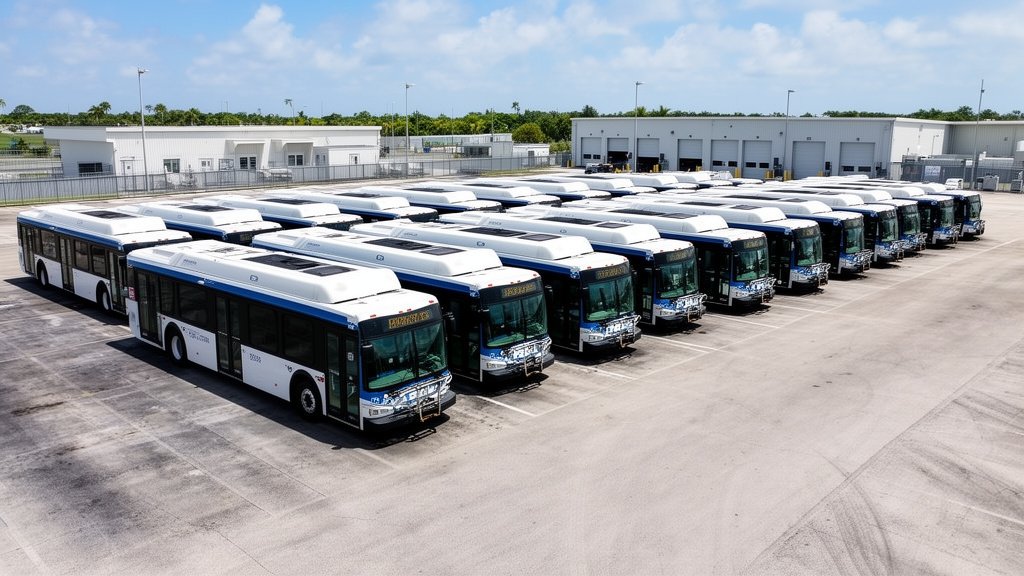
Miami-Dade County’s ambitious attempt to modernize its public transit fleet with eco-friendly technology has devolved into a multi-million dollar wreckage, with county officials now preparing to dispose of 75 electric buses following years of persistent, catastrophic mechanical failures. The decision effectively writes off a $72 million investment, serving as a stark cautionary tale for municipalities rushing to adopt early-generation electric vehicle (EV) infrastructure. As the Department of Transportation and Public Works (DTPW) looks to clear its inventory, the situation has ignited a complex legal battle, underscoring the risks of procurement dependencies in a rapidly evolving, yet unproven, industrial sector.
Key Highlights
- Fleet Decommissioning: 75 electric buses are slated for disposal after failing to meet operational reliability standards.
- Financial Write-off: The initiative represents a total loss of $72 million in taxpayer funding.
- Legal Recourse: Miami-Dade County has initiated active legal proceedings against the bus manufacturer, Proterra, citing breach of contract.
- Performance Issues: The fleet suffered from severe range limitations, recurring mechanical failures, and battery performance inconsistencies that rendered them unusable for standard municipal routes.
The Anatomy of a Municipal Fleet Collapse
The downfall of Miami-Dade’s electric bus project did not happen overnight; it was a slow-motion collision between political ambition and technological reality. When the county first committed to the procurement of these units, the promise was one of sustainability, reduced carbon emissions, and lower long-term fuel costs. However, the operational reality within the Miami-Dade Department of Transportation and Public Works (DTPW) proved to be diametrically opposed to the marketing literature of the era.
From the moment the buses were integrated into the existing grid, they struggled to perform. The issues were not limited to a single component but rather a systemic failure of the vehicle’s core propulsion and energy storage systems. Drivers reported that the buses frequently failed to hold a charge sufficient to complete scheduled routes, leaving the county with vehicles that were functionally obsolete before they even reached their middle age. In the harsh, high-heat climate of South Florida, the battery systems struggled, compounding the range anxiety that has plagued early-generation heavy-duty EVs. Over time, the maintenance demands surpassed the utility of the fleet, turning the garage into a graveyard of expensive, idle machinery.
The Legal Impasse
With the realization that the assets were unsalvageable, the county’s focus shifted from maintenance to litigation. Miami-Dade County has moved to hold the manufacturer accountable, filing legal challenges centered on the failure to deliver equipment that met the specified contractual requirements. The core of the argument is simple: the county paid for a product that was sold as ‘ready for transit deployment’ but failed to function as such.
However, the legal landscape is complicated by the manufacturer’s own financial turbulence. Proterra, the company responsible for the fleet, entered bankruptcy proceedings, which significantly muddied the waters for municipalities seeking restitution. The legal battle is not merely about recovering funds; it is about establishing precedence for how transit authorities can protect taxpayer dollars when purchasing high-ticket technology from vendors who may not be able to guarantee the long-term viability of their hardware or their corporate existence.
Economic Impact and The Cost of Early Adoption
The $72 million price tag is a staggering figure for any municipality, but it is particularly painful when viewed through the lens of opportunity cost. In the context of a local government budget, this amount could have funded significant upgrades to existing diesel-hybrid fleets, expanded light rail infrastructure, or provided years of service subsidies to underserved communities.
This incident highlights the “early adopter tax”—a phenomenon where government entities absorb the exorbitant costs of R&D while simultaneously serving as the beta-testers for unrefined technology. The transition to electric public transport is an environmental imperative, but this failure suggests that municipalities must pivot toward more rigorous procurement standards. Future contracts likely require tighter performance guarantees, longer-term warranty obligations, and escrow protections that ensure taxpayers are not left holding the bag if a manufacturer fails to deliver or folds.
A Shift in Procurement Philosophy
The Miami-Dade failure is already serving as a case study for transit authorities nationwide. The standard operating procedure for electric bus procurement is shifting. Instead of purchasing large batches of unproven technology, transit agencies are moving toward phased, pilot-based adoption. This methodology allows for real-world stress testing of vehicles without risking the entire fleet budget on a single vendor or a single generation of battery technology.
Furthermore, the integration of “Vehicle-to-Grid” (V2G) technology, while promising, is being approached with significantly more skepticism regarding infrastructure readiness. The Miami-Dade incident forces a necessary conversation: are municipal transit departments equipped to act as the primary engineers of their own technology, or should they remain reliant on proven, albeit traditional, propulsion systems until the EV manufacturing sector stabilizes?
FAQ: People Also Ask
1. Why were the buses considered ‘useless’?
The buses suffered from chronic mechanical and electrical failures, most notably regarding battery capacity and range, which made them unable to complete basic municipal routes reliably.
2. Who is the manufacturer of these buses?
The buses were manufactured by Proterra, a company that subsequently filed for Chapter 11 bankruptcy protection, complicating the county’s recovery efforts.
3. Is there any way to recoup the $72 million?
The county is pursuing legal action against the manufacturer. However, due to the company’s financial insolvency and bankruptcy status, recovering the full investment is considered highly unlikely by legal and financial analysts.
4. What will happen to the buses now?
The county plans to dispose of the buses. Given the proprietary nature of the technology and the lack of replacement parts due to the manufacturer’s issues, there is little to no resale market for these units, leaving scrapping or salvage as the most probable outcome.