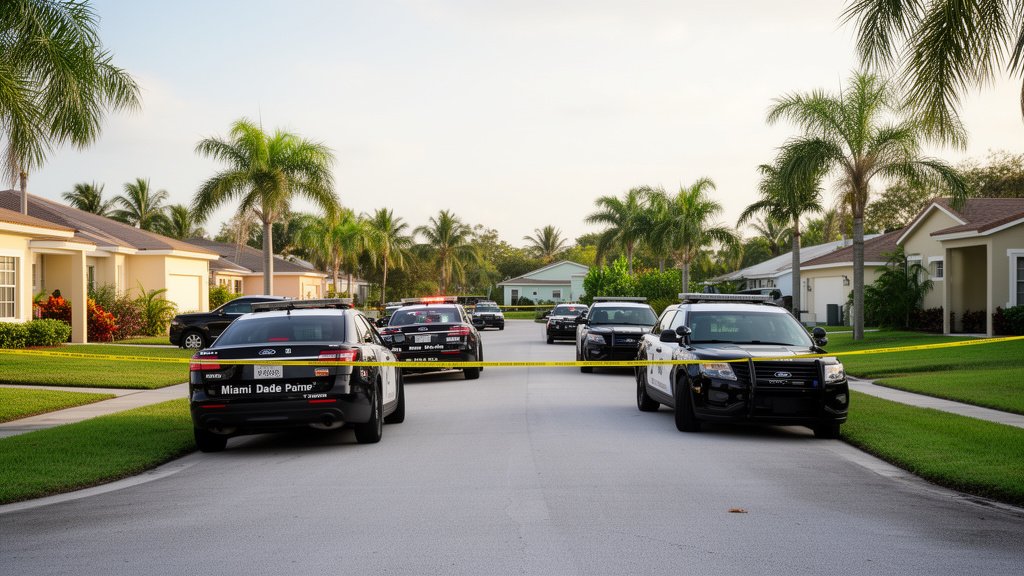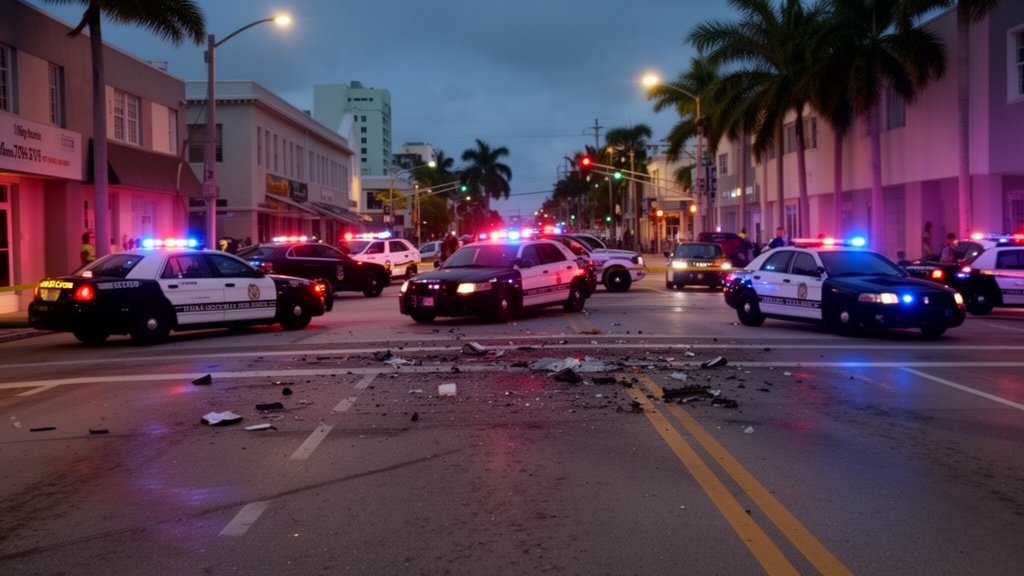
Three Miami-Dade Police Department (MDPD) officers were rushed to the hospital on Monday, October 21, 2024, following two separate yet consecutive vehicular crashes in the West Little River neighborhood. The incident, which paralyzed traffic in the area, triggered a significant emergency response as authorities scrambled to assess the wreckage and ensure the safety of both the officers and the civilians involved.
Key Highlights:
- Three officers were transported to the Jackson Memorial Hospital Ryder Trauma Center for treatment.
- The collisions occurred in the vicinity of Northwest 79th Street and 17th Avenue.
- Authorities confirmed that while the injuries required hospitalization, all three officers were listed in stable condition.
- A multi-agency investigation is currently underway to determine the causal factors behind the back-to-back accidents.
Anatomy of the West Little River Incidents
The events began unfolding during a routine patrol shift that quickly turned chaotic. According to the preliminary reports provided by the Miami-Dade Police Department, the first collision involved a marked police cruiser and at least one civilian vehicle. The impact was severe enough to necessitate immediate medical intervention. While responders were still processing the initial scene, a second crash occurred in immediate proximity, compounding the emergency response efforts.
The Sequence of Events
Understanding the timeline is critical for the ongoing investigation. The crashes happened in a high-density intersection known for significant daily traffic flow. The first incident involved cruisers positioned in the area for regular patrol operations. When the initial collision occurred, the cascading effect of traffic disruption, emergency vehicle presence, and the disorientation caused by the crash led to a second, secondary collision involving additional departmental units. This ‘domino effect’ is a documented risk in urban policing, where the sudden cessation of traffic flow—combined with high-stress responses—creates additional hazards for emergency personnel.
Medical Response and Patient Status
The rapid deployment of Miami-Dade Fire Rescue (MDFR) units ensured that the injured officers reached the Ryder Trauma Center in record time. The Ryder Trauma Center, part of the Jackson Health System, is a Level 1 trauma center, the highest level of trauma care available. The medical team’s swift action in triage and stabilization was vital. Officials stated that while the injuries were significant enough to warrant immediate trauma activation, the officers were fortunate not to have suffered life-threatening trauma. The community outpouring of support for the officers has been immediate, with departmental leadership emphasizing that the safety and recovery of these public servants remain the top priority during the investigative phase.
Analysis: The Dangers of Modern Urban Patrol
Beyond the specific details of the West Little River crashes, this event highlights the inherent risks faced by officers patrolling Miami’s increasingly complex roadways. Law enforcement driving is a specialized skill, yet it is tested daily against the unpredictability of civilian drivers, infrastructure challenges, and the pressure of rapid-response environments.
Traffic Safety Infrastructure in Miami
Miami’s road infrastructure is currently undergoing significant changes, with new traffic patterns emerging from ongoing construction projects and population density shifts. Intersections like those near 79th Street and 17th Avenue are critical arteries, but they often lack the buffer zones required for emergency maneuvering. The MDPD frequently reviews its driver safety protocols, but external factors—including distracted driving among the public and weather-related road slickness—remain difficult to mitigate completely. This incident serves as a poignant reminder that even with training, the margin for error in an urban environment is razor-thin.
The Psychological Impact of Emergency Driving
There is a broader conversation occurring within law enforcement regarding the ‘rush-response’ culture. While officers are trained to prioritize speed when lives are at risk, departments across the country are re-evaluating the cost-benefit analysis of high-speed or high-urgency driving in non-life-threatening situations. The stress of managing a scene while simultaneously navigating traffic creates a high cognitive load. Experts in public safety often cite the need for advanced simulation training to help officers handle the ‘secondary crash’ phenomenon, where the initial accident sets the stage for a secondary, often avoidable, collision.
Future-Proofing Police Fleet Safety
Modern police cruisers are essentially mobile command centers, loaded with complex communication and navigation equipment. While this aids in situational awareness, it also provides a source of distraction. The industry is trending toward integrating more ‘hands-free’ and HUD (Heads-Up Display) technology to allow officers to keep their eyes on the road. Investigating the specific telemetry data from the vehicles involved in this Miami crash will likely form part of the internal review to determine if technological failures or human error contributed to the severity of the impacts.
FAQ: People Also Ask
Were there any civilian injuries reported in the Miami police crashes?
While the focus of the report has been on the three hospitalized officers, initial departmental statements indicated that the investigation would cover the condition of all individuals involved. Official updates regarding civilian injuries are typically released as the police investigation concludes.
Why are back-to-back crashes more common in police scenarios?
The ‘secondary collision’ is a known phenomenon in traffic safety. When an emergency vehicle is struck or stops abruptly, following vehicles—often responding to the same scene—can experience ‘tunnel vision’ or reduced reaction time, leading to subsequent accidents in the immediate vicinity.
What is the typical investigation process for police-involved accidents?
MDPD follows a strict internal protocol for accidents involving departmental vehicles. This includes an investigation by traffic homicide or internal affairs units, the collection of dashboard camera footage, and an analysis of vehicle telemetry data to determine speeds, braking patterns, and situational factors.